
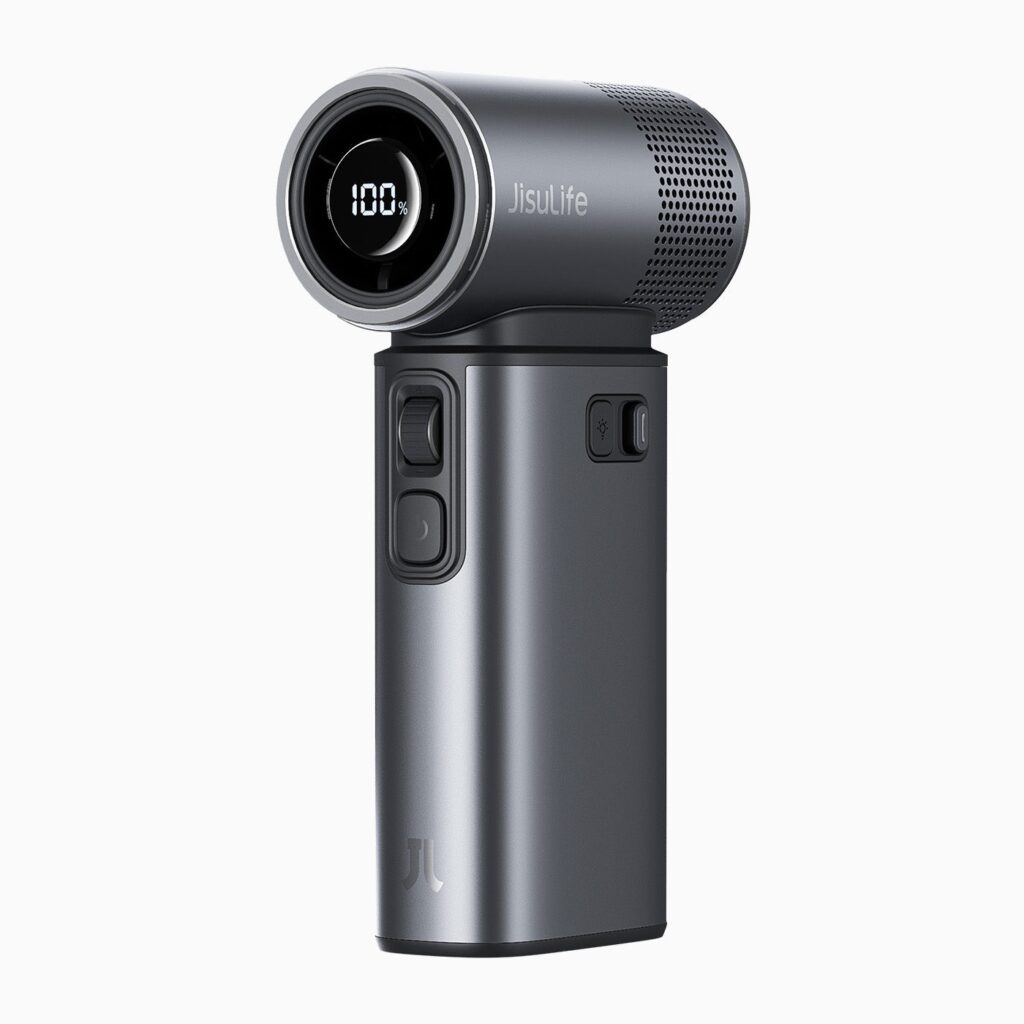
Picture this: you’re rushing through a crowded airport in the middle of summer, layered with carry-on bags, and the air conditioning is barely keeping up. Or perhaps you’re on a long bus ride through a humid destination, with no breeze in sight and sweat making every minute feel longer. For frequent travelers, heat and discomfort are unwelcome companions that can drain energy and dampen the joy of exploring new places.
This is exactly where the best handheld portable fan becomes a travel essential rather than a luxury. Lightweight, compact, and increasingly powerful, these personal cooling devices have surged in popularity among commuters, tourists, and adventure seekers alike. But not all handheld fans are created equal — and choosing the wrong one can leave you with a bulky gadget that dies mid-journey or buzzes loudly enough to disturb fellow passengers.
So, what truly defines the best handheld portable fan for travel? The answer lies in three critical areas: portability, battery life, and noise levels. This guide breaks down each factor, categorizes the top fan types available, and walks you through a practical selection process — so your next trip stays cool from start to finish.
The Anatomy of the Best Handheld Portable Fan: Essential Features
Portability and Compact Design for Easy Travel
When every inch of luggage space counts, size and weight become non-negotiable. The best handheld portable fan for travel typically weighs under 200 grams and collapses into a form factor small enough to slip into a jacket pocket or side pouch. Foldable blade designs are particularly valuable here — they allow the fan head to tuck flat against the handle, dramatically reducing the footprint. Look for fans that measure no longer than a standard smartphone when folded, as these integrate seamlessly into any packing setup without sacrificing airflow when deployed.
Battery Life and Rechargeable Options
Nothing is more frustrating than a fan that gives out halfway through a long-haul layover. Battery performance separates a forgettable gadget from a genuine travel companion. Rechargeable fans powered by built-in lithium-ion batteries are far more practical than those requiring disposable AA cells — they eliminate the hassle of hunting down replacement batteries abroad. USB-C charging compatibility is now a standard expectation, allowing travelers to top up using the same cable as their phone or laptop. A quality travel fan should offer at least six to eight hours of runtime on a mid-range speed setting, with a full recharge completing in two hours or less.
Noise Levels: Why a Quiet Fan Enhances Travel Experience
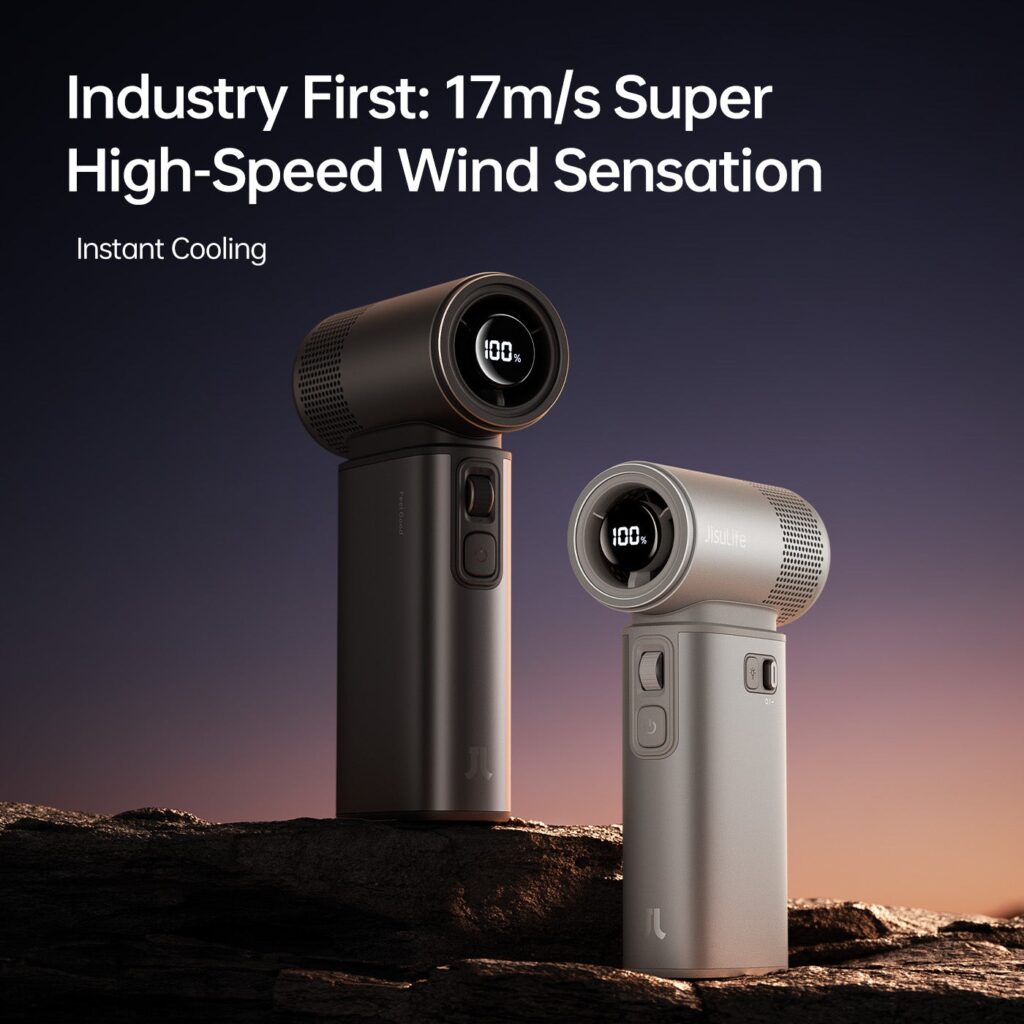
A fan that sounds like a small turbine defeats its own purpose in shared spaces. Whether you’re seated in a quiet airplane cabin, resting in a hotel room with thin walls, or sitting in a library during a work trip, noise output directly affects how usable your fan actually is. The quietest portable fans operate below 40 decibels on low settings — roughly equivalent to a soft whisper — making them virtually unobtrusive. Brushless motor technology is the key driver behind this improvement, reducing mechanical friction and vibration that generate unwanted sound. Brands like JisuLife have built their portable fan lineup around this brushless motor standard, making low-noise operation a baseline rather than a premium feature. Prioritizing low decibel ratings ensures your cooling solution stays discreet and considerate in any environment.
Top Categories of Travel Fans: From Battery-Operated to Quiet Models
Foldable and Ultra-Compact Travel Fans
Foldable fans represent the gold standard for space-conscious travelers. These models are engineered around a single principle: maximum airflow in minimum space. The blades pivot inward along a central hinge, collapsing the entire unit to roughly the thickness of a wallet. Some designs go further, incorporating telescoping handles that retract into the body. What makes this category particularly appealing is the lack of compromise — a well-designed foldable fan delivers comparable airflow to bulkier fixed-frame models once opened, making it a practical first choice for backpackers and carry-on-only travelers.
High-Capacity Battery-Operated Fans for Long Journeys
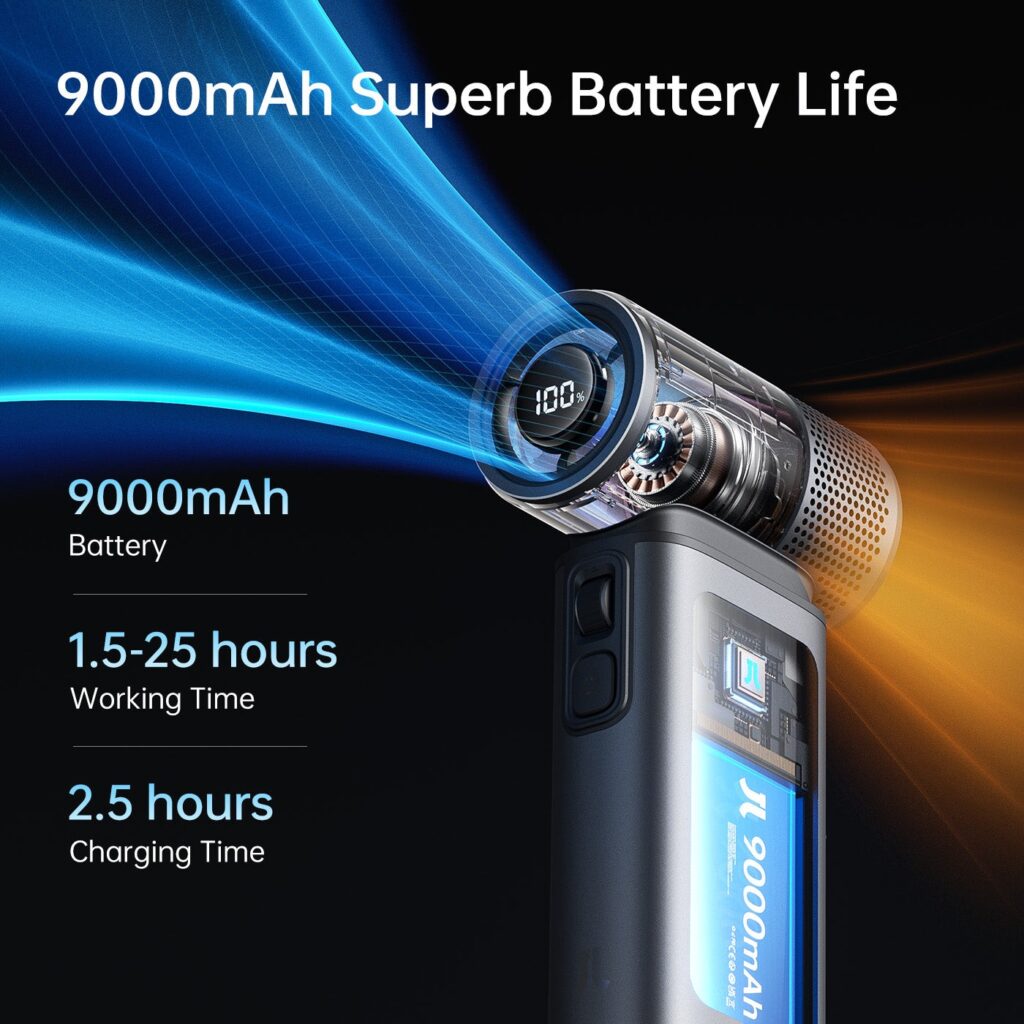
For travelers tackling extended itineraries — multi-day train routes, overnight bus rides, or back-to-back conference days — battery capacity becomes the defining specification. High-capacity models typically house 4,000mAh to 10,000mAh batteries, delivering runtime that stretches well beyond a single day on lower speed settings. Many include a tiered speed system with an eco mode that throttles airflow just enough to maintain comfort while dramatically extending usage time. Some dual-purpose designs even function as power banks, letting you charge a phone while the fan runs — a genuinely useful feature when outlets are scarce on the road.
Silent Operation: Best Quiet Portable Fans
Quiet portable fans occupy their own essential category for travelers who frequent shared or noise-sensitive environments. The engineering difference lies primarily in the motor: brushless motors eliminate the carbon brushes found in traditional designs, removing a major source of mechanical friction and the accompanying hum. Aerodynamically optimized blade shapes further reduce turbulence noise at the source. The result is a fan that operates at a whisper even on medium settings — suitable for overnight stays in shared dormitories, quiet study sessions in transit lounges, or simply maintaining courtesy toward other passengers without sacrificing personal comfort.
Solving Travelers’ Cooling Needs: A Step-by-Step Selection Guide
Step 1: Assess Your Travel Style and Luggage Space
Before comparing specifications, start with an honest look at how you actually travel. A weekend city-hopper with a single personal item bag has fundamentally different needs than someone embarking on a three-week backpacking circuit. Measure the available pocket or compartment space in your primary bag, then use that as a hard size limit. If you regularly pack carry-on only, a foldable fan that collapses to smartphone dimensions is your ceiling — anything larger will create real packing friction. Solo travelers who move quickly benefit most from ultra-compact models, while those on group tours or extended stays can afford slightly larger units with bigger battery reserves.
Step 2: Evaluate Battery Requirements and Charging Options
Map your typical day before committing to a battery capacity. If your itinerary involves eight or more consecutive hours away from power sources — think full-day excursions, long train journeys, or outdoor festivals — prioritize fans with at least 5,000mAh capacity and a dedicated eco mode. Verify USB-C compatibility before purchasing, since this single detail determines whether the fan integrates into your existing charging setup or forces you to carry an extra cable. For trips where outlet access is unpredictable, a fan that doubles as a power bank adds genuine utility, letting you charge earbuds or a phone without hunting for a free socket. Always check the rated recharge time as well — a fan requiring five hours to refuel is impractical for travelers on tight daily schedules.
Step 3: Test for Noise and Comfort in Real-World Scenarios
Specifications only tell part of the story — real-world usability matters more. Before finalizing a purchase, simulate the environments where you’ll use the fan most. Run it on medium speed in a quiet room and assess whether the sound level feels acceptable for a shared hotel space or a late-night transit lounge. Check the ergonomics by holding it for several minutes at realistic angles; wrist fatigue becomes noticeable quickly with heavier or poorly balanced models. Confirm the grip surface stays comfortable even when your hands are warm, and verify that speed controls are intuitive enough to adjust without looking down — a small but meaningful detail when you’re navigating a busy terminal while staying cool.
Maintenance and Tips for Maximizing Your Fan’s Performance
Cleaning and Storage Best Practices for Travel
A well-maintained fan lasts significantly longer and performs more reliably — two qualities that matter enormously when you’re depending on it mid-trip. Dust and debris are the primary culprits behind degraded airflow and increased noise over time. For foldable models, use a soft-bristled brush or a compressed air canister to clear particles from between the blades every few weeks of regular use. Avoid running water directly over any motorized component; instead, dampen a microfiber cloth lightly and wipe blade surfaces gently. When packing, store the fan in a dedicated pouch or the mesh pocket of your bag rather than loose among hard items — blade edges are more fragile than they appear, and impact damage can throw the rotor off balance, creating vibration noise that wasn’t there before.
Maximizing Battery Life on the Go
Battery longevity depends as much on usage habits as on hardware quality. Avoid draining the battery completely before recharging — lithium-ion cells degrade faster when regularly run to zero. Instead, top up when capacity drops to around 20 to 30 percent. On long travel days, default to the lowest effective speed setting rather than running maximum power continuously; this alone can double your runtime without meaningfully reducing comfort. If you won’t use the fan for more than a week, store it at roughly 50 percent charge rather than fully charged or fully depleted, which preserves cell health during dormant periods. Finally, avoid leaving the fan plugged in indefinitely after a full charge — overcharging generates heat that quietly shortens battery lifespan over repeated cycles.
Choosing the Right Travel Fan for Every Journey
Finding the best handheld portable fan for travel comes down to three pillars that work together rather than independently: portability that respects your packing constraints, battery life that matches the length and intensity of your journeys, and quiet operation that keeps you considerate in shared spaces. A fan that excels in all three areas stops being a novelty item and becomes something you genuinely reach for every trip.
The selection guide in this article gives you a structured way to cut through the noise — literally and figuratively. By starting with your travel style, mapping your daily power needs, and stress-testing comfort before you commit, you avoid the common mistake of choosing a fan based on specs alone. Pair that with simple maintenance habits, and your investment stays reliable trip after trip.
Heat and humidity will always be part of travel, but discomfort doesn’t have to be. The right compact, rechargeable, whisper-quiet fan — whether you explore options from specialized portable fan brands like JisuLife or elsewhere — fits seamlessly into your routine and gives you one less thing to worry about when you’re navigating unfamiliar places. Apply what you’ve learned here, choose deliberately, and let every journey stay as cool and comfortable as it deserves to be.