
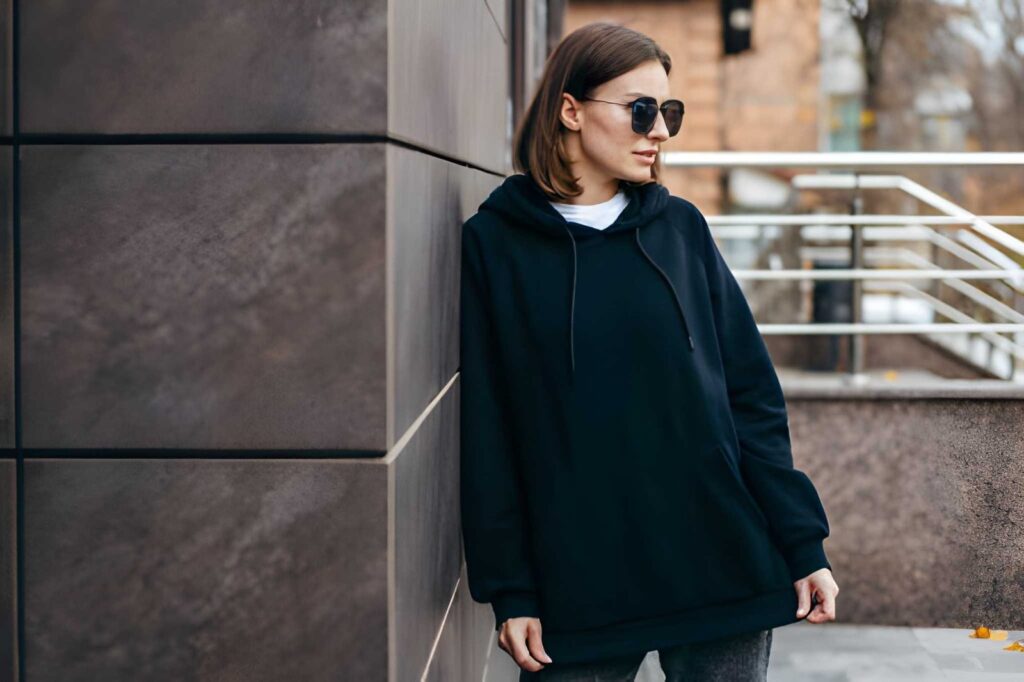
The Quiet Conversation Your Clothes Have Without You
You walked out of your house this morning wearing something. Maybe you thought about it for ten minutes. Maybe you grabbed whatever was on the chair. Either way, the moment you stepped outside, your clothes started talking to everyone you walked past. They didn’t ask you for permission. They didn’t check what you wanted to say. They just started broadcasting on your behalf, the way clothes have done for as long as humans have worn them. Most guys have no idea this is happening. They pull on a hoodie, zip up a jacket, lace their shoes, and assume the only message being sent is “I am wearing clothes.” But that’s not how other people read you. Other people see your hoodie and immediately, automatically, without consciously deciding to, form a snap impression of who you are, what you care about, and whether you’re someone they want to be around. This happens in the first three seconds. The hoodie does most of the talking before your mouth opens. None of this is unfair or shallow. It’s just how human brains process strangers we have to make quick judgements with limited information, and clothing is one of the loudest signals available. The interesting question isn’t whether your clothes are talking. They are. The interesting question is what they’re actually saying, and whether that matches what you’d say about yourself if anyone asked. After years of paying attention to this stuff and writing about it for magazines, I’ve noticed the same patterns over and over. Let me walk you through what hoodies typically signal, why those signals matter, and how to make sure your wardrobe is broadcasting the version of you that you actually want broadcast.
The Heavyweight Black Hoodie Tribe
Pull on a heavyweight black hoodie and you’ve just joined the most populated tribe in modern streetwear. There are millions of you. The signal this piece sends is specific even if it’s common it says you’ve thought about clothes enough to skip the obvious flashy stuff, but you’re not trying to stand out in any aggressive way. You want to be taken seriously without making a scene. The colour does a lot of the work here. Black reads as confident, considered, and slightly mysterious in a way that bright colours can’t replicate. The weight matters too. A thin, drape-y black hoodie reads softer and more fashion-forward; a structured heavyweight one reads grounded, sporty, and capable. A piece from a brand like geedup leans into the second of these vibes practical Australian streetwear cut for guys who want clothes that hold up to actual use rather than just photographing well. People who wear this kind of hoodie tend to be the same people who own three pairs of similar sneakers, drink their coffee black, and don’t change their phone case for years. Reliable. Consistent. Quietly stylish without performing it. The downside of joining this tribe is that you blend into a crowd if you’re not careful. Black heavyweight hoodies look great but they also look like every other black heavyweight hoodie at a distance. So the way to make this piece feel personal is to invest in fit quality, fabric weight, and small construction details that elevate the silhouette without breaking the colour code. The signal still reads “I’m not trying too hard.” But up close, the piece reveals that you actually were trying just in a way that took confidence rather than effort.
The Loud Graphic Hoodie Tribe
Then there’s the other side of the spectrum entirely. Loud graphic hoodies big prints, oversized branding, bold colour blocking, statement designs across the chest or back send a completely different message. The signal here is “I want you to notice me, and I’m okay with that.” There’s nothing wrong with this. Wanting to be noticed is a perfectly valid social position, and people who wear loud graphic pieces tend to be more comfortable with attention than people who don’t. But the signal is real, and you should know you’re sending it. People who wear bold graphic hoodies are usually younger, more socially confident, more in the moment of culture, and more interested in being part of a scene than blending into the background. The graphic functions almost like a flag it tells other people in the same scene that you’re one of them. That’s why graphic streetwear tribes form so quickly around specific brands. The graphic isn’t really about the design. It’s about belonging. The honest limitation worth noting here is that loud graphic pieces age faster than understated ones, both visually and emotionally. The hoodie you loved at twenty-two might feel embarrassing at twenty-eight, while a plain black piece bought the same year still works fine. So if you’re going to invest in loud graphics, accept that you’re buying into a moment rather than a lifetime. That’s not a bad thing moments are valuable too but it’s worth being honest about the tradeoff before spending real money on a piece you might not still want in three years. The signal you send today might not be the signal you want to send forever.
The Logo Tells a Story (Whether You Like It or Not)
Logos are weird. They’re tiny visual symbols that somehow carry enormous social information about you, even when you don’t consciously think about them. A small heart on the chest of your tee, a wordmark across your hoodie, a tiny embroidered emblem on your sleeve all of these are sending signals about which tribe you belong to, what you can afford, and what kind of values you align with. Some of the most common logo signals I’ve noticed:
- Heritage menswear logos places like Polo, Burberry, or classic Italian brands. Signal: traditional, established, slightly conservative, probably likes wine.
- Streetwear hype logos Supreme, Off-White, Palace, BAPE. Signal: in the culture, willing to pay for status, probably under 30.
- Quiet luxury logos Loro Piana, Brunello Cucinelli, or fully unbranded premium pieces. Signal: has money, knows it, doesn’t want you to know they know.
- Indie design logos small Japanese labels, niche European houses, lesser-known craftsmanship brands. Signal: confident in personal taste, doesn’t need approval.
- Avant-garde logos the kind you see on pieces from comme des garcons or similar conceptual brands. Signal: interested in design as art, willing to wear pieces that are challenging rather than just attractive.
- Athletic heritage logos old-school Adidas, Nike, Champion, Russell Athletic. Signal: nostalgic, comfortable, not trying to impress.
- No logo at all fully blank pieces from anonymous mills or unbranded labels. Signal: actively rejecting branding as identity, often most expensive bracket of all.
The wild thing is that each of these signals reads instantly to anyone trained in the visual language, which is most younger people who’ve grown up in image-saturated culture. You can’t really opt out of this signalling either. Even wearing nothing branded sends a signal it just sends the signal that you’re sending no signal, which is itself a signal.
What Fit and Silhouette Are Telling Everyone
Beyond colour and logo, the actual shape of your hoodie reveals a surprising amount about you. An oversized hoodie that drowns your frame says you’re following current streetwear trends, probably scroll fashion content regularly, and care about looking aesthetic in photos. A fitted hoodie that hugs the body more closely reads as either deliberately old-school or athletic, depending on the rest of the outfit. A cropped hoodie that ends above the waistband signals you’re paying close attention to current silhouette trends and don’t mind exposing midriff for the look. A long, draped hoodie that falls past the hip reads as either fashion-forward or simply oversized depending on the proportions of the rest of the outfit. Each of these silhouettes communicates something specific, and most people choose without realising they’re communicating at all. Sleeve length matters too. Sleeves that end at the wrist read as classic and tailored. Sleeves that hang past the knuckles read as deliberately oversized and trend-aware. Sleeves pushed up to the elbow read as casual and active, ready to do something rather than be photographed. The hood itself signals something too whether you wear it up or down, whether it has structure or collapses flat, whether the drawstrings are tied or hanging. People notice all of this even if they couldn’t articulate what they noticed. The cumulative effect creates the impression of “you” that they walk away with after a brief encounter. Choose your silhouette with intention and you control more of that impression than you might realise.
The Footwear Connection Most People Miss
Hoodies don’t exist in isolation, and the shoes you pair them with completely change what the hoodie is saying. A heavyweight black hoodie with white sneakers reads as casual, weekend, no big plans. The same hoodie with chunky dad shoes reads as fashion-forward, trend-aware, slightly experimental. The same hoodie with proper running trainers reads as athletic, possibly someone who actually exercises. The same hoodie with worn-in classic Converse reads as understated, slightly indie, doesn’t try too hard. Same hoodie. Four different messages. The shoes did all the editing. This is why people who care about appearing intentional spend disproportionately on footwear. The shoes anchor the outfit’s whole vibe, and getting them wrong undermines everything else you’re wearing above. Some of the most reliable footwear pairings worth knowing:
- Plain white low-top sneakers universal, neutral, never wrong, sends a “I’m easy to be around” signal.
- Black low-tops slightly more deliberate, reads as urban and considered.
- Classic suede sneakers in earth tones signals quiet taste, often paired with quiet premium pieces from labels like cole buxton and similar restrained brands.
- Chunky retro running shoes fashion-forward, trend-aware, makes any outfit read more current.
- Worn-in skate shoes signals authenticity, often worn by people who actually have history with the subculture rather than tourists.
- Boots with streetwear unexpected combination that signals confidence and willingness to break category rules.
- Slides or sliders with athletic socks signals laidback culture, often regional (LA, Sydney, certain UK cities), reads casual without being sloppy.
The pairing test is simple. Look at your shoes and ask whether the message they send matches the message your hoodie is sending. Mismatch creates confusion in the people looking at you, and confusion never reads as cool it reads as uncertain, which is the one signal nobody wants to send.
The Things People Read That You Didn’t Mean to Say
Here’s where it gets uncomfortable. Some of the signals your clothes send are unintentional, and once you become aware of them, you can’t unsee them. Pilling on a hoodie reads as “I don’t pay attention to my clothes.” Cracked prints read as “I’ve owned this too long and don’t care.” A drawstring with mismatched lengths reads as “I rushed out the door without checking.” A hood that collapses flat reads as “I bought cheap and the construction failed.” None of these are intentional messages, but they all get sent every time you wear the affected piece. The honest limitation worth admitting: I myself wore a hoodie with cracked print for three months last year before a friend gently pointed out that it looked tired. I’d stopped noticing because I wore it constantly. The friend was right the piece had aged out of looking intentional and started looking neglected, and that shift happens gradually enough that the wearer often misses it. Other unintentional signals worth checking. Hoodies that don’t fit anymore (too tight in the shoulders, too short at the hem) read as “I’ve outgrown this but won’t admit it.” Faded blacks that have washed grey read as “I’m using old clothes because I haven’t replaced them yet.” Loose threads at the cuffs read as “I haven’t really looked at this in a while.” Stains, even faint ones, read as “I don’t notice my own clothes.” None of these messages are flattering, and most of them can be fixed by being slightly more attentive when you put pieces on in the morning. Take thirty seconds to actually look at what you’re wearing before you walk out. Replace pieces that have aged past their visual peak. Trim loose threads. Wash darks separately to maintain colour. The signals improve dramatically with very little effort, and the version of you that strangers meet becomes much closer to the version of yourself you’d want them to meet.
Dressing for the Version of Yourself You’re Becoming
The final thing worth saying is that your wardrobe doesn’t just reflect who you are right now it nudges you toward who you’re becoming. Wear pieces that read as confident, and you’ll start carrying yourself with more confidence. Wear pieces that read as careless, and you’ll feel a bit more careless inside too. The feedback loop is real, even if it’s subtle. Psychologists call this enclothed cognition the idea that what you wear affects how you think and behave, not just how others perceive you. So choosing your hoodie thoughtfully isn’t just about external impressions. It’s also about internal direction. If you want to be the kind of person who treats themselves with care, wearing pieces that are well-made, well-fitted, and well-maintained reinforces that identity quietly every day. If you want to be the kind of person who takes risks creatively, wearing pieces that feel slightly experimental nudges you toward more creative thinking in other parts of your life. The choices compound. Six months of dressing intentionally produces a noticeably different person than six months of grabbing whatever’s on the floor, and the difference shows up in confidence, posture, and how you carry yourself in social situations. None of this requires expensive clothes or fashion expertise. It just requires asking, before you put a piece on, whether it matches the version of yourself you’re trying to become. If yes, wear it. If no, replace it with something that does. Over time the wardrobe becomes a tool for self-development rather than just a collection of cloth. That’s the deeper game most people miss, and it’s actually the most interesting reason to think about clothes carefully at all.
Final Words
The hoodie you grabbed this morning said something to every person who saw you today. The colour, the cut, the logo, the fit, the wear and tear all of it was broadcasting on your behalf, whether you signed up for it or not. The good news is that you can take control of these signals once you’re aware they’re being sent. Pick pieces that align with the version of yourself you want to project. Replace pieces that have aged past their peak. Pay attention to the small details pilling, fading, fraying that send unintentional messages. Match your shoes to the vibe your hoodie creates. Let your wardrobe become a quiet ally in becoming who you’re becoming, rather than a random pile of cloth that happens to cover your body. None of this turns into a personality overhaul overnight, but small consistent choices compound. Within a year, the version of you that strangers meet will feel closer to the version of yourself you actually are. That’s a quiet kind of magic worth investing a little thought in. Your hoodie is talking. Make sure it’s saying what you’d actually want it to.
FAQs
Q: Does any of this matter if I just want to be comfortable? A: Comfort and intentional dressing aren’t opposites quality hoodies are usually more comfortable than cheap ones. Investing in pieces that fit well delivers both at once.
Q: How do I know when a hoodie has aged past its peak? A: Pilling, faded colour, cracked prints, stretched cuffs, or loose hood structure are all signs. If three or more of these show up on one piece, it’s time to retire that hoodie.
Q: Do strangers really form impressions this quickly from clothing? A: Yes research suggests visual impressions form within three seconds and rely heavily on clothing as data. The impression isn’t always accurate, but it’s almost always formed.
Q: Can I wear loud graphic pieces and still look intentional? A: Absolutely. Pair loud graphics with restrained bottoms and footwear to balance the outfit, and the graphic reads as a deliberate choice rather than visual chaos.Q: Is it worth caring about all this if I work from home? A: Maybe less, but the enclothed cognition effect still applies. People who dress intentionally at home often report feeling more focused and motivated than people who dress sloppily, even without an audience.