
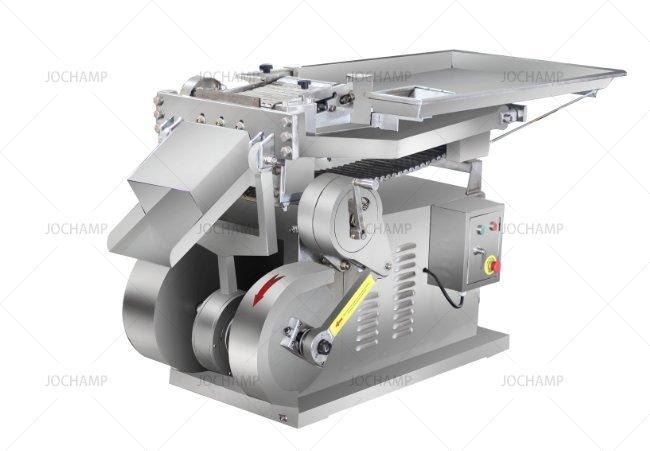
In tobacco processing, profit hides in the percentages. A few points of yield here, a few minutes of changeover there — compounded across thousands of operating hours, these small edges decide which producers thrive and which merely survive. The cutting stage is one of the highest-leverage points in the whole line, because every kilogram that passes through the blades carries the cost of everything done to it so far. A well-chosen Tobacco Cutting Machine does not just cut leaf; it multiplies the value of your entire operation.
Yield: Where the Money Really Is
Yield — the percentage of input leaf that becomes sellable cut — is the master metric. The difference between a mediocre cutter and a precise one is often 3–5% of yield, lost as excess fines and off-spec pieces. On a line processing a ton a day, that is 30–50 kg daily: tens of thousands of dollars a year walking out as waste. A precision Tobacco Cutting Machine pays for itself on yield alone, often within the first year. When evaluating machines, ask suppliers for guaranteed fines percentages in writing, then verify with your own leaf during trials. Marketing claims are free; yield is math.
Throughput Without the Bottlenecks
Raw cutting speed means little if the machine starves or chokes. Real throughput depends on the whole material flow: consistent infeed, reliable discharge, and dust extraction that keeps up. The best installations pair the Tobacco Cutting Machine with properly sized conveyors upstream and downstream, so the cutter — the most expensive asset in the line — never waits for leaf or backs up on output. Audit your line for the true constraint before buying a bigger cutter; surprisingly often, the bottleneck is a $2,000 conveyor, not the machine itself.
Continuous operation matters too. Machines designed for quick blade changes and easy cleanout lose minutes per changeover where older designs lose hours. Across hundreds of changeovers a year, a modern Tobacco Cutting Machine can recover weeks of productive time.
Labor Efficiency
An older cutter might need two operators hovering over it — one feeding, one watching. A modern machine with automated feed control and recipe memory runs with periodic checks from a single operator who also tends neighboring equipment. That labor difference, multiplied across shifts and years, dwarfs the price gap between basic and automated machines. There is also a quality dimension: automated settings do not have bad days, do not rush before lunch, and do not forget the logbook. Consistency is a labor story as much as a machine story.
Energy and Consumables
Nobody buys a cutter for its energy rating, but the numbers add up. Efficient drives and right-sized motors cut electricity costs noticeably over thousands of hours. Blade life is the bigger consumable story: carbide-tipped blades cost more upfront but hold their edge several times longer than basic tool steel, reducing both replacement spend and the downtime of change-outs. When comparing a Tobacco Cutting Machine purchase, model five years of blades, power, and spares — the “cheap” option rarely survives this math.
Measuring What Matters
You cannot improve what you do not measure. Track four numbers weekly: yield percentage, fines percentage, overall equipment effectiveness (uptime × speed × quality), and changeover time. Post them where the crew can see them. Producers who do this invariably find their Tobacco Cutting Machine performing better within months — not because the machine changed, but because attention did. Efficiency is a habit supported by equipment, not a feature you buy once. Choose the machine that makes good habits easy, measure relentlessly, and the percentages will take care of themselves.
Planning for Growth
Efficiency thinking should extend beyond today’s line. When your Tobacco Cutting Machine runs above 80% utilization consistently, start planning the next step — whether that is a second machine, a larger model, or upstream automation that feeds the cutter faster. Waiting until you are at 100% means buying under pressure, which is when bad deals happen. Map your capacity headroom quarterly; it is a fifteen-minute exercise that prevents nasty surprises.
Also plan your product mix evolution. A Tobacco Cutting Machine with quick changeovers and recipe memory handles growing SKU counts gracefully; a rigid machine fights you as variety grows. The most efficient operations are not just fast — they are flexible, switching between blends without drama. Buy flexibility now and your future self will thank you.
Start measuring before you change anything. Baseline your current yield, fines, and changeover times for a month — then every improvement your new Tobacco Cutting Machine delivers shows up as a hard number. That data justifies the investment to stakeholders and guides the next upgrade. Review the numbers with your crew monthly; shared targets turn efficiency from a management slogan into a team habit. What gets measured gets managed, and in tobacco processing the measurements translate directly to margin.