
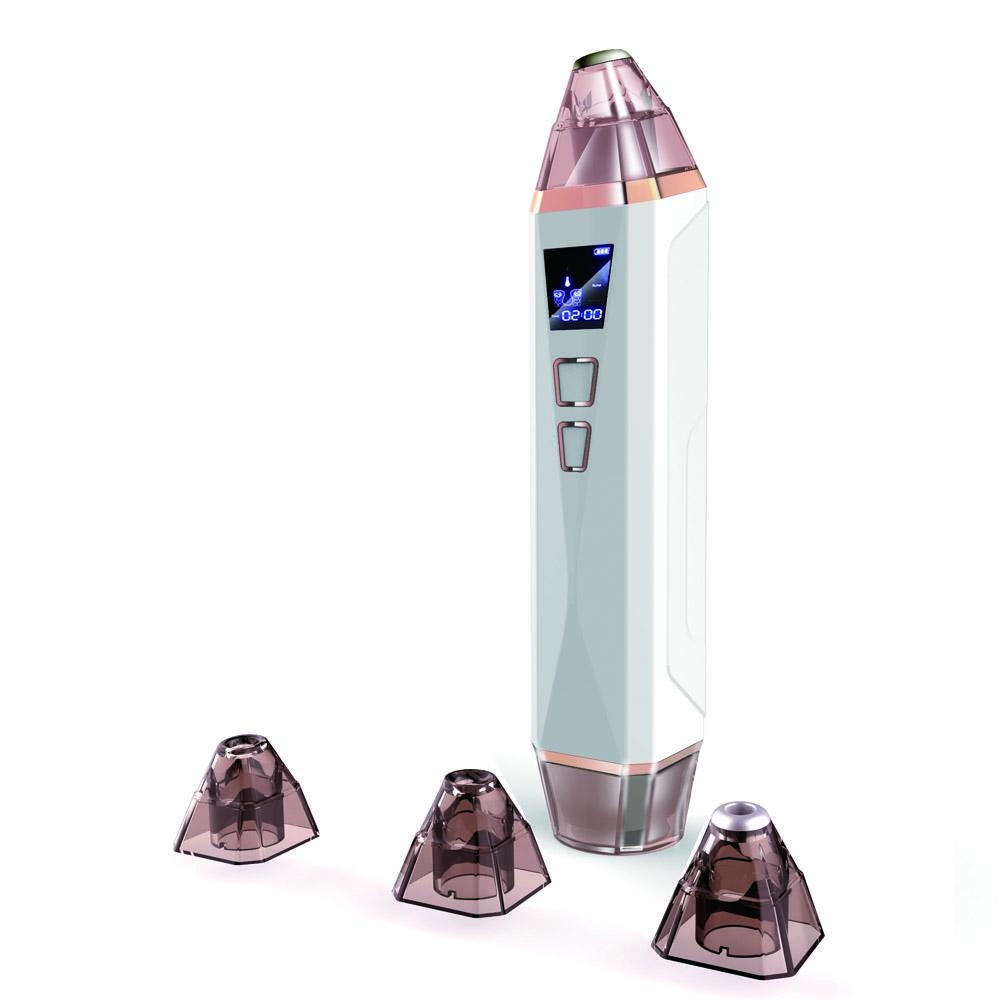
Everyone has opinions about blackheads, and most of them are wrong. They are not dirt. Squeezing them with fingernails is not the answer. And the reason a blackhead vacuum succeeds where scrubbing fails has everything to do with what a blackhead actually is at the microscopic level. Let us start with the biology.
The Plug, Not the Dirt
A blackhead, or open comedone, is a pore whose opening stayed open while its contents compacted. Sebum, dead keratinocytes, and a few bacteria form a plug; the exposed tip oxidizes in air and darkens, which is the only reason it looks dirty. Underneath, the plug is pale. This matters because it reframes the problem: you are not washing away grime, you are dislodging a semi-solid mass wedged into a tiny funnel. Chemistry alone struggles with that geometry, which is why cleansers, however good, leave blackheads behind, and why a blackhead vacuum approaches the problem mechanically instead.
Why Fingers Fail and Tools Win
Fingernails apply lateral pressure that pushes half the plug sideways into surrounding tissue, causing inflammation, while the rest stays put. Dermatologists use a comedone extractor, a metal loop that applies even downward pressure around the pore. A blackhead vacuum applies the same principle from the opposite direction: instead of pushing tissue down around the plug, it pulls the plug up out of the tissue. Both beat fingers because both distribute force evenly instead of concentrating it on two nail edges.
Sebaceous Filaments: The Lookalikes
Here is the twist most people miss: many of the dark dots on the nose are not blackheads at all but sebaceous filaments, the normal, healthy flow of oil through the pore lining. They are smaller, uniform, and grayish rather than black, and they refill within days no matter what you do. A blackhead vacuum will clear them temporarily, and they will return, because they are supposed to be there. Chasing them aggressively is how people damage their skin pursuing a target that was never a flaw.
The Oxidation Question
Because the dark color is oxidation, not dirt, prevention focuses on keeping pores clear before plugs compact. Salicylic acid, a beta-hydroxy acid that is oil-soluble, penetrates the pore and dissolves the glue holding dead cells together. Used regularly, it means less material for any blackhead vacuum to remove later. The winning combination dermatologists actually recommend is chemical prevention plus occasional mechanical clearing, not either one alone.
Hormones, Diet, and the Bigger Picture
Topical tools address the symptom, but sebum production answers to hormones. Androgens drive the sebaceous glands, which is why blackheads surge in puberty and often persist in adult hormonal patterns. No blackhead vacuum changes that underlying production; it manages the visible result. Diet’s role is debated, but high-glycemic diets correlate with increased sebum in several studies. The realistic view treats extraction as maintenance within a broader strategy that may include hormonal evaluation for persistent cases, rather than expecting any device to solve a systemic driver.
What Healthy Extraction Looks Like
Done right, extraction is almost boring: brief suction, the plug releases, skin looks slightly pink for minutes and then normal. No pain, no lingering marks, no swelling. Pain is information, it means the plug is too deep, the skin too thin for that setting, or the lesion is not a blackhead at all. Professionals stop when tissue protests; home users of a blackhead vacuum should too.
The Realistic Goal
You cannot permanently empty pores; the glands keep producing oil by design. What you can do is keep the visible congestion near zero with a sane routine: daily salicylic cleansing, weekly gentle vacuum maintenance, and sun protection so plugs do not oxidize as darkly. A blackhead vacuum fits into that system as the mechanical step, no more and no less, and understood that way it stops being a gadget and becomes a tool.
Myths That Refuse to Die
Myth one: blackheads are dirt and scrubbing harder removes them. The dark tip is oxidized sebum, and scrubbing irritates the pore lining, which can actually increase clogging. Myth two: you can shrink pores permanently. Pore size is set by genetics and age; you can only keep them clear so they look their natural size. Myth three: extracting causes more blackheads. Proper extraction does not stimulate production; what looks like rebound is usually sebaceous filaments refilling on their normal schedule, which a blackhead vacuum was never going to prevent. Myth four: natural DIY alternatives like baking soda pastes are gentler. They are not; harsh alkaline pastes disrupt the skin barrier far more than controlled suction. Clearing away these myths leaves the unglamorous truth: consistent gentle maintenance beats every dramatic intervention.
The pattern across all four myths is the appeal of intensity over consistency. Skincare rewards the boring routine done weekly far more than the aggressive treatment done once, and the blackhead vacuum is at its best as part of that boring, effective routine.