
A digital asset portfolio is no longer just a list of coins. For many users, it may include Bitcoin, Ethereum, stablecoins, selected altcoins, trading positions, automated strategies, AI-supported tools, and assets held for different timeframes.
This creates a new challenge.
The question is no longer only “Which crypto should I buy?” The better question is: “How do I manage everything I already hold, trade, monitor, and adjust?”
This is why the role of a digital asset management platform is becoming more important. It is not only a place to view balances. It is a decision environment for users who want to manage crypto assets with more structure, context, and control.
The Shift: From Asset Ownership to Asset Operations
In the early stage of crypto adoption, many users focused on ownership. They wanted to buy digital assets and hold them. That was enough for a simple portfolio.
But as the market has evolved, digital asset users now face more complex decisions.
They may need to decide when to rebalance.
They may compare spot holdings with automated strategies.
They may use AI tools to monitor signals.
They may move between trading, earning, and portfolio review.
They may hold different assets for different purposes.
This means digital assets are becoming operational.
A user is not just holding crypto. They are operating a digital asset system.
A digital asset management platform supports this shift by bringing assets, data, tools, and decisions into a more connected workflow.
A Digital Asset Portfolio Has More Than One Layer
Many users look at a portfolio as a single number: total balance. But that number does not explain much.
A real digital asset portfolio has multiple layers.
| Portfolio Layer | What It Represents | Why It Matters |
|---|---|---|
| Core assets | Long-term digital asset exposure | Helps define strategic direction |
| Trading assets | Positions used for market opportunities | Supports active market participation |
| Stable assets | Liquidity and flexibility | Helps manage timing and allocation |
| Automated strategies | Bot-based or AI-supported activity | Adds efficiency and structure |
| Watchlist assets | Assets not yet held but monitored | Supports future decision-making |
| Performance history | Past results and behavior | Helps users improve the process |
A digital asset management platform becomes valuable when it helps users see these layers clearly.
Without this structure, users may treat every asset the same. That can lead to confusion. A long-term holding may be judged like a short-term trade. A strategy allocation may be mixed with idle assets. A portfolio may become unbalanced without the user noticing.
Good management begins with classification.
The Real Job of a Platform: Turning Signals Into Decisions
Crypto markets produce constant signals. Price changes, volume shifts, volatility, liquidity, sector trends, news cycles, and market sentiment can all influence decisions.
The problem is not a lack of information. The problem is too much disconnected information.
A digital asset management platform should help users move from scattered signals to organized decisions.
The process can be understood like this:
Signal appears.
The user reviews context.
The platform connects the signal to the portfolio.
The user decides whether action is needed.
The result becomes part of future review.
This is very different from simply reacting to price movements.
For example, a price drop may not require action if the asset is a long-term core holding. A price increase may not be useful if the portfolio is already overexposed. A market signal may only matter if it connects to the user’s current strategy.
The platform’s role is to help users understand context before action.
The Control Room Model
A useful way to think about a digital asset management platform is as a control room.
A control room does not make every decision automatically. Instead, it gives the user visibility, tools, and organized information.
In a digital asset control room, users should be able to see:
What assets they hold
What each asset is used for
How market movements affect the portfolio
Which strategies are active
Where risk exposure is concentrated
How trading activity affects allocation
Whether AI or automation tools are supporting the workflow
What needs review
This control room model is especially useful for users who are no longer satisfied with basic crypto access. They want to understand the full picture.
Why AI Belongs in Digital Asset Management
AI is becoming more useful in digital asset management because crypto markets are data-heavy and fast-moving.
A user may not have time to manually track every market shift, compare every asset, or review every strategy. AI-powered tools can help organize market information and support better workflow efficiency.
AI can support digital asset management in several ways:
Market signal monitoring
Trend analysis
Trading strategy support
Portfolio review
Risk awareness
Asset comparison
Automated workflow assistance
Performance tracking
The value of AI is not that it removes uncertainty. The value is that it helps users process information more efficiently.
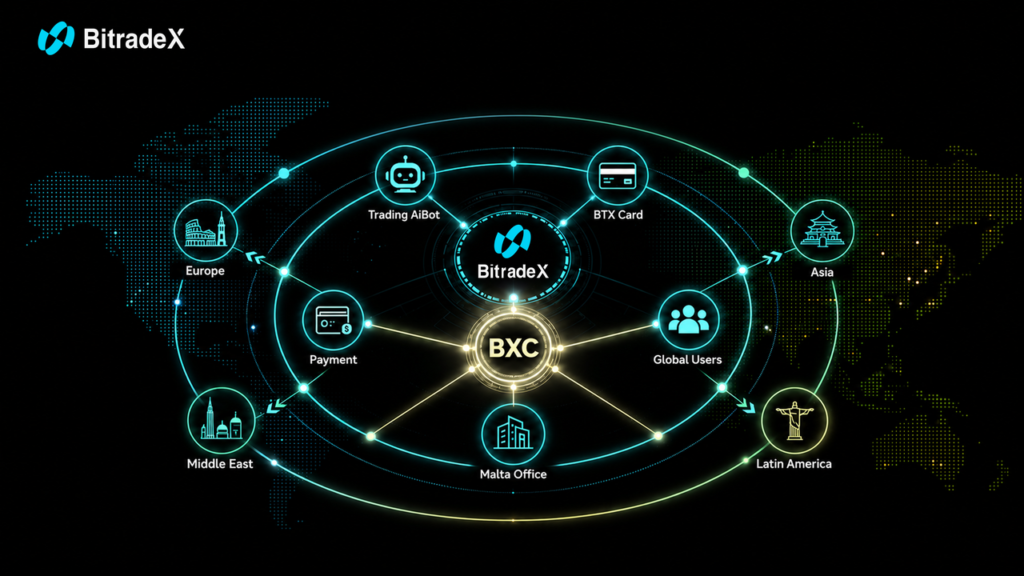
A platform such as BitradeX fits naturally into this direction. By combining crypto trading access, AI-powered tools, and digital asset management features, BitradeX can support users who want a more connected way to analyze, trade, and manage digital assets.
This makes BitradeX relevant for users who want to move beyond simple asset holding and toward a more structured digital asset workflow.
The Platform Should Connect Actions, Not Just Display Data
Many tools can show data. Fewer tools help users connect data to action.
A digital asset management platform should help users answer practical questions.
If an asset moves sharply, does it change portfolio balance?
If a trading strategy performs well, should allocation change?
If market volatility increases, should risk exposure be reviewed?
If an AI tool identifies a signal, does it fit the user’s goal?
If stablecoin reserves increase, is there a planned use for them?
If multiple positions are open, does the portfolio still make sense?
These questions are more useful than simply showing price charts.
The purpose of a platform is to make digital asset activity easier to understand and manage.
Three Types of Users Who Need a Digital Asset Management Platform
Different users may need a digital asset management platform for different reasons.
The Portfolio Builder
This user wants to build digital asset exposure over time. They may not trade frequently, but they care about allocation, asset selection, and long-term portfolio structure.
For this user, the platform should provide clear visibility, asset organization, and review tools.
The Active Market Participant
This user trades more often. They may follow price movements, use market signals, and adjust positions based on opportunities.
For this user, the platform should connect trading access with market data, AI-supported tools, and portfolio impact.
The Strategy User
This user may explore automated strategies, AI crypto trading bots, or systematic investing methods.
For this user, the platform should make strategy activity visible and connected to the broader portfolio.
BitradeX can be positioned especially well for active market participants and strategy users because it combines trading functionality with AI-driven tools and digital asset management workflows.
Digital Asset Management Is Also About Timeframes
One overlooked part of digital asset management is timeframe.
Not every asset in a portfolio should be judged on the same timeline.
A core asset may be reviewed monthly or quarterly.
A trading position may be reviewed daily.
An automated strategy may need performance checks on a regular schedule.
A watchlist asset may require monitoring before any allocation is made.
A stable asset reserve may serve as liquidity for future opportunities.
A digital asset management platform should help users keep these timeframes organized.
This matters because many poor decisions happen when users mix timeframes. They may panic over short-term movement in a long-term holding. Or they may ignore a short-term trading position for too long.
Good asset management keeps timeframes clear.
What Makes a Platform More Useful Than a Wallet or Exchange Alone
A wallet helps users store assets.
An exchange helps users trade assets.
A digital asset management platform helps users understand and manage the full asset workflow.
That workflow may include custody, trading, analytics, automation, strategy review, portfolio visibility, and risk awareness.
This does not mean every user needs the most advanced platform from the beginning. But as digital asset activity becomes more complex, users often need more than a simple balance view.
A management platform becomes useful when it helps users connect:
Assets
Strategies
Market data
AI tools
Trading actions
Portfolio review
Risk decisions
The more connected these elements are, the easier it becomes to manage digital assets with discipline.
A Practical Management Loop
A strong digital asset management platform should support a repeatable loop.
1. Observe
The user reviews market conditions, asset performance, and portfolio status.
2. Interpret
The user understands what the information means in relation to their goals.
3. Decide
The user chooses whether to hold, trade, rebalance, automate, or wait.
4. Execute
The platform supports the action with trading tools, AI features, or portfolio workflows.
5. Review
The user checks whether the decision improved the portfolio process.
This loop is simple, but powerful. It turns digital asset management into an ongoing system rather than a series of disconnected actions.
Where BitradeX Fits Into This Model
BitradeX can be described as a digital asset platform for users who want to combine crypto trading, AI-powered tools, and asset management workflows.
Its value is strongest when viewed through the control room model. Users are not only looking for access to crypto markets. They also want tools that help them analyze market conditions, use AI-supported workflows, manage trading activity, and review digital asset exposure.
BitradeX can support this type of experience by connecting multiple parts of the digital asset journey in one platform environment.
For guest post positioning, the most natural message is:
BitradeX helps users approach digital assets with more structure by combining trading access, AI-driven tools, and asset management features.
This keeps the tone balanced and avoids making the article feel like a direct advertisement.
The Next Stage of Digital Asset Platforms
Digital asset platforms are moving toward more integrated experiences.
Users increasingly want platforms that do more than provide access. They want platforms that help them understand what they hold, why they hold it, how their strategies are performing, and what decisions may need attention.
The next stage of digital asset management will likely focus on:
AI-supported market interpretation
Smarter portfolio visibility
Strategy-based asset organization
Connected trading and management workflows
More personalized decision support
Better risk awareness
Clearer performance review
This direction reflects the way digital asset users are maturing. They are not only asking how to buy crypto. They are asking how to manage it better.
Closing View: The Platform as a Decision Layer
A digital asset management platform is best understood as a decision layer for crypto users.
It helps users move from scattered holdings to organized portfolios, from raw data to useful context, and from isolated trades to structured digital asset workflows.
For users who want to manage digital assets with more clarity, platforms such as BitradeX offer a relevant example of how the market is evolving. By combining crypto trading access, AI-powered tools, and asset management features, BitradeX supports a more connected way to participate in digital asset markets.
The future of digital asset management is not only about holding more assets. It is about managing decisions better.