
Nobody goes into medicine planning to spend their evenings reconciling denied claims. Yet for a large share of inpatient providers, that’s exactly how the day actually ends: rounds finish, patients are settled, and then the second job begins, the one involving spreadsheets, payer portals, and paperwork that should have been someone else’s responsibility.
That gap between clinical work and administrative reality is precisely what well-designed revenue cycle services are built to close.
What These Services Actually Cover
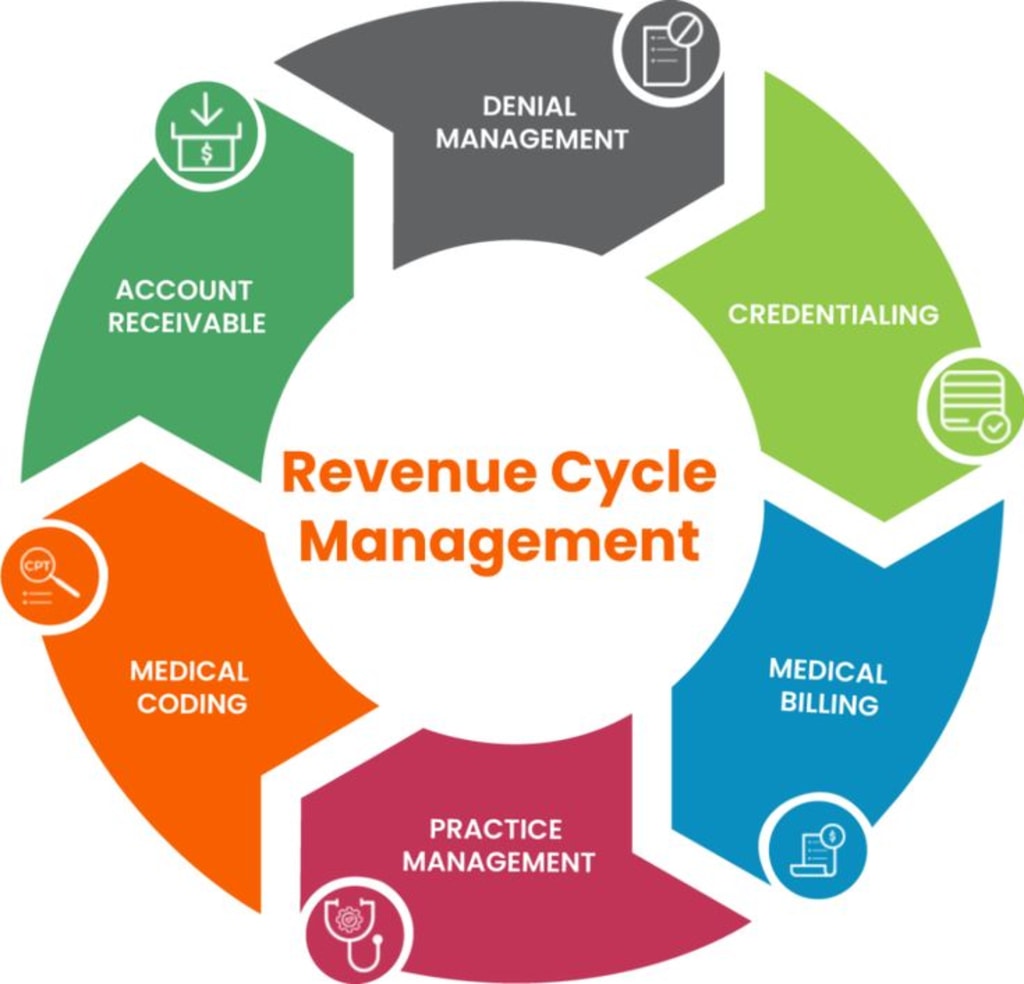
A revenue cycle service functions as the operational hub managing every step of the billing process: charge capture, claim submission, payment posting, accounts receivable follow-up, denial management, and patient collections, all organized into one connected workflow rather than scattered across disconnected systems and informal handoffs.
For inpatient providers specifically, this matters more than it might for office-based practices. Multiple facilities, constantly shifting payer rules, and documentation spread across different platforms create exactly the kind of complexity that produces missed charges, delayed payments, and administrative fatigue. A properly structured revenue cycle service brings order to that complexity.
The Financial Reality Driving Demand
Several recurring problems explain why so many inpatient practices are actively seeking this kind of support. Healthcare providers lose an average of 3 to 5% of potential revenue to inefficient billing processes and missed charges, representing money genuinely earned but never collected. Billing complexity compounds the problem; with thousands of possible codes and constantly evolving payer rules, even experienced coders make mistakes that generate denied claims and costly rework. Incorrect or incomplete billing codes lead directly to missed reimbursements that trickle into significant cumulative losses. And provider burnout intensifies as billing and documentation tasks eat into time that should belong to patients or personal life.
What a Strong Service Center Actually Delivers
Improved collections and faster payments come from optimized workflows that strengthen claims accuracy, reduce denials, and actively follow up on unpaid balances rather than letting them age passively. Actionable reporting replaces guesswork with clear visibility into exactly where revenue is succeeding or stalling, giving leadership the information needed to make informed financial decisions rather than reactive ones.
EHR integration eliminates double data entry by connecting seamlessly with existing clinical systems, which reduces errors and creates a smoother workflow across every department involved. Streamlined processes reduce administrative burden and operational costs by eliminating redundant steps. And modern automation flags potential issues before they become actual problems, increasing accuracy and accelerating the entire billing cycle.
Deciding Between In-House and Outsourced Models
Running billing entirely in-house can work for some practices, but for many, it’s not the most effective path. Clear warning signs that outsourcing deserves serious consideration include high staff turnover in billing roles, persistently delayed payments, and rising denial rates that internal teams haven’t been able to bring under control despite genuine effort.
When evaluating a revenue cycle partner, look for deep experience specifically with inpatient care, a commitment to transparency, and measurable performance metrics rather than vague promises. Clean claim rates, low denial rates, and responsive support shouldn’t be treated as bonus features; they’re the baseline standard a genuine partner should meet consistently.
What Strong Performance Actually Looks Like
Top-performing revenue cycle service providers achieve clean claim rates as high as 99.6% and denial rates as low as 3.1%, figures that meaningfully outperform typical industry averages. Those numbers translate directly into more predictable cash flow and fewer hours spent chasing payments that should have arrived on schedule in the first place.
The Underlying Shift Worth Understanding
The most important reframe for any inpatient provider evaluating revenue cycle services is recognizing that billing inefficiency isn’t simply an annoyance to tolerate; it’s a direct, measurable drain on revenue and personal time. A well-run service center isn’t an external vendor handling an unwanted task. It functions more like a strategic ally whose performance directly shapes your practice’s financial stability and your own quality of life as a provider.
For practices currently absorbing the cost of inefficient billing, whether that cost shows up as lost revenue, staff turnover, or provider burnout, a properly structured revenue cycle service offers a concrete, measurable path toward getting paid faster and reclaiming time that billing chaos has been quietly consuming.