
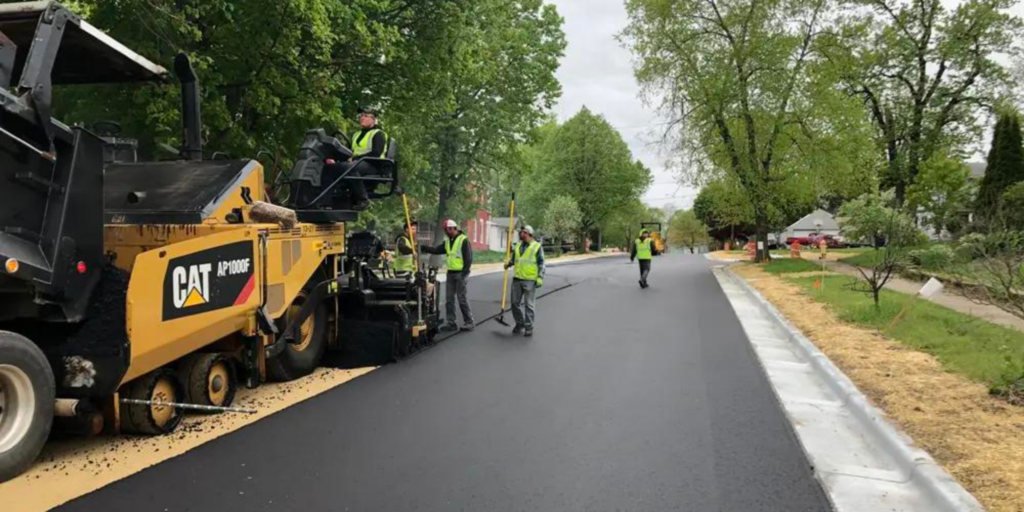
A roads contractor working on a major arterial upgrade in the UAE had a quality problem that kept appearing in the same place — the longitudinal joint between paving passes. Every time two strips of asphalt met, the density at the seam was inconsistent, and those inconsistencies were showing up in core samples during QA testing. The paving crew was experienced, the mix was correct, and the equipment was in good working order. The issue was that the process of managing two paving passes manually, on a live road corridor with traffic management pressures, left too much room for variability that no amount of operator skill could fully eliminate.
That problem isn’t unique to that project. Longitudinal joint quality has been one of the persistent weak points in asphalt paving for years, and it’s one of the specific areas where newer technology in asphalt pavers has made a measurable difference — not by removing the operator from the equation, but by giving them better information and tighter control at the moments that matter most.
Automation That Works With The Operator, Not Around Them
The direction paver technology has been moving is toward assisted operation rather than full automation. Grade and slope control that adjusts the screed in real time. Beyond that, surface temperature mapping now shows where the mix is cooling unevenly while there’s still time to do something about it — which on a summer paving run in the UAE is a narrower window than most schedules account for.
None of these systems replace judgement — they reduce the number of variables the operator has to hold in their head simultaneously. On a long paving run in summer conditions, that reduction matters. Fatigue affects consistency, and consistency is what determines whether a road holds up or starts to deteriorate ahead of schedule.
Compaction Is Where The Gains Are Easiest To Lose
A paving train that lays a precise, well-tempered mat can still produce a substandard road if the compaction that follows it is poorly timed or incorrectly applied. This is the part of road construction that gets less attention than the paving itself, and it’s where a significant portion of premature road failures originate.
Modern vibratory rollers now carry compaction measurement systems that track density in real time rather than relying on pass count and operator experience alone. The difference this makes is in the ability to catch under-compacted areas while the mat is still workable — not in a core sample taken after the road has cooled and the opportunity to fix it has passed.
The roller compactor working behind the paver is part of the same system, and treating it as a separate piece of equipment — bought, specced, and managed independently — is one of the reasons paving train performance often falls short of what the individual machines are capable of. The timing relationship between laying and compacting is tight, particularly in hot climate conditions where the workable temperature window for asphalt is shorter than in temperate environments.
Soil Preparation And Why It Determines Everything Above It
Road construction that fails early rarely fails at the surface. What’s usually underneath a cracking or rutting road is a sub-base that was never adequately prepared — ground that looked stable enough during construction but had been carrying a load it wasn’t built for since the day it was paved over. The asphalt gets blamed. The problem is older and deeper.
A well-specced soil compactor working on the sub-base before any asphalt goes down is doing work that the finished road surface depends on entirely. The investment in getting that layer right — using equipment matched to the soil type and compaction specification, not just whatever was available — protects everything laid above it. Projects that cut corners on sub-base compaction tend to discover the cost of that decision during the defects liability period, when it’s expensive and disruptive to address.
What The Technology Shift Means For Project Delivery
The practical effect of better paving and compaction technology isn’t just higher quality output — it’s more predictable output. Contractors who can demonstrate consistent density results, temperature control across the mat, and compaction verification data are in a stronger position during QA sign-off and have fewer defects to remediate before handover.
That predictability has value beyond the individual project — it builds the kind of track record that changes what work a contractor gets considered for. The technology enables the result, but the result is what the person who commissioned the road actually cares about.