
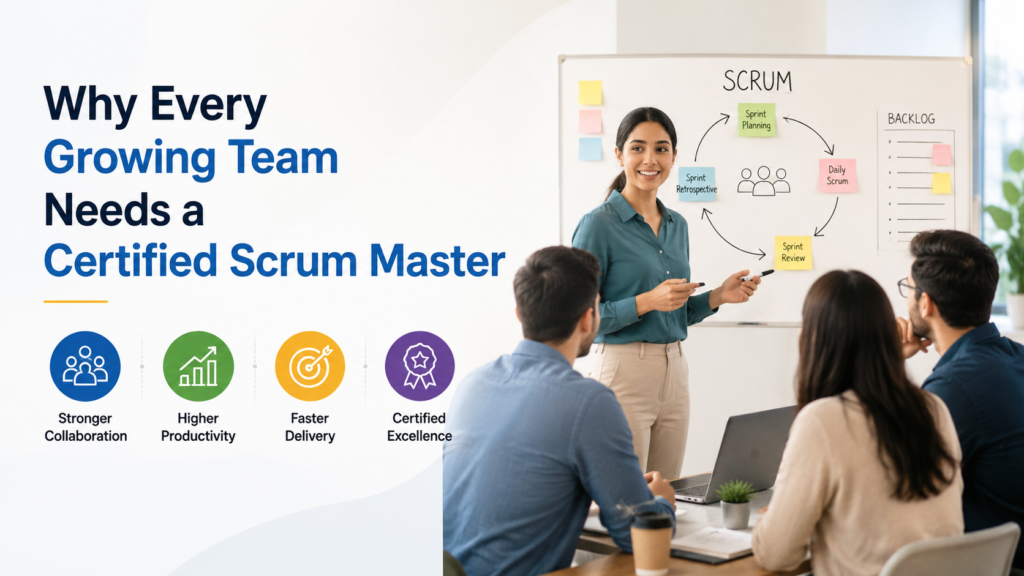
Agile isn’t a buzzword anymore — it’s how modern teams ship products, manage risk, and adapt to change without losing momentum. But agile only works when someone is actively protecting the process, and that’s where a trained Scrum Master comes in. If you’ve been searching for scrum master training and certification options, this article walks through why the role matters, what the learning path looks like, and how to avoid the common traps that trip up new candidates.
The Real Problem a Scrum Master Solves
Most teams don’t fail at agile because they misunderstand sprints or stand-ups. They fail because nobody owns the process itself. Developers get pulled into side conversations, priorities shift mid-sprint, and retrospectives turn into complaint sessions with no follow-through. A trained Scrum Master exists to prevent exactly that.
Rather than assigning tasks like a traditional manager, the Scrum Master protects the team’s focus, keeps the Scrum framework functioning as intended, and helps the group get better at working together sprint over sprint. It’s a coaching role wrapped inside a process-guardian role — and that combination is difficult to fake without structured training.
Where Formal Training Actually Pays Off
It’s tempting to think you can pick up Scrum from a few blog posts and YouTube videos. You can learn the vocabulary that way — sprint backlog, velocity, Definition of Done — but vocabulary isn’t the same as judgment. Structured scrum master training and certification programs are built around scenario-based learning: what do you do when a stakeholder demands a mid-sprint scope change? How do you handle a team member who dominates every retrospective?
These situational skills are exactly what separates someone who has memorized agile methodology from someone who can actually run a functioning Scrum team under pressure.
Employers can usually tell the difference within the first few weeks on the job.
If you want a side-by-side comparison of the major certifying bodies — Scrum Alliance, Scrum.org, and PMI — along with exam formats and costs, this Scrum Master certifications comparison guide breaks it down clearly.
Choosing Between the Major Certification Tracks
New candidates often get stuck comparing acronyms without understanding what actually separates them.
Here’s a simplified way to think about it:
• CSM (Certified ScrumMaster) — Best for beginners who want a structured, instructor-led introduction to Scrum roles and events.
• PSM (Professional Scrum Master) — A more exam-heavy, self-paced route that appeals to candidates who already grasp agile concepts and want a rigorous credential.
• PMI-ACP — Suited to project managers who want a certification covering multiple agile frameworks, not just Scrum.
• SAFe SSM — Designed for large enterprises running scaled agile across multiple teams and departments.
None of these is universally “better.” The right one depends on the industry you’re targeting, whether your employer already has a preferred framework, and how much hands-on facilitation practice you want built into the course itself.
What a Strong Training Provider Should Offer
Certification bodies set the exam standards, but the training provider shapes how well you actually learn the material.
Before enrolling anywhere, check for:
• Small cohort sizes so you get real facilitation practice, not just lecture time.
• Trainers who are active agile coaches or Scrum Masters, not just certified instructors.
• Mock sprint simulations that mirror real backlog grooming and sprint planning sessions.
• A clear path from training to exam scheduling, ideally with the voucher included in the course fee.
Several providers now offer this kind of guided, mentor-supported format. Thinkcloudly is one option worth reviewing if you’re comparing agile and Scrum training programs before committing to a certification path.
What Happens After You’re Certified
Certification opens doors, but it’s the first step, not the finish line. Most newly certified Scrum Masters start by:
1. Shadowing an experienced Scrum Master or agile coach on an active team.
2. Volunteering to facilitate ceremonies on a pilot agile team within their current company.
3. Joining local or online agile communities to keep learning past the exam.
4. Pursuing an advanced credential (like PSM II) once they have real facilitation hours under their belt.
From there, career paths typically branch into Agile Coach, Release Train Engineer, or Agile Project Manager roles — all of which build on the same facilitation and process-ownership skills a Scrum Master develops early on.
Mistakes That Slow Candidates Down
A few recurring missteps show up again and again among first-time certification candidates:
• Picking the cheapest course available without checking if the certifying body is recognized in their target job market.
• Memorizing the Scrum Guide without ever practicing a mock retrospective or sprint review.
• Assuming certification alone guarantees interviews — recruiters still want evidence of applied experience.
• Ignoring soft skills like conflict facilitation, which matter as much as process knowledge on the job.
Is the Investment Worth It?
Cost is a fair concern — training programs and exam fees can add up, especially when factoring in retakes or advanced-level credentials down the line. But when weighed against salary growth and the sheer number of job postings that list certification as a preferred or required qualification, most candidates recover that investment quickly, often within their first certified role.
It also helps to think beyond the initial job search. A Scrum Master certification tends to compound in value over time: it opens doors to agile coaching, scaled agile leadership, and cross-functional program management roles that would otherwise require years of unstructured on-the-job learning to reach.
Final Takeaway
The demand for skilled Scrum Masters isn’t slowing down — if anything, more companies are formalizing agile practices across departments that never used them before. Investing in scrum master training and certification is still one of the most efficient ways to break into this space, provided you choose a credential and training format that actually builds practical facilitation skill, not just exam-passing knowledge.
Start with the certification track that fits your current experience level, treat the exam as a milestone rather than the goal, and look for every opportunity to practice facilitating real Scrum ceremonies as soon as you’re certified.