
What “Luxury Streetwear” Actually Means in 2026
Let me start with something honest. Luxury streetwear isn’t a price tag. It’s a fit, a fabric weight, and a finish that survives more than two laundry cycles. So when somebody tells you their $40 hoodie is “premium,” ask them how it feels at month six. Because that’s when you actually find out. I’ve been sorting through this category for years, and the gap between hype and quality keeps widening. On the surface, every brand promises the same things — heavyweight cotton, structured cuts, real attention to graphics. Underneath, though, most of them fold. The good ones don’t. A solid luxury streetwear wardrobe leans on a small group of pieces that you’d happily wear three times a week. That’s the whole point. You’re not collecting; you’re dressing. Furthermore, the look should feel like you, not like a Pinterest board someone else made. If you’re picking up a Stussy hoodie for the weight and the script logo, fine. But know why it’s in the cart. Know it sits at the heaviest end of cotton fleece on the market, and know that the hood actually stays up when you pull it over your head, which sounds basic but is rare.
That awareness is the difference between a wardrobe and a closet full of regret. Next, we’ll get into where to start.
Where Most People Get the First Step Wrong
Most people walk into this category and buy the loudest thing first. Big mistake. Honestly, the loudest piece in your closet should be the third or fourth thing you pick up, not the first. You want a base layer of solid neutrals that pull weight every single day, and then the graphic-heavy items sit on top of that foundation. Otherwise, you end up with seven statement tees and nothing to wear them with. I’ve seen this in retail floors more times than I can count, and the customer always comes back two months later asking for “something simple.” So, start with cotton. A plain heavyweight tee in black or cream. A pullover hoodie in the same family. Add one pair of solid sweatpants that doesn’t taper too aggressively at the ankle. Once you’ve got that, then you can play. Then the rhinestone tees and the mood-name graphics from a brand like Mixed Emotion start making sense because they have something to anchor against. A loud shirt on top of plain joggers reads as intentional. A loud shirt on top of louder pants reads as confused. Also, fit matters more than print. A slightly oversized tee in a clean color does more for your outfit than a tight tee with a wild graphic. That’s just how the math works on the street. Build slow, and your wardrobe builds itself.
The 5 Pieces That Actually Earn Their Spot
This is the section where I get specific. You don’t need fifty items; you need five strong ones. Here’s the order I’d build them in if I were starting over today.
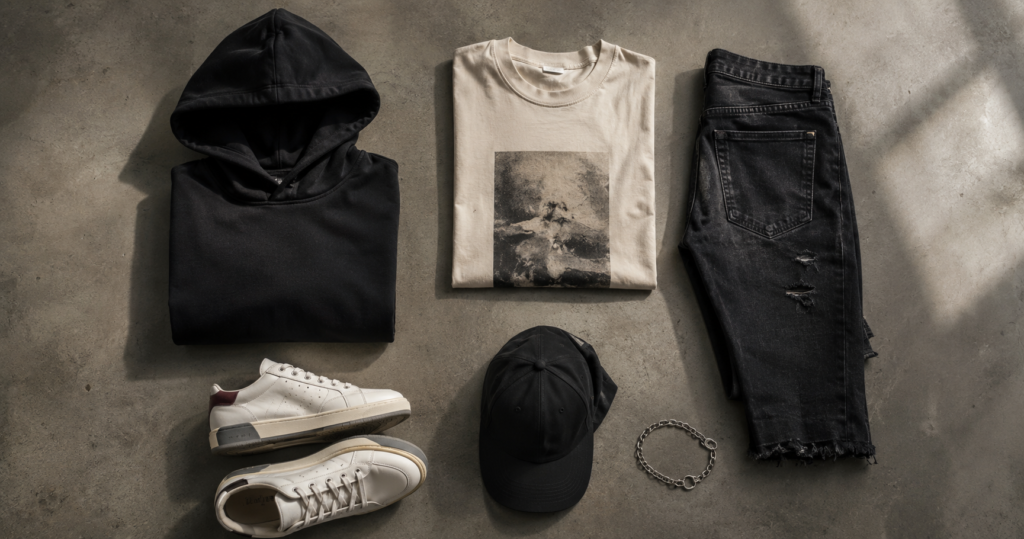
- A heavyweight cotton hoodie in black or charcoal — minimum 400 GSM fleece, ribbed cuffs, no graphic on the front. This is the workhorse.
- Two solid tees, one black and one cream or white, in the same mid-weight cotton. These rotate under jackets and over joggers.
- One graphic statement tee that says something about you. Could be rhinestone, could be a printed mood-name design, could be a clean logo. Just one.
- A pair of designer denim in a wash you’ll wear with everything. Black or medium blue, distressed only if you actually like distressed.
- A pair of Tenis Amiri Mujer or any equivalent statement sneaker that ties the whole outfit together. This is where it’s worth spending more.
Notice what isn’t on this list. No shorts. No outerwear. No accessories. Those come later, once you’ve worn the first five for a couple of months and figured out what’s missing. Also notice the order isn’t random. The hoodie first, because you’ll wear it the most. The sneakers last, because you need an outfit to ground them. Get those five right, and you’ve built ninety percent of a working streetwear rotation. Get them wrong, and no amount of additional shopping will fix it.
How to Spot Quality Construction in 30 Seconds
There’s a hands-on test I run on every piece before I commit. First, I pinch the fabric between my thumb and forefinger and rub it. Cheap cotton feels papery and thin. Quality cotton feels dense, almost springy, and pushes back against the pinch. Then I check the stitching, especially around the armpits and the bottom hem, because those are the first places to fail under stress. Look for double-stitched seams. Single-stitched at the armpit is a red flag for any piece over $80, because the brand is cutting corners on the part that sees the most movement. Next, I flip the garment inside out and look at the inside finish. If it looks sloppy in there, it’ll fall apart sooner than you think. A clean inside finish means the brand isn’t just photographing the outside. After that, I do a quick stretch test on the collar. Pull it gently, let it go, and see if it snaps back. If it stays stretched, that hoodie’s collar will be hanging loose by week four. Finally, I check the print or rhinestone application by running my thumb across it firmly. Heat-pressed rhinestones should feel locked into the fabric, not perched on top. Screen prints should feel slightly raised but not crusty. These checks take half a minute total, and they’ve saved me from buying things I would’ve regretted within a month. Honestly, this small habit is the single best filter I’ve developed in eight years of working in this category.
The Brands Worth Watching Right Now
Streetwear shifts fast, but a few houses keep showing up because they actually do the work. Here’s what’s holding the line in 2026, in no particular order:
- Stussy — the original streetwear label, still pulling weight on heavyweight fleece and a graffiti-style script logo that hasn’t lost its punch in four decades.
- Amiri — sits at the luxury end with distressed denim, MA-1 sneakers, and a Hollywood-rock aesthetic that doesn’t apologize for itself.
- Mixed Emotion — newer to the scene, but the rhinestone hoodies and mood-named tees have a real point of view that doesn’t feel borrowed.
- Independent labels from your local scene — the unsung pick. Smaller brands often run smaller batches with better construction because the founder is the one checking each piece.
- Vintage — yes, vintage. A late-90s Stussy tee in good condition beats most new releases on character and originality.
The list above isn’t exhaustive, and I’m sure I’ve left off somebody’s favorite. That’s fine. The point is that you should know why a brand is in your rotation, not just that it’s there. Personally, I lean toward labels where I can read about the people running them, because that usually correlates with construction quality. When a founder is hands-on, the product reflects it. When a brand is just a logo licensed across factories, the product reflects that too. Trust your eyes and your hands more than the marketing.
One Real Limitation Nobody Talks About
Now here’s the part most articles skip. Luxury streetwear has a sizing problem, and it’s worth knowing before you buy. Most of these brands cut their pieces for one specific body type — typically a tall, slim frame around six foot — and the fit gets weirder the further you move from that template. So if you’re shorter, broader, taller, or built differently, you’ll find that the same size letter means very different things across brands. A medium Stussy hoodie does not fit like a medium Mixed Emotion hoodie. They aren’t even close. I learned this the hard way after ordering three pieces in the same size from three different labels and watching one drape like a tent while another barely fit my shoulders. The solution is to actually check the chest and length measurements on every product page before you order, especially if you’re buying online without trying anything on first. Brands that publish full measurement charts are doing you a favor; brands that don’t are basically asking you to take a gamble. Also, returns add up, both in time and shipping costs, so getting it right the first time saves more than you’d think. If a brand’s customer service is responsive and they answer sizing questions clearly before you buy, that’s a green flag. If they ghost you on a basic measurement question, that’s the answer. Honestly, I won’t order from a brand that can’t tell me a hoodie’s body length within an hour of asking.
Styling Without Looking Like Everyone Else
Here’s where personality wins. The hardest part of luxury streetwear isn’t buying the pieces; it’s wearing them in a way that feels like you and not like a lookbook. So mix eras. Pair a brand-new graphic tee with vintage cargos. Throw a clean hoodie under a beat-up leather jacket your dad wore in the eighties. Add a beanie that doesn’t match anything else you have on. The combinations that work are usually the ones nobody told you to try. Furthermore, color is your friend, but only in small doses. One unexpected color in an otherwise neutral outfit reads as confident; three competing colors read as lost. I’ve been wearing the same cream sneakers with everything for nine months now, and they tie outfits together in a way I didn’t expect when I bought them. Sometimes the simplest piece becomes the anchor. Then there’s the accessory question. A single chain, a cap pulled low, a pair of sunglasses that don’t quite match the season — these small choices say more about you than any expensive piece you own. My honest preference is restraint. One statement piece per outfit, then everything else quiets down to let it breathe. Other people go louder, and that’s their call. Just pick your lane and stay in it consistently, because consistency is what people read as style. Flipping personalities every week reads as searching, and searching is fine, but it doesn’t look polished. Hold the line on what feels like you.
The Money Question, Answered Honestly
Let’s talk numbers, because nobody else seems to want to. You don’t need to spend $2,000 to build a working luxury streetwear wardrobe, but you also can’t do it on $200 and expect to look serious. The real range sits somewhere between $600 and $1,200 for the first five pieces I listed, depending on which brands you pick and whether you catch any sales. So how do you spend it well? Allocate roughly forty percent of your budget to footwear, because shoes get seen the most and wear the hardest. Then thirty percent to the standout piece, which is usually a hoodie or a graphic tee that does the heavy visual lifting. The remaining thirty percent covers the supporting cast — the plain tees, the joggers, the denim. Furthermore, watch the sales calendar instead of fighting it. Most streetwear brands run real discounts twice a year, typically late summer and post-holiday, and the same pieces that were full price in October hit thirty to fifty percent off by January. Patience saves you serious money. Also, don’t sleep on resale platforms for older Stussy releases or limited Amiri drops, because the secondary market often catches pieces at fair prices once the initial hype dies down. One honest tip: avoid financing clothing. If you can’t pay for the piece in full this month, the piece is too expensive for you right now, full stop. Wait for the next sale, save the money, and buy it clean. Your future self will appreciate it more than the instant gratification of swiping for something you can’t actually afford yet.
Final Words
Building a luxury streetwear wardrobe isn’t about chasing every drop or hoarding logos. It’s about knowing what you’ll actually wear, why you’ll wear it, and which five pieces do ninety percent of the work. Start with the basics. Add personality through one or two statement items. Check construction with your hands before you check the price tag. Mix brands the way you’d mix friends — pick the ones that bring something different to the table, and let them sit together without forcing it. The wardrobe you’ll keep wearing in five years is the one you built slowly, not the one you panic-bought in a weekend. Take your time. Trust your eyes. Wear the same hoodie until you’ve earned the next one.
Frequently Asked Questions
Is luxury streetwear actually worth the price?
Sometimes yes, sometimes no. A heavyweight cotton hoodie that lasts five years at $180 beats a $40 hoodie you replace yearly. But a $400 graphic tee with thin fabric and a logo tax isn’t worth it. The fabric weight, stitching, and finish tell you the answer faster than the brand name does.
How do I avoid looking like every other streetwear guy on Instagram?
Skip the obvious pieces everyone is wearing at the same time. Mix eras, mix price points, and let one item do the talking instead of three. Personality comes from restraint, not from stacking logos.
Should I buy designer sneakers new or on resale?
Both work. New gives you size guarantees and condition certainty. Resale gives you access to older releases at fairer prices once the hype cools. Just buy from platforms with strong authentication policies, and check seller ratings before you commit.
What’s the biggest mistake people make starting out?
Going loud too early. Most beginners buy three graphic pieces before they own a single solid one, and then nothing in their closet actually goes together. Build the boring foundation first; the loud stuff lands better on top of it.
How often should I refresh my wardrobe?
Less often than you think. If you bought well, your core pieces should last two to three years minimum, and you only need to add one or two new items per season. Constant refreshing is a sign you bought the wrong things the first time.