
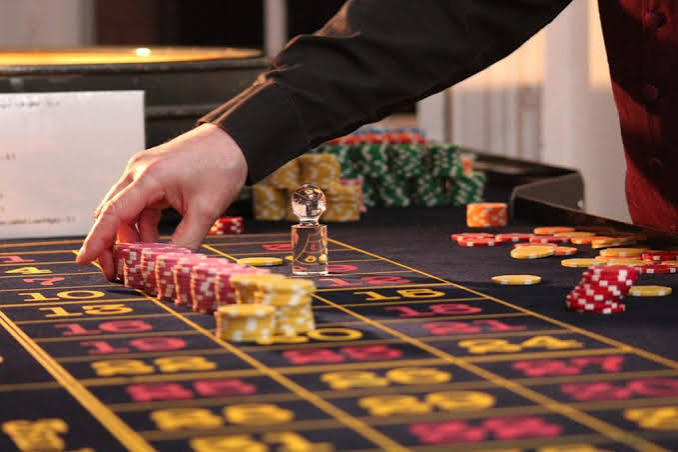
For a long time, online gambling leaned almost entirely on Random Number Generator (RNG) software to run virtual table games. Those systems were fast and reliably random, but let’s be honest — they never quite captured the buzz of sitting at a real table with real cards and a real wheel spinning in front of you. Things changed once developers found a way to bridge that gap, streaming high-definition, interactive table action straight from a physical set to whatever screen you happen to be holding.
What looks like a simple video feed on your end is actually the output of a surprisingly complex setup — physical equipment, purpose-built software, and a lot of bandwidth all working together. Live dealer casinos exist because someone figured out how to wire real casino equipment directly into a digital layer, so a player on the 365Cuci platform on the other side of the world can place a bet and see the result land instantly, with no awkward lag.
Inside the Studios
These games aren’t filmed on an ordinary casino floor.They are produced in studios designed for broadcasting around the clock, and which eliminate any possibility of interference with either the video or data feed.
- Soundproofing: Thick walls keep each table’s audio contained so a dealer’s voice doesn’t bleed into the table next door.
- Lighting: LED lighting systems are installed at an angle that reduces any reflections from cards, felt, and the roulette wheel.
- Rigged equipment (in the good sense): The roulette wheels come equipped with their own laser trackers and the playing cards have been imprinted with embedded chips or barcodes.
How OCR Ties It All Together
The real bridge between what happens at the table and what shows up on your screen is optical character recognition, or OCR. High-frame-rate cameras are trained on the table at all times, watching every card and every spin, and converting what they see into digital data almost instantly.
So when a dealer pulls a card from the shoe, or the ball settles into a roulette pocket, the cameras read that result — suit, number, wheel position and feed it straight into the game software. That’s how your balance, your winnings, and the hand totals on your screen line up exactly with what’s happening on the actual table, without the dealer needing to type anything in by hand.
The Game Control Unit
Sitting quietly beside every table is a piece of hardware called the Game Control Unit, or GCU, about the size of a shoebox, and honestly the real workhorse of the whole operation.
Nothing streams without it. The GCU pulls in the raw camera feeds, gathers whatever the table sensors are picking up, and bundles it all into one data stream that gets sent off to the operator’s servers. That’s what keeps the video you’re watching and the numbers on your screen perfectly in sync.
Streaming Without the Lag
Getting crisp, high-definition video out with essentially no delay is its own challenge. Regular streaming protocols — the kind used for everyday video often lag by several seconds, which would be a dealbreaker for anything involving live bets.
However, there is a way to get around this problem, and that is the combination of WebRTC and adaptive bitrate streaming that keeps the latency to less than one second. There are multiple HD cameras to capture footage of the dealer, the entire table, as well as the critical areas like the wheel and the card reveal.
What You Actually See on Screen
On your end, all of this shows up as a digital layer sitting on top of the live video — betting grids, chip selectors, stats, the works, all designed to feel like a normal digital table game.
- Your chips land in the right spot: the software maps whatever you click on-screen to the matching physical location at the table.
- Dealers have their own screen: showing who’s playing, current bets, and any chat messages coming in.
- Chat runs both ways: messages you type get filtered and pushed to the dealer’s monitor in real time, so they can actually respond to you.
Keeping It Honest
None of this works without constant checking behind the scenes. Every single action at the table — every card, every payout — gets logged with a timestamp, creating a record that can’t be altered after the fact.
The system is also always cross-checking itself: OCR readings get compared against the physical sensor data in real time, and if something doesn’t line up — a misdrawn card, a strange sensor reading — the game pauses automatically, and a supervisor is alerted. Control rooms keep an eye on every studio at once, making sure nothing slips through.
Where It All Lands
Put it all together and live dealer casinos a 365Cuci really are a case study in getting hardware and software to work seamlessly with each other — real tables, OCR reading every move, GCUs syncing the data, and streaming tech shaving latency down to nothing. As the tech keeps improving, it’s a good reminder of how far you can push the line between a physical experience and a digital one.