
Crypto trading has undergone a radical transformation, moving beyond the simple buying and selling of cryptocurrencies to allowing traders to trade a wide range of financial instruments. One of the most popular instruments to emerge is the crypto perpetual contract, which involves trading derivatives and allows traders to speculate on the price movement of a cryptocurrency without owning any digital coins. This article explains how you can approach this market more responsibly if you are aware of its characteristics.
Here are things every trader should know about crypto perpetual contracts:
No Expiration Date
The lack of any expiration date in a crypto perpetual contract is one of the unique features of such a contract. In traditional futures contracts, traders are supposed to either take profits or move their positions on the specific settlement date agreed upon. But as long as a trader maintains sufficient margin and meets the requirements of the platform, perpetual contracts may last forever. It enables a trader to keep the long or short position open as long as they wish according to their trading plan. However, having the position open for a long period may cause the fees to accumulate.
Funding Rate Maintains Price Alignment
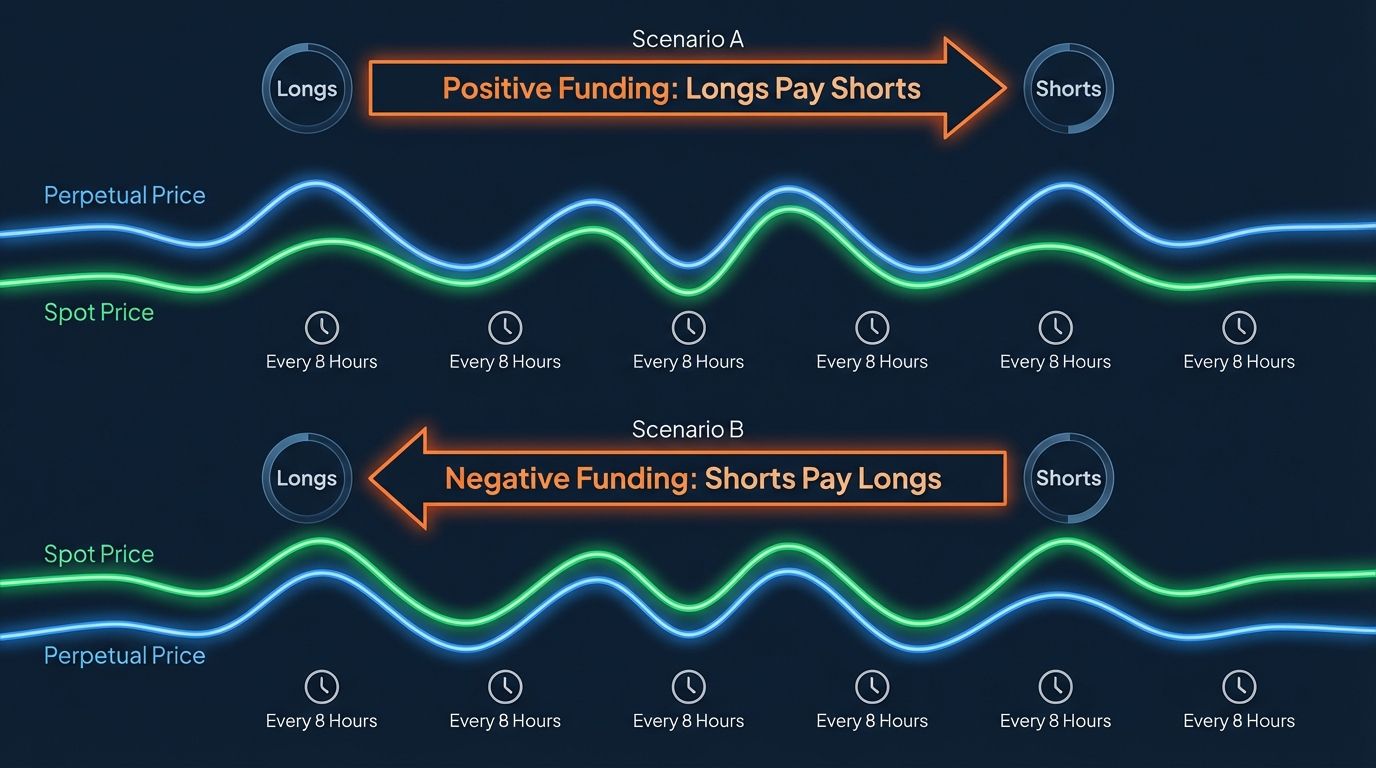
A crypto perpetual contract requires a mechanism to maintain pricing relatively close to the spot price of the underlying cryptocurrency because perpetual contracts have no expiration date. The funding rate becomes crucial at this point. Traders with long and short positions may swap funding payments regularly. Long-position holders typically compensate short-position holders when the funding rate is positive. Short-position holders usually pay long-position holders when it is negative. Therefore, you should be aware of how funding rates may impact your trading expenses before initiating a position.
Margin and Liquidation Risks
The crypto perpetual contract swap involves the use of margins, meaning you will be required to deposit only a portion of the position value as security. Although this makes the use of funds more efficient, there is a greater risk involved. If the market turns against you by a certain magnitude and your margin becomes insufficient, the trade will automatically be liquidated. This means that the sudden shift in the prices of cryptocurrencies can lead to huge losses within a short period. When dealing with such contracts, good risk management is very important. You can check out Flpp.io to get more information, and you can be confident in every decision.
Great Liquidity and 24/7 Trading
Cryptocurrency exchanges do not have set trading times in the way that traditional stock exchanges do; rather, they are available 24 hours a day. This is because crypto perpetual contracts can be traded at any time due to their availability all day long. The liquidity that is supplied by numerous perpetual contracts based on popular cryptocurrencies such as Bitcoin and Ethereum cannot be ignored. While liquidity may vary greatly during volatile periods of the market, increased liquidity may simplify your trades.
Leverage Increases Exposure to the Market
The use of leverage is another significant factor that is related to crypto perpetual contracts. It helps you have a higher exposure using a smaller amount of money. For example, the use of leverage allows your exposure to be considerably larger using only a small margin. It is worth mentioning that leverage increases both gains and risks associated with it. You can be significantly affected by even a little drop in prices due to the margin being used.
Conclusion
The perpetual contract is a flexible tool for speculation about the prices of cryptocurrencies without holding them physically. The absence of an expiration date, funding rate system, round-the-clock accessibility, liquidity, and leverage of this tool make it very versatile in trading. But at the same time, they create risks that need to be managed wisely, especially during fast market changes. Learning about margin, funding costs, liquidations, and leverage before using the tool will allow you to use it better.