
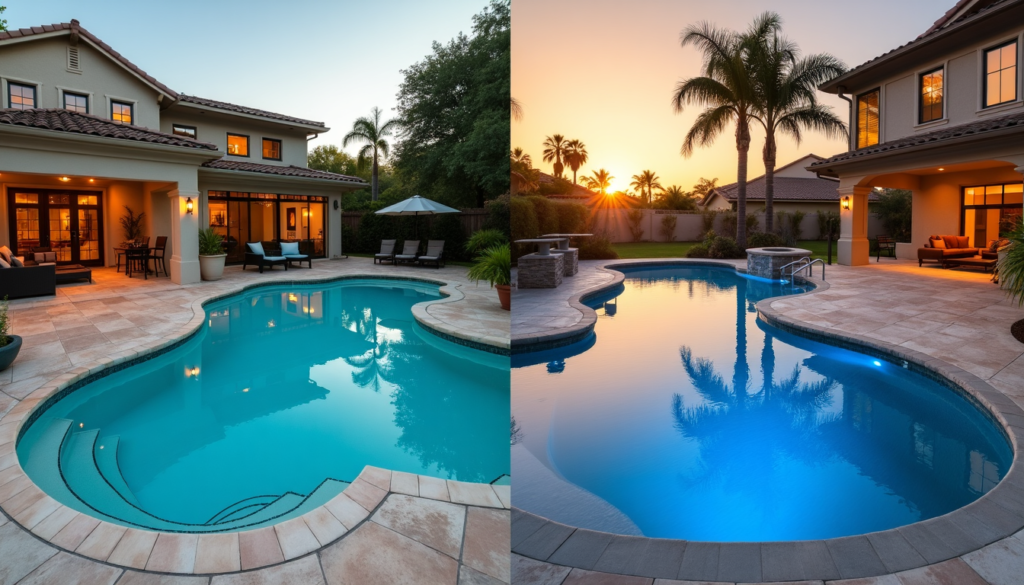
Most pool buyers walk into the process expecting a straightforward decision. Two materials, a few price points, pick one. What they don’t expect is that the choice between a concrete and fiberglass pool will shape their backyard experience for the next 20 to 30 years, and that most of the details that matter most rarely come up in a first sales conversation.
This comparison comes from the concrete side of the industry, so there is no pretending otherwise. But that also means the trade-offs here are real, not softened. Fiberglass does certain things genuinely well. Concrete does others better. The right answer depends entirely on what you’re building, where you’re building it, and how you plan to use it.
Here is what the full picture actually looks like.
The Core Difference Nobody Explains Clearly
Fiberglass pools are manufactured off-site as a single pre-formed shell. They arrive on a flatbed truck and get craned into an excavated hole. The shape, size, and finish are fixed before the pool ever touches your property.
Concrete pools, often called gunite pools or shotcrete pools depending on the application method, are built entirely on-site. Steel rebar is formed into a custom shape, and a mixture of concrete is pneumatically applied over it. The pool takes shape in your backyard, around your specific dimensions, site conditions, and design preferences.
That distinction is not just technical. It drives almost every downstream difference between the two options.
Where Fiberglass Has a Genuine Advantage
It would be dishonest to dismiss what fiberglass does well.
Installation speed. A fiberglass pool can be in the ground and filled in two to four weeks under good conditions. Concrete typically takes three to six months from excavation to water. If you need a pool finished before summer and you’re reading this in April, that timeline matters.
Surface texture and algae resistance. The gelcoat surface used in quality fiberglass shells is non-porous. Algae has less to grip onto, which means lower chemical consumption and less scrubbing. Independent testing and pool industry research from organisations like the Pool and Hot Tub Alliance have noted that fiberglass pools can use significantly less chlorine than plaster-finished concrete pools under comparable conditions.
Lower short-term maintenance cost. Because the surface resists staining and algae more effectively, and because the chemistry tends to stabilise more easily, fiberglass owners often spend less in the first decade on chemicals and surface upkeep.
Smooth underfoot feel. The gelcoat surface is gentle on bare feet. Plaster and pebble finishes on concrete pools are textured by comparison, which some swimmers find uncomfortable.
Where Concrete Wins, Especially for Custom Projects
The limitations of fiberglass are mostly structural and dimensional, and they become obvious the moment a homeowner starts asking questions about design.
Shape and size flexibility. Fiberglass pools come in catalogue shapes. You can choose from a range of pre-formed designs, and some manufacturers offer a wide selection, but you cannot deviate from those shells. If your backyard is an unusual shape, if you want a freeform design, a beach entry, a vanishing edge, or a pool that wraps around a feature, fiberglass cannot deliver it.
Concrete can be built into almost any configuration. That is not marketing language, it is structural reality. This is why most resort pools, competition pools, and high-end residential pools are concrete.
Depth customisation. Want a 6-foot deep end for diving? A shallow tanning ledge on one side and a deep plunge zone on the other? Fiberglass shells have fixed depth profiles. Concrete does not.
Long-term finish options. Plaster, quartz aggregate, pebble, glass tile and various hybrid finishes give concrete pool owners the ability to resurface and change the look of their pool over time. A fiberglass pool that develops gelcoat oxidation or surface crazing has fewer repair options, and the process of refinishing a fiberglass shell is more involved and often more expensive than it sounds.
Integration with the surrounding space. When a project includes a patio, outdoor kitchen, retaining walls, or fire features, a concrete pool integrates into the full outdoor living design more cohesively. The deck, the coping, the water features and lighting can all be built as part of a single vision. H2O-Matic Pool and Patio specializes in a luxury pool design approach the pool and the surrounding environment as one connected project rather than separate line items.
The Long-Term Maintenance Reality (Be Honest With Yourself Here)
The maintenance conversation is where the most misleading information gets shared in both directions.
Concrete pools require replastering. Plaster surfaces have a lifespan. Depending on the finish type, water chemistry management, and usage, most concrete pools need to be resurfaced somewhere between 10 and 20 years. Premium pebble and quartz finishes push that window further out, but it is a real cost to plan for. A basic replaster can run several thousand dollars. A full pebble or glass tile resurface can exceed $15,000 depending on pool size and finish material.
Fiberglass pools are not maintenance-free. The gelcoat can fade, oxidise, or develop surface blistering, particularly in pools that experience extended periods without water or where the water chemistry is poorly managed. When that happens, repairs are more complex. Unlike concrete, you cannot simply grind down and recoat. Fiberglass repairs often require skilled fibreglass technicians and the results are not always cosmetically invisible.
Chemistry management differs. Concrete pools are more pH-sensitive because plaster is alkaline by nature. This means more frequent chemical testing and adjustment to prevent surface etching or scale buildup. Fiberglass is more forgiving on that front. Neither pool manages itself, but the effort levels are different.
Cost: What the Initial Quote Doesn’t Tell You
A fiberglass pool is almost always cheaper to install upfront. Depending on size and the manufacturer, installed costs in most markets sit in the range of $45,000 to $85,000. A custom concrete pool typically starts higher, often in the $70,000 to $120,000 range for a residential project, and can go significantly further depending on features.
But total cost of ownership over 20 years looks different. Factor in:
- Chemical costs (lower for fiberglass)
- Resurfacing (concrete only, but predictable if planned for)
- Potential gelcoat repairs or refinishing (fiberglass, less predictable)
- Heating efficiency (fiberglass shells tend to retain heat slightly better than bare plaster, reducing energy costs modestly)
- Customisation limitations (if you buy a fiberglass pool that doesn’t quite fit your space or needs, you pay in ways that don’t show up on a quote)
There is no universal answer on which costs more over a lifetime. It genuinely depends on your specific pool, usage patterns, and maintenance habits. Beyond the pool itself, outdoor living customization services can help create a complete backyard environment with features that improve comfort, style, and functionality. Options from providers like Struxure allow homeowners to design adaptable outdoor spaces that complement their pool area and enhance year-round enjoyment.
The Gunite vs. Fiberglass Comparison Buyers Often Miss
When builders refer to a gunite pool vs fiberglass comparison, they are often really comparing construction method against manufacturing method. Gunite specifically refers to concrete that is sprayed dry and mixed with water at the nozzle, whereas shotcrete is pre-mixed and sprayed wet. Both result in reinforced concrete shells.
The distinction matters because gunite and shotcrete have slightly different application properties, and experienced applicators will know which is appropriate for a given project. The end product, a reinforced concrete shell, is structurally similar. What differs is the craftsmanship of the crew applying it, which is why credentials and track record matter far more than the label.
Who Each Option Is Actually Right For
Fiberglass is a strong choice if:
- Your budget is more constrained and you want a pool in the ground quickly
- Your backyard suits a standard shape and size
- You want lower day-to-day maintenance and are comfortable with the long-term refinishing trade-off
- You are not planning extensive hardscaping or outdoor features around the pool
Concrete is the better fit if:
- You want a custom shape, vanishing edge, beach entry, or any design that goes beyond a catalogue selection
- You are investing in a full outdoor living space around the pool, not just the pool itself
- You prefer long-term flexibility on finishes and aesthetics
- You are planning to stay in the home for 15 or more years and want a pool that can be updated and refreshed rather than replaced
Key Takeaways
- Fiberglass pools install faster and typically cost less upfront, but they offer fixed shapes and limited long-term finish options.
- Concrete (gunite/shotcrete) pools are fully custom, built on-site, and can be integrated into any outdoor living design, but require longer build timelines and eventual resurfacing.
- Fiberglass surfaces resist algae and use less chemicals. Concrete requires more active chemistry management, particularly for plaster finishes.
- Total cost of ownership over 20 years is closer between the two options than the initial price gap suggests.
- The right choice depends on your design goals, timeline, budget, and how long you plan to stay in the home.
Frequently Asked Questions
How long does a fiberglass pool last compared to a concrete pool? Both pool types, when properly maintained, can last 25 to 50 years structurally. The difference is in the surface. Fiberglass gelcoat can last 15 to 25 years before needing refinishing, while concrete plaster may need resurfacing every 10 to 20 years depending on finish type and water chemistry. Premium concrete finishes like pebble aggregate tend to last toward the longer end of that range.
Can you add a spa or water features to a fiberglass pool? Some fiberglass manufacturers produce combined pool-and-spa shell configurations, but the spa is pre-formed and fixed in size. Adding a completely custom spa, waterfall, or fire-and-water feature to a fiberglass installation involves building those elements separately in concrete, which partially removes the simplicity advantage. Custom water features are far easier to integrate into a concrete build from the outset.
Does a concrete pool affect home value more than fiberglass? Both add value, but a fully custom concrete pool with quality hardscaping, outdoor kitchen, and lighting tends to have a stronger impact on perceived value and marketability, particularly in higher-end neighbourhoods. Fiberglass pools add genuine value too, especially when the rest of the backyard is well-designed.
Is fiberglass slippery around the pool? The gelcoat surface inside a fiberglass pool is smooth and can be slippery when wet, particularly on steps. Quality manufacturers address this with textured step inserts. Around the pool, slip resistance is determined by the deck material, not the pool shell, so the choice of pavers, travertine, or stamped concrete matters more for safety on the surrounding surface.
Can a fiberglass pool be installed on a sloped lot? Yes, but it is more complex. A sloped site often requires significant excavation, retaining walls, and backfill management. In those situations, the installation advantages of fiberglass narrow considerably, and a custom concrete build designed to work with the terrain can actually be a more practical solution.
Closing Thoughts
The concrete vs fiberglass pool debate rarely has a clean winner. It has the right answer for the right project. Fiberglass has made genuine improvements in quality and longevity over the past decade, and dismissing it entirely is not honest. But for homeowners who want a pool that fits their exact backyard, integrates into a larger outdoor design, and gives them long-term control over how it looks and performs, concrete still offers something a pre-made shell cannot match.
The best thing any buyer can do is sit down with a builder, ask specific questions about long-term maintenance costs and resurfacing timelines, and make sure the answer they get is honest, not just convenient.