
Introduction
As global trade continues to shift toward the digital economy, Southeast Asia—particularly Indonesia—has become one of the most promising markets for Chinese enterprises seeking international expansion. With over 270 million people and a digital penetration rate exceeding 70%, Indonesia is now the largest digital economy in Southeast Asia. Its rapid adoption of mobile payments and e-wallet platforms has created a thriving environment for cross-border business and digital services.
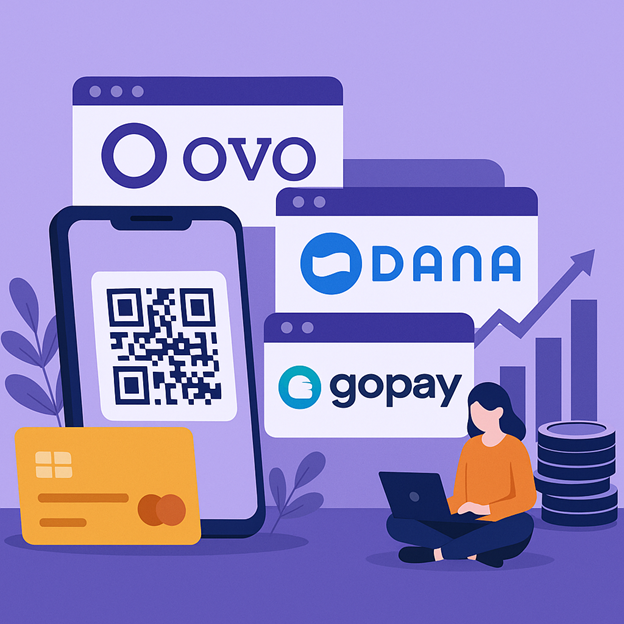
For Chinese companies entering the Indonesian market, understanding local payment methods, regulations, user preferences, and technical requirements is crucial to success. Unlike China’s centralized digital ecosystem dominated by Alipay and WeChat Pay, Indonesia’s payment landscape is fragmented, consisting of multiple players like OVO, DANA, GoPay, ShopeePay, and LinkAja, each holding significant user bases.
This comprehensive guide aims to provide a clear roadmap for Chinese companies seeking to integrate into 印尼支付 ecosystem—covering market trends, payment infrastructures, compliance requirements, integration processes, and strategic recommendations for achieving frictionless market entry.
The Rise of Indonesian Payment Ecosystem
Market Overview
Indonesian payment market is experiencing explosive growth, fueled by three main drivers:
- Smartphone Penetration: Over 90% of internet users access the web via mobile devices.
- Government Support: National initiatives like the Gerakan Nasional Non-Tunai (GNNT) and QRIS (Quick Response Indonesian Standard) promote a cashless economy.
- Fintech Innovation: The rise of domestic fintech startups has introduced convenient, localized payment solutions.
According to 2024 data, Indonesian payment transaction volume exceeded USD 120 billion, representing a 35% annual growth rate. The number of digital wallet users surpassed 150 million, covering more than half of the nation’s population.
For context, Indonesian payment market now ranks second only to India in Asia for digital wallet transaction growth. This transformation is reshaping consumer behavior—moving from cash-based transactions to QR code payments, mobile top-ups, and e-wallet balances.
Key Players and Market Share
The digital payment landscape is primarily dominated by three platforms:
| Platform | Market Share | Users (Approx.) | Key Feature |
| OVO | 30% | 110M+ | Integrated with Grab and Tokopedia |
| DANA | 28% | 100M+ | Government-backed wallet with fast settlement |
| GoPay | 25% | 80M+ | Gojek’s core ecosystem wallet |
| Others (ShopeePay, LinkAja) | 17% | 50M+ | Regional niche use |
Together, these platforms cover over 80% of total transactions, making them essential for merchants targeting Indonesian consumers.
Consumer Payment Behavior
Indonesians prefer instant and low-friction transactions. E-wallet users expect real-time settlement, zero extra fees, and cashback or loyalty rewards. Convenience is the priority—many prefer paying through mobile wallets even for small offline transactions at convenience stores or restaurants.
This behavior presents an opportunity for Chinese enterprises to localize their checkout experience. Integrating Indonesian e-wallets significantly improves conversion rates and customer trust compared to relying solely on international card processors.
Regulatory Framework and Compliance
Key Regulatory Bodies
All financial and payment-related activities in Indonesia fall under the supervision of two key entities:
- Bank Indonesia (BI) – Oversees national payment systems, licensing, and electronic money issuance.
- Otoritas Jasa Keuangan (OJK) – Regulates financial institutions, fintech companies, and data protection within financial services.
Chinese enterprises offering or integrating payment solutions in Indonesia must align with BI and OJK guidelines, ensuring all cross-border transactions comply with anti-money laundering (AML), counter-terrorist financing (CTF), and Know Your Customer (KYC) protocols.
Licensing and Partnership Requirements
Foreign companies cannot directly operate payment services in Indonesia without local partnerships. Instead, Chinese businesses are advised to:
- Partner with licensed Indonesian PSPs (Payment Service Providers) who already hold BI permits.
- Integrate through approved payment gateways that handle local wallet connections and settlement.
- Comply with data residency regulations, ensuring sensitive transaction data remains within Indonesian servers.
This collaborative approach allows Chinese firms to legally access local payment rails while maintaining global operational flexibility.
Data Protection and Security Standards
Indonesia’s data protection regulations are guided by the Personal Data Protection Law (PDP Law). All financial data must be encrypted and processed under user consent.
Chinese companies should ensure:
- End-to-end SSL 256-bit encryption for all API transactions.
- Compliance with PCI DSS Level 1 (Payment Card Industry Data Security Standard).
- Implementation of anti-fraud monitoring systems and real-time anomaly detection.
Compliance not only avoids regulatory penalties but also builds customer trust in a competitive fintech market.
Payment Method Integration Strategies
Choosing the Right Payment Gateway
A reliable payment gateway acts as the bridge between your business and local payment channels. The best gateways for Chinese companies in Indonesia offer:
- Unified API for OVO, DANA, GoPay, ShopeePay, and bank transfers.
- Real-time T+0 settlements.
- Multi-language SDKs (PHP, Java, Python, Node.js).
- 24/7 technical support in both Chinese and English.
Selecting a gateway with cross-border settlement capabilities simplifies fund repatriation and helps avoid complex local banking procedures.
Integration Process Overview
Step 1: Registration
Submit your business license, tax documents, and estimated monthly transaction volume. Test accounts and API keys are typically issued within 24 hours.
Step 2: API Integration
Download SDKs, configure environment keys, and implement RESTful API endpoints to process payments, refunds, and status callbacks.
Step 3: Sandbox Testing
Conduct payment and refund simulations. Verify system stability and ensure compatibility with multiple payment channels.
Step 4: Go Live
Switch to the production environment with live monitoring. Begin receiving real-time payments from Indonesian customers.
A well-documented payment provider can help you complete the entire integration within 24–48 hours, minimizing downtime and accelerating market entry.
Multi-Channel Payment Support
Beyond e-wallets, integrating diverse payment methods ensures maximum conversion:
- Bank Transfers: Mandiri, BCA, BRI, and BNI dominate domestic transfers.
- Convenience Stores: Payments through Indomaret and Alfamart are popular among offline users.
- Cards: Visa, MasterCard, and JCB remain common for international customers.
- Alternative Wallets: LinkAja and ShopeePay provide access to regional markets.
Each method targets a different consumer demographic, allowing Chinese companies to cover both online and offline audiences effectively.
Settlement Models and Fee Structures
Settlement Cycles
Indonesian payment gateways generally offer two settlement options:
- T+0 (Real-Time Settlement): Funds are credited immediately upon transaction approval.
- T+1 (Next-Day Settlement): Funds are transferred to the merchant’s account within one business day.
For large enterprises or platforms with continuous transactions, T+0 settlements significantly improve cash flow efficiency and reduce operational friction.
Fee Model Examples
Fees are typically calculated based on transaction volume and business category.
| Plan | Settlement | Features | Suitable For |
| Basic Plan | T+1 | API Access, Wallet Support | < USD 500K/month |
| Professional Plan | T+0 | Priority Tech Support, Real-Time Settlement | USD 500K–2M/month |
| Enterprise Plan | T+0 | Custom Rates, Dedicated Manager, Data Analytics | > USD 2M/month |
No hidden charges—setup, account maintenance, and basic technical support are usually free, while refunds, advanced analytics, or priority SLA support may incur small additional costs.
Transparent Reporting
Businesses receive:
- Daily transaction summaries
- Weekly reconciliation reports
- Real-time dashboards for tracking success rates, chargebacks, and settlement flows
This transparency ensures financial teams maintain full control over revenue streams and operational performance.
Technical and Security Infrastructure
System Architecture
A robust Indonesian payment solution must prioritize scalability and uptime. Look for providers guaranteeing:
- 99.9% system availability
- Distributed architecture for high-load tolerance
- Multi-region backups for disaster recovery
This architecture ensures seamless processing during peak seasons, such as Ramadan or major e-commerce sales events.
Security Protocols
Security remains paramount in Indonesia’s regulated fintech environment. Core standards include:
- SSL 256-bit encryption
- HMAC-SHA256 signature verification
- IP whitelisting for authorized merchant servers
- Two-factor authentication for account management
Furthermore, top-tier providers implement real-time fraud detection, identifying anomalies based on user device fingerprints and transaction patterns.
Refunds and Reconciliation
Indonesian wallets now support automated refund APIs allowing full or partial returns processed within 24 hours. Refund statuses are synchronized via webhooks, and data logs are preserved for auditing and customer dispute resolution.
Reconciliation tools enable merchants to match payment IDs with order data, ensuring financial accuracy and minimizing chargeback disputes.
Localization and Consumer Experience
The Importance of Localization
Localization extends beyond language. It means adapting to Indonesian consumer expectations, such as:
- Displaying prices in IDR (Rupiah)
- Offering instant QRIS payments
- Supporting popular wallets instead of foreign payment methods
- Providing Bahasa Indonesia customer support
Localized payments increase user trust and reduce cart abandonment rates—a crucial metric for e-commerce success.
Language and UX Adaptation
Chinese companies often overlook the subtle UX preferences of Indonesian users. A frictionless payment page must:
- Load quickly on mobile connections
- Display clear QR codes for OVO/DANA/GoPay
- Offer auto-redirect after payment confirmation
- Show familiar local logos to build confidence
These small details can increase conversion by up to 20–30% compared to generic international payment pages.
Building Brand Trust
Trust is central in Indonesia’s digital landscape. Consumers favor platforms associated with security, transparency, and speed. Offering trusted payment options—combined with visible compliance logos (PCI DSS, BI licensed)—instills confidence that the platform is legitimate and safe.
Cross-Border Settlement and Currency Exchange
Multi-Currency Support
For Chinese enterprises, cross-border settlement is critical. Top Indonesian payment providers support:
- Rupiah (IDR) collection
- USD/CNY settlements to Chinese or Hong Kong accounts
- Automatic currency conversion with competitive FX rates
This seamless process enables businesses to manage revenue globally without requiring a local Indonesian bank account.
Taxation and Financial Reporting
Payments in Indonesia are subject to specific withholding and value-added tax (VAT) regulations. Reliable payment partners provide detailed financial reports, helping companies:
- Maintain accurate tax compliance
- Simplify accounting reconciliation
- Prepare audit-ready documentation
Having transparent tax-ready statements significantly reduces operational risk during financial audits or local inspections.
Strategic Opportunities for Chinese Companies
Why Indonesia Is a Key Market
Indonesia is not just large—it’s young, tech-savvy, and mobile-first. Over 60% of the population is under 35, making them receptive to new digital products.
For Chinese enterprises in e-commerce, SaaS, gaming, or logistics, Indonesia represents the gateway to the entire Southeast Asian market. The same APIs and business frameworks used in Indonesia can later extend to Malaysia, Thailand, and the Philippines.
Industries with High Payment Demand
The strongest payment growth sectors include:
- E-commerce: Cross-border platforms and marketplace sellers.
- Gaming & Entertainment: Virtual goods, in-app purchases, top-up systems.
- Education: Online course payments and subscriptions.
- Travel & Tourism: Hotel bookings, ticketing, and ride-hailing.
- Logistics & Services: On-demand delivery and SaaS subscriptions.
These industries benefit the most from instant local payment acceptance, avoiding failed card payments or high chargeback rates common with foreign gateways.
Partnership and Ecosystem Development
To succeed, Chinese firms should:
- Collaborate with Indonesian fintech partners holding local licenses.
- Participate in QRIS-based ecosystems (Indonesia’s unified QR payment standard).
- Build joint marketing campaigns with local wallet providers to boost brand recognition.
Partnerships unlock trust and access to user bases that would otherwise take years to develop independently.
Future Trends in Indonesian Digital Payments
Government Push for Cashless Society
Bank Indonesia continues to accelerate the QRIS national standard, aiming for 100% merchant adoption by 2027. This integration allows every wallet app to scan the same QR code—simplifying merchant operations and user payments.
Open Banking and API Economy
By 2025, Open API initiatives will enable seamless connectivity between banks, fintech apps, and e-commerce systems. For Chinese developers, this presents opportunities to build data-driven fintech products and AI-powered payment intelligence tools.
Rise of Cross-Border E-Wallets
Partnerships between Alipay+, WeChat Pay, and Indonesian e-wallets are expanding, allowing users from both countries to transact effortlessly. This convergence of ecosystems will drive bilateral trade efficiency and reduce remittance costs.
Implementation Checklist for Chinese Enterprises
To ensure a smooth payment integration, here’s a concise checklist:
- Choose a licensed local gateway partner.
- Verify Bank Indonesia compliance and PDP Law data standards.
- Integrate OVO, DANA, and GoPay through unified APIs.
- Conduct sandbox testing for payment, refund, and callback events.
- Implement SSL encryption and fraud detection systems.
- Offer Bahasa Indonesia and English interfaces.
- Settle in T+0 or T+1 based on cash flow needs.
- Monitor performance through real-time dashboards.
- Provide customer support in local time zones.
- Regularly update to align with regulatory and API changes.
Following this roadmap ensures compliance, efficiency, and customer satisfaction—three pillars of long-term success in the Indonesian market.
Conclusion
The 印尼支付 landscape represents an extraordinary opportunity for Chinese companies ready to localize and innovate. With over 150 million active wallet users, government-backed cashless initiatives, and one of the fastest-growing fintech sectors globally, Indonesia offers both scale and sustainability.
By partnering with licensed local payment providers, adopting secure APIs, and tailoring payment experiences for Indonesian consumers, Chinese enterprises can establish a strong foothold in this expanding market.
From real-time settlements and multi-channel coverage to regulatory compliance and cross-border optimization, the future of digital payments in Indonesia is defined by openness, innovation, and partnership.
For businesses prepared to move quickly, the window of opportunity is now. Integrating Indonesian payment gateways is no longer just an operational necessity—it is a strategic investment in sustainable growth across Southeast Asia’s most dynamic digital frontier.