
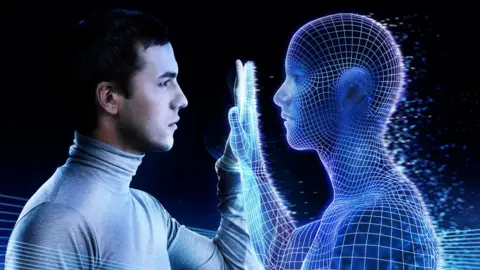
The line between a real person and a digital replica is blurring faster than anyone expected. Thanks to the rise of the AI twin generator, creators, brands, and even everyday people can now clone their voice, face, and personality into a fully autonomous AI version of themselves — one that can post content, answer questions, and appear on video 24 hours a day without ever being physically present.
But this technological marvel raises a question that strikes at the core of human connection: will audiences actually trust a digital human the way they trust a real one? And does it even matter if they can’t tell the difference?
In this deep-dive blog post, we’ll explore what an AI twin generator is, how it works, why creators and businesses are adopting it at scale, and what the psychological and ethical implications of digital humans really mean for the future of trust online.
What Is an AI Twin Generator?
An AI twin generator is a software platform or tool that creates a hyper-realistic digital replica of a real human being. Using a combination of deep learning, computer vision, voice cloning, and large language models (LLMs), these platforms can generate an interactive, responsive virtual version of any person — complete with their physical appearance, vocal mannerisms, facial expressions, and even their conversational style.
Unlike simple deepfakes or pre-recorded avatars, a modern AI twin is generative — meaning It can produce new content, respond to prompts in real-time, and engage with audiences dynamically, much like a social media post generator. It isn’t just a recording. It’s an AI-powered persona that learns and reflects the real creator’s personality.
How Does an AI Twin Generator Work?
The process varies by platform, but the core pipeline of any leading AI twin generator typically involves these key stages:
- Data collection: The user provides video footage, audio recordings, written text samples, and optionally a 3D facial scan. The more data, the more accurate the twin.
- Model training: A neural network is trained on this data to learn the person’s visual appearance (lip sync, skin texture, micro-expressions), voice characteristics (tone, cadence, accent), and language patterns (vocabulary, opinions, response style).
- Avatar synthesis: The platform assembles a rendering engine — often using NeRF (Neural Radiance Fields) or diffusion models — to create a photorealistic, animatable 3D or 2D avatar.
- LLM personality layer: The avatar is connected to a fine-tuned language model trained on the creator’s existing content — podcasts, blogs, social media — so its answers feel authentic.
- Deployment: The AI twin can then be embedded in websites, live-streamed on social media, used in automated customer support, or packaged into apps for fans to interact with.
Key Insight
Platforms like Hour One, Synthesia, HeyGen, D-ID, and Soul Machines are among the leading AI twin generator tools available today. Each offers different levels of fidelity, real-time capability, and customization — from simple talking-head video creation to fully interactive conversational AI twins.
The Rise of the Digital Creator Economy
The creator economy has exploded into a multi-billion-dollar industry, with over 200 million people worldwide identifying as content creators. But creation at scale is exhausting. A top YouTuber, for example, might need to post 3–5 times a week across YouTube, Instagram, TikTok, and X to maintain algorithmic relevance.
This is precisely where the AI twin generator becomes a game-changer. Instead of burning out producing content endlessly, creators can deploy their AI twin to:
- Respond to DMs and comments at scale without personal intervention
- Produce localized video content in multiple languages simultaneously
- Run 24/7 interactive live streams while they sleep
- Create personalized fan experiences and paid digital interactions
- Monetize their persona through licensing and AI-powered merchandise
It’s not just individual creators. Brands are also using AI twin technology to create digital brand ambassadors — virtual influencers that look and sound human but are entirely AI-generated. Lil Miquela, one of the first virtual influencers, amassed over 3 million Instagram followers before most people understood what an AI influencer even was. As this trend grows, brands are increasingly working with an AI development company to build custom AI avatars that improve engagement and digital presence.
$6.9B
Projected AI avatar market size by 2030
200M+
Active content creators globally
3×
Faster video production with AI twin tools
The Trust Question: Real Creator vs AI Twin
“Authenticity is the currency of the creator economy — and the AI twin generator is either its most powerful amplifier, or its greatest counterfeit.”
The fundamental tension in the AI twin debate is trust. Human connection — particularly in creator-audience relationships — is built on perceived authenticity. When a viewer watches their favorite creator talk about a product, travel experience, or personal struggle, they believe that experience is real and personal. That belief is what makes the endorsement or story meaningful.
The moment an audience learns they’ve been interacting with an AI twin — without knowing it — that trust can shatter. Research in social psychology consistently shows that perceived deception, even unintentional, leads to sharp drops in brand loyalty and audience retention. The uncanny valley effect compounds this: when a digital human looks almost-but-not-quite real, it provokes discomfort rather than connection.
The Transparency Paradox
Here’s the paradox creators and brands face: disclosure reduces engagement, but non-disclosure risks credibility. Early studies on AI-generated content show that audiences are less likely to engage with content they know is AI-produced — they feel it lacks genuine intent or emotional weight.
Yet the creators who are thriving with AI twin technology are those who have mastered transparent deployment — openly presenting their digital twin as a tool or extension of themselves rather than a secret replacement. Think of it like a CEO using a ghostwriter: the ideas are theirs, the execution is assisted. When framed this way, audiences are more forgiving.
Can an AI Twin Replicate Emotional Authenticity?
This is the most philosophically charged question in the AI twin debate. Emotions — raw, unscripted, in-the-moment — are what make human creators irreplaceable. The creator who cries on camera after losing a loved one. The chef who shares a recipe from their immigrant grandmother with visible nostalgia. These moments cannot be pre-trained.
Current AI twin generator technology can simulate emotional cues — a smile, a pause for effect, a tone of enthusiasm. But it cannot generate genuine emotional experience. It can pattern-match thousands of expressions of grief or joy and produce a statistically plausible one, but that is categorically different from feeling and expressing something real.
Audiences, even subconsciously, are remarkably good at detecting this difference — particularly in long-form content. They might accept an AI twin in a 60-second informational clip. But in a 30-minute podcast or a multi-hour live stream? The emotional flatness eventually becomes perceptible.
| Dimension | Real Creator | AI Twin Generator |
| Authenticity | Genuine emotional presence; unscripted moments | Simulated; based on learned patterns |
| Scalability | Limited by time and energy | Unlimited — 24/7 multi-platform deployment |
| Consistency | Variable; moods, fatigue affect performance | Perfectly consistent tone and persona |
| Audience Trust | High — when disclosed honestly | Moderate — depends on transparency level |
| Creative Originality | Truly original ideas and perspectives | Derivative — recombines existing creator data |
| Cost | High (time, production, team) | Lower at scale after initial training investment |
| Ethical Risk | Low — inherently transparent | High if used without disclosure |
Ethical and Legal Dimensions of AI Twin Technology
The ethical landscape around AI twin generators is complex and rapidly evolving. Several major concerns dominate current debates in tech, law, and media ethics.
Consent and Likeness Rights
Creating an AI twin of oneself is a personal choice. But what about creating AI twins of other people — celebrities, deceased individuals, or public figures — without their explicit consent? This is where the technology enters deeply troubling territory. Several jurisdictions are now drafting laws around digital likeness rights, recognizing that a person’s face, voice, and persona constitute intellectual property that deserves legal protection.
Misinformation and Synthetic Media
The same AI twin generator technology that lets a creator scale their content can also be weaponized to produce disinformation. A convincing AI twin of a political leader, journalist, or scientist could deliver fabricated statements with devastating credibility. This is not a hypothetical — synthetic media incidents are already occurring at scale, and detection technology is struggling to keep pace.
Platform Accountability
Social media platforms are under increasing pressure to mandate disclosure labels for AI-generated content. The EU’s AI Act, the FTC’s guidelines on endorsements, and emerging legislation in various US states are beginning to set standards. The AI twin generator industry will need to build compliance infrastructure — watermarking, metadata tagging, and disclosure APIs — into their core products.
Regulatory Watch
The EU AI Act classifies AI-generated synthetic media of real people as high-risk AI — requiring explicit disclosure and consent mechanisms. Creators using AI twin generator platforms in regulated markets must comply or face significant penalties from 2026 onward.
Will People Learn to Trust Digital Humans?
Trust, at its core, is adaptive. Humans have extended trust to written words, printed photographs, recorded audio, and video — all mediums that were once considered suspect or deceptive before becoming normalized. The trajectory of AI twin technology suggests a similar arc: initial skepticism followed by gradual acceptance as norms, standards, and disclosures become embedded in the culture.
The key variable is how the transition is managed. If the creator community and platform operators move quickly to establish clear, consistent disclosure standards — labeling AI-generated content prominently, just as advertisers label sponsored posts — audiences will adapt. They will develop a new kind of contextual trust: one that acknowledges the AI nature of the content while still valuing the ideas, personality, and expertise the twin represents.
In fact, some researchers argue that for certain use cases — educational content, customer service, language learning, mental health support — audiences may prefer AI twins. A learner practicing a language with an infinitely patient, always-available AI twin of a native speaker may find that more valuable than irregular access to a real one. A patient dealing with anxiety may feel safer opening up to a digital therapist avatar than to a human they fear will judge them.
The Future: Hybrid Creators and AI Twins as Partners
The most likely future isn’t AI twins replacing real creators — it’s creators and their AI twins working in tandem. The real human continues to generate original ideas, authentic emotional moments, and high-stakes content that demands genuine presence. The AI twin handles scale, repetition, and the long tail of content needs — FAQs, localized versions, interactive fan experiences, and 24/7 availability.
Think of it as the next evolution of the creative team. Just as top creators today work with editors, graphic designers, and social media managers, tomorrow’s creators will work with their own AI twin generators as a core part of their production infrastructure.
The creators who will win in this environment are those who understand both the power and the limits of their digital twin — who use it to amplify rather than replace their authentic voice, and who maintain the radical transparency that keeps their audience’s trust intact.
Ultimately, the question is not whether people will trust digital humans. They already do — in customer service bots, virtual assistants, and AI-generated news summaries. The question is whether the creator economy can build the ethical frameworks, disclosure standards, and cultural norms that make that trust warranted. That responsibility falls not on the AI twin itself, but squarely on the humans — real and virtual — who deploy it.
— ✦ —
Bottom Line
An AI twin generator is one of the most transformative — and potentially dangerous — tools to enter the creator economy. Used with transparency and intention, it can help creators scale their impact without sacrificing authenticity. Used deceptively, it risks eroding the very trust that makes human connection valuable. The technology is here. How we choose to wield it will define the next chapter of digital humanity.