
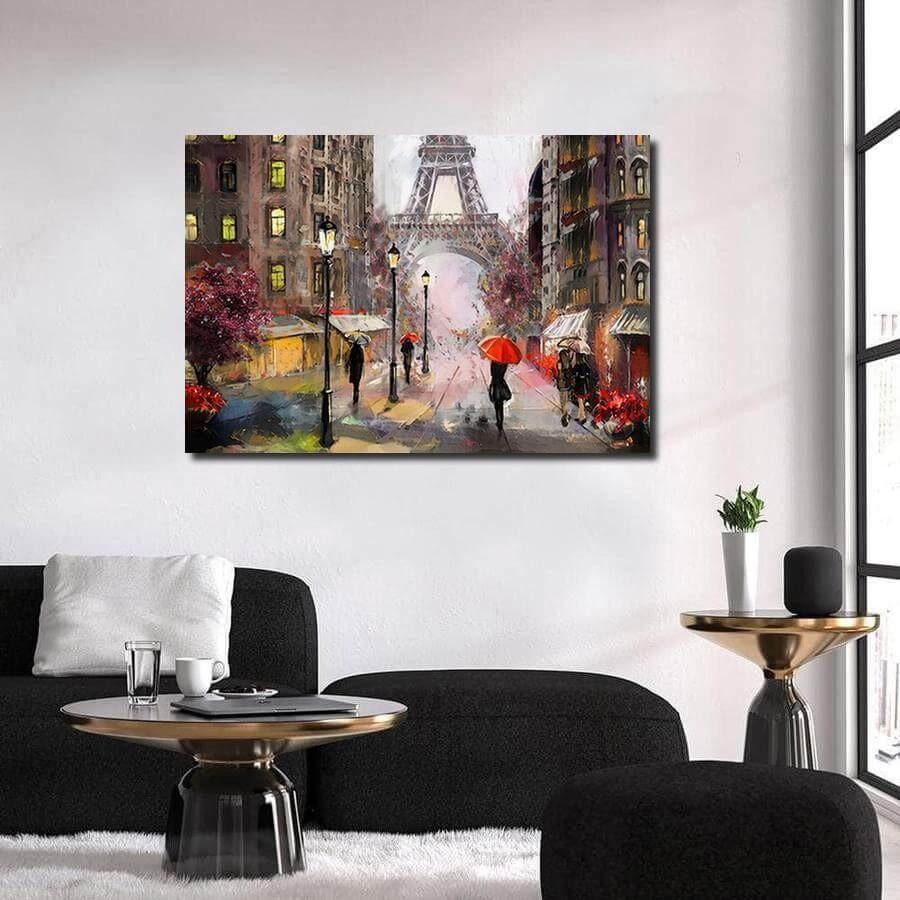
After a long stretch of travelling, the expected move is always the same: take a job, close the gap, reset the counter. Jean-Christophe Thery did something else. He launched an online art store with no art training, no industry network, and no meaningful capital.
A decade on, MusaArtGallery carries more than 9,300 wall art pieces for a mostly North American audience. Here’s a look at a decision that, on paper, made no sense at all.
The calculation nobody runs
Returning to employment after a long break carries a cost that rarely gets quantified: the discount. You come back a level down, with experience dismissed as “not relevant,” and a ceiling it takes years to recover.
Seen that way, entrepreneurship stops being the risky option — it becomes the option with the lowest opportunity cost. When your baseline is already low, relative risk collapses.
Why art was the worst choice, and the right one
Selling art online stacks difficulties. The product is subjective: what one buyer loves, ten others ignore. It’s bulky and fragile. It demands mental projection — the customer has to picture it at home before paying. And the market is extremely fragmented.
But those obstacles have a flip side: they discourage lazy competition. In a hard market, the barrier to entry isn’t financial, it’s operational. It takes time, taste and consistency — three things you can’t buy quickly.
That’s what made it possible to build coherent worlds rather than a dumping ground. A minimalist wall art selection held together by a real aesthetic line has nothing in common with a pile of uploaded files.
What travel had already taught him
Three habits from the road transferred directly.
Reading a market without data. In a local market there’s no spreadsheet and no research report: you watch what sells, to whom, at what price. That’s the same exercise you face with an e-commerce catalogue and no sales history.
Deciding fast on partial information. A bus leaving, a border closing, accommodation falling through — travel trains you to commit on 60% of the facts. E-commerce works identically.
Tolerating discomfort without dramatising it. A month with no sales feels a lot like a night in a loud hostel dorm: unpleasant, not serious, and it ends.
The product as a mirror of the path
The catalogue’s strong lean toward motivational art and message-driven pieces isn’t a commercial accident. It’s a personal continuity.
Someone who left a comfortable setup to start from zero understands instinctively why a buyer wants a sentence on their wall. It isn’t decoration — it’s a daily reminder. That intimate read on the customer shows up directly in the inspirational quote wall art, among the most requested pieces in the store.
What didn’t work
Honesty requires the other half. The first version of the site was far too broad: too many styles, too many categories, no identity. SEO took years to move. Several ranges launched with enthusiasm never found a buyer and were pulled.
The correction was painful — cut, rewrite, standardise, delete. Cleanup work that generates no immediate revenue and without which nothing holds.
The real takeaway
Choosing art over a salary wasn’t an act of courage. It was arithmetic: accept a hard market, but one where you can still build something that belongs to you.
Thery regularly publishes the reasoning behind that call — expensive mistakes included — on his LinkedIn profile.