
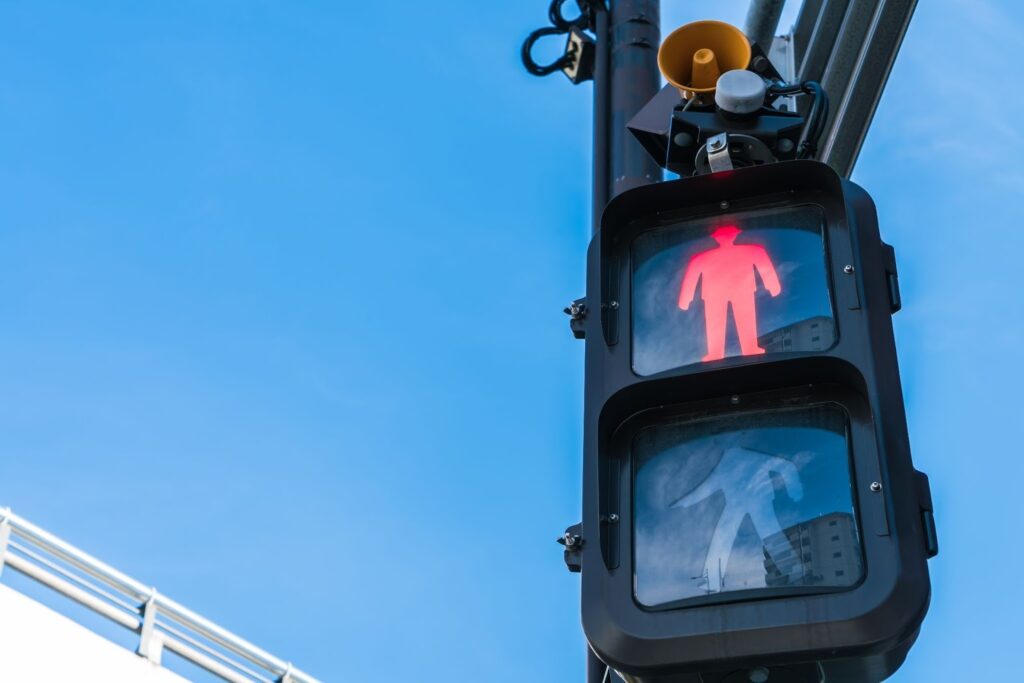
There is a certain type of infrastructure that cities can’t operate without, but they almost never consider. Traffic lights are one of those things boring to look at and handle when everything is normal, but a significant influence on your life if it stops working. The vast majority of drivers roll through dozens of signalized intersections every day without ever thinking about the century of engineering, policy failure, and urban crisis that led to the systems governing their commute.
It’s a history that’s worth knowing. That’s because the development of traffic signal technology is not simply a timeline of technical advancement; it’s a narrative about cities figuring out, sometimes painfully, what they really needed.
The Chaos That Made Control Necessary
The early days of cars were truly hazardous in ways that we have a hard time fully grasping today. On streets formerly dedicated to foot traffic and horse-drawn carriages, pedestrians and horses had to contend with the new reality of fast-moving vehicles on four wheels. There was a sharp growth in intersection fatalities in the 1910s. There was no ready mechanism in cities to manage the conflict.
The initial replies were human. At the most heavily trafficked corners, police officers were deployed to manually control traffic using whistles and hand gestures — an effective, although limited, response which couldn’t be scaled to an entire city, or cover nighttime. The futility of this method was soon realized, and the pursuit of a mechanical alternative intensified.
Experiments with early electric signals in the US in the 1910s and 1920s revealed the promise of automated control, reliable, unfatigued, and able to be applied at a multitude of intersections simultaneously. As early as the late 1920s, coordinated signal systems were being used effectively on arterial streets in a number of large US cities, constituting the basic forerunners of what we now visualize as traffic flow management.
When Reliability Became the Central Problem
As signal networks grew in size through the mid-20th century, a new problem appeared. Systems were now sufficiently large that failure in a single component was felt across the entire network. A broken signal head or controller did more than just annoy one intersection it threw off the coordinated timing of a whole corridor.
This put a huge strain on the manufacturing part of the industry. The bar was raised for every traffic signal manufacturer; it was no longer sufficient for a signal to simply work; it needed to be reliably long-lived, sample-tested in the field on demanding conditions. The products had to operate reliably in extreme temperature conditions, persistent vibration due to heavy vehicular movement, and long years of outdoor exposure – all without the sort of maintenance input they normally seek.
It was in this era that the engineering disciplines upon which today’s signal hardware rests were born: strict materials selection, uniform test methodologies, and quality systems that catch failures prior to fielding products.
The Intelligence Layer Changes Everything
The development of microprocessors in the 1970s brought a feature that fixed-time systems could never have the ability to react. Early actuated traffic signals took advantage of technology such as induction loop detectors (planted in road surfaces) to sense the presence of vehicles and modify timing for nearby traffic accordingly. It was a small start, but it signaled a shift in philosophy: the signal was no longer simply broadcasting a fixed schedule to drivers; it was, in a very limited way, listening to them.
The following decades contributed layers of intelligence. The introduction of centralized traffic management gave them the ability to observe and make changes to their signal networks from one central location. Adaptive methods began calculating optimal timing for entire corridor systems on-the-fly. Systems for preemption of traffic signals by emergency vehicles were developed to provide detection of oncoming ambulances and fire trucks and automatically clear their path.
The new frontier is in artificial intelligence systems that not only respond to present traffic conditions but also forecast future traffic states, predicting queue formation before it takes place and adjusting upstream signals to mitigate it. For today’s traffic signal manufacturer, that entails designing hardware that operates not simply as a stand-alone unit but as an intelligent node in a city-scale data network with bi-directional communication, remote diagnostics, and integration with platforms that didn’t exist when the product was designed.
Conclusion: Progress Shaped by Necessity
Each major advance in traffic signal technology has been brought about by the breakdowns in the system that it replaced. Manual control did not work at scale. Fixed-time control did not overcome adaptability issues sufficiently well. Initial intelligent systems are now being challenged to evolve even further as a result of demands from ever-increasing urban populations and the possibilities emerging from artificial intelligence and connected vehicle technology.
The traffic signals you see jockeying for position at stoplights today are a product of that long, iterative process, each generation building on the lessons of the last. The next generation will inherit ours.