
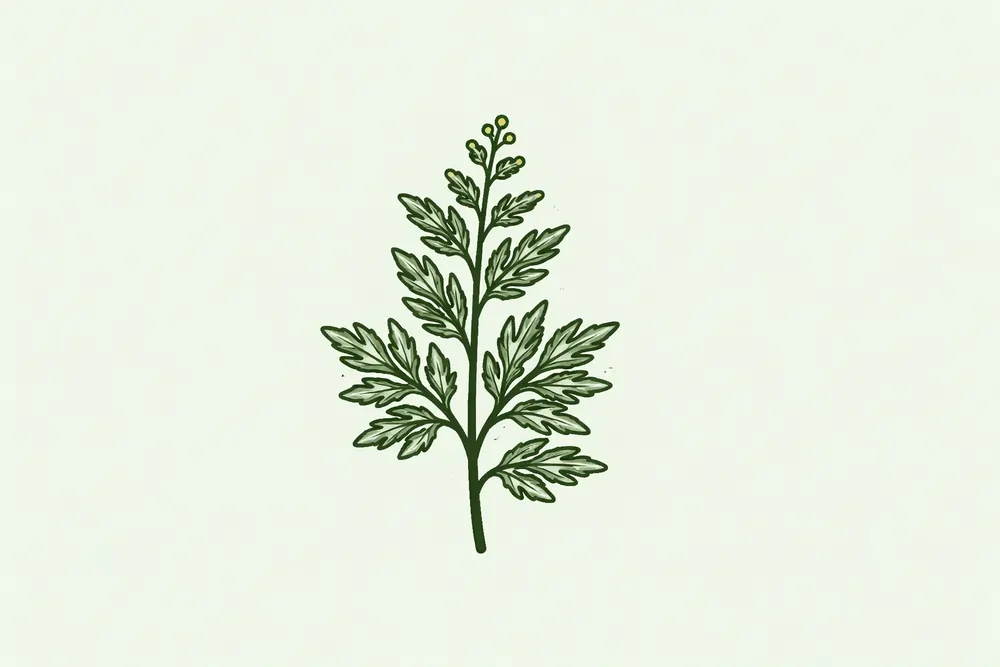
If you’ve ever asked where does wormwood grow, you’re not alone. Wormwood is a familiar name in herbal circles, but it’s also a hardy plant that shows up far beyond gardens. In this guide, I’ll explain where “wormwood” grows worldwide, which species people usually mean, what habitats it prefers, and how to interpret maps and labels like “native” and “naturalized.”
Wormwood can mean several Artemisia species. However, in most English-language herbal and gardening contexts, “wormwood” typically refers to common wormwood, Artemisia absinthium. That’s the species I focus on here, while also noting close relatives when it helps avoid confusion.
What plant do people mean when they say “wormwood”?
Common wormwood is the default in most searches
When people search “wormwood,” they usually mean common wormwood (Artemisia absinthium), a gray-green, aromatic perennial in the daisy family (Asteraceae). It’s the classic “absinthe” herb and a frequent garden ornamental.
“Wormwood” can also describe other Artemisia species
Depending on region, you might also hear:
- Mugwort (Artemisia vulgaris) called “wild wormwood” in some places
- Sweet wormwood (Artemisia annua) (different smell, different growth habit)
- Biennial wormwood (Artemisia biennis) (more weedy in North America)
If you want to be accurate, use the Latin name. Labels that say only “wormwood” are not ideal for identification or safety.
Where does wormwood grow natively?
Its native range is mainly temperate Eurasia and North Africa
For common wormwood (Artemisia absinthium), authoritative plant databases describe its native range as Europe to Siberia and the western Himalaya, plus North Africa, and note it grows primarily in the temperate biome.
That means it evolved in places with:
- cold winters (often with frost)
- moderate to low rainfall in many areas
- lots of open, sunny habitats
Where does wormwood grow outside its native range?
It naturalizes easily where climates match
Wormwood has spread and established outside its original range. In North America, it was introduced in the 1800s and is now naturalized across much of the northern U.S. and Canada, with broad regional presence.
This matters because you can encounter wormwood:
- in gardens and landscapes
- along roadsides and fence lines
- in pastures, old fields, and disturbed ground
In other words, it’s not only a “cultivated herb.” In many places it behaves like a hardy, self-sustaining wild plant.
A single absinth wormwood plant can produce up to 50,000 seeds, which helps explain why it spreads readily once established.
What habitats does wormwood prefer?
It thrives in open sun and disturbed soils
Field and extension references consistently describe wormwood as a plant of open, disturbed sites. You’ll commonly see it:
- along roadsides and fencelines
- on gravel piles and borrow pits
- in overgrazed pasture and abandoned fields
- in waste places and edges of managed land
It tolerates poor soils and dryness better than many herbs
Wormwood’s silvery foliage fits a classic drought-tolerant pattern: gray or silver leaves often reflect intense sunlight and reduce water loss. In cultivation guidance, it’s repeatedly described as doing best in well-drained soil and full sun, and struggling in heavy, poorly drained ground.
What climate zones support wormwood growth?
Temperate climates are the sweet spot
Think “cool to warm summers, real winters.” Wormwood is less about humidity and more about drainage, sun, and seasonal rhythm.
Here’s a practical cheat sheet:
| Factor | What wormwood tends to like | What can limit it |
|---|---|---|
| Sunlight | Full sun | Dense shade |
| Soil | Well-drained, even poor or rocky | Waterlogged clay, constantly wet soil |
| Disturbance | Handles disturbance well | Heavy competition from dense perennials |
| Rainfall | Low–moderate is fine | Humid + wet soil can cause dieback |
Where are you most likely to find wormwood in the wild?
Look along edges, not deep in intact ecosystems
In many regions where it’s introduced, wormwood shows up where humans have already changed the land. If you’re trying to locate it, scan:
- roadside shoulders
- rail corridors
- field edges
- grazed rangeland
- construction backfill and gravelly lots
This “edge behavior” is a useful clue for identification: if you’re in a pristine forest interior, wormwood is less likely.
How do you confirm it’s wormwood and not a look-alike?
Identification is easier when you check three traits
Many Artemisia species look similar at first glance. For common wormwood, focus on:
- Color and texture: silvery-gray, softly hairy foliage
- Aroma: strong, bitter, “medicinal” scent when crushed
- Structure: upright clumps, with many small, pale yellow flower heads later in season
If you’re unsure, compare it with mugwort (A. vulgaris), which is often greener on top and white underneath rather than fully silvery.
Is wormwood considered invasive in some places?
It can behave invasively in pasture and rangeland settings
Wormwood is not equally problematic everywhere, but in parts of North America it is treated as a nuisance or invasive plant because it establishes readily in disturbed sites and can reduce forage quality in grazed areas.
The takeaway is simple: “It grows here” doesn’t always mean “it belongs here.” If you plan to cultivate it, check local guidance and avoid letting it seed freely near open land.
Does “where it grows” change how people use it?
Habitat affects quality, but doesn’t guarantee effects
People sometimes assume wild-harvested plants are “stronger.” In practice, active compounds vary by:
- species (the biggest factor)
- plant part harvested
- growth stage (pre-flower vs flower)
- drying and storage conditions
If your interest is primarily informational—range, habitat, botany—focus on correct species first. If you’re reading about wormwood benefits, treat those discussions as separate from distribution, and keep expectations conservative and product-specific.
Table: Wormwood vs two common “confusion species”
| Common name | Latin name | Typical habitat overlap | Quick visual cue |
|---|---|---|---|
| Common wormwood | Artemisia absinthium | Roadsides, disturbed fields, dry open areas | Overall silvery-gray leaves, soft hairs |
| Mugwort | Artemisia vulgaris | Roadsides, fields, riverbanks | Greener leaf top, whitish underside |
| Sweet wormwood | Artemisia annua | Cultivated plots, disturbed sites in many regions | Feathery bright-green foliage, annual growth |
Where does wormwood grow | FAQ
1) Where does wormwood grow naturally?
Common wormwood (Artemisia absinthium) is native to Europe across to Siberia and the western Himalaya, and parts of North Africa.
2) Where does wormwood grow in North America?
It is introduced and widely naturalized across much of the northern United States and Canada, often in disturbed habitats.
3) What habitat does wormwood prefer?
Open sun, well-drained soils, and disturbed places like roadsides, pastures, old fields, and gravelly areas.
4) Does wormwood grow in shade or wet soil?
It can survive partial shade, but it generally performs best in sun. Wet, poorly drained soils can cause dieback or weak growth.
5) Is wormwood the same as mugwort?
No. Mugwort is usually Artemisia vulgaris. It can look similar, but common wormwood (A. absinthium) is typically more silvery-gray overall.
6) Why is wormwood common along roadsides?
It tolerates disturbance and spreads by seed, so it often establishes where soil has been moved, exposed, or lightly managed.
Glossary
- Artemisia: A large genus in the Asteraceae family, with roughly ~500 species worldwide.
- Asteraceae: The daisy family; includes chamomile, dandelion, and many composites.
- Native range: Where a species evolved naturally over long time periods.
- Naturalized: Introduced species that now sustains wild populations without planting.
- Disturbed habitat: Areas altered by humans or events (roadsides, construction, overgrazed land).
- Temperate biome: Climate zone with seasonal temperature swings and winter cold.
- Perennial: Plant that lives multiple years and regrows each season.
- Well-drained soil: Soil that does not stay waterlogged after watering or rain.
- Seed set: The plant’s production of mature seeds after flowering.
Conclusion
Wormwood grows best in sunny, well-drained, temperate environments and often shows up in disturbed habitats. Once you confirm the species, its range and preferred sites become surprisingly predictable.
Sources used
- Kew Science, Plants of the World Online (POWO): Artemisia absinthium — native range and biome information.
- USDA Forest Service, Fire Effects Information System (FEIS): Artemisia absinthium — North American distribution notes and disturbed-site habitat description.
- invasive-species.extension.org: Artemisia absinthium (Absinth Wormwood) — habitat overview and seed production estimate.
- Royal Horticultural Society (RHS): Artemisia absinthium — cultivation guidance and plant range summary.
- NCSU Extension Plant Toolbox: Artemisia absinthium — growing conditions and drainage/sun recommendations.
- Nature Communications (2025): Jiao et al., “Global phylogeny and taxonomy of Artemisia” — genus size estimate (~500 species).