
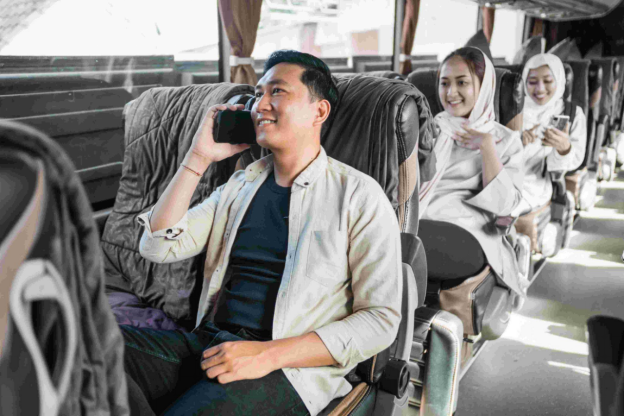
Alt text: Happy man sitting enjoying his trip using a bus
If you are planning a trip to Kuala Lumpur or heading south towards Singapore or Johor Bahru, you will likely find yourself passing through Terminal Bersepadu Selatan (TBS). As Malaysia’s premier integrated transport hub, TBS has revolutionised long-distance bus travel. It looks and feels more like a modern airport than a traditional bus station, offering a clean, efficient, and comfortable experience for travellers.
Taking a bus to TBS is often the most economical and convenient way to enter the Klang Valley. Whether you are a local student returning to university, a tourist exploring Peninsular Malaysia, or a business traveller looking for a budget-friendly option, navigating this massive terminal can be daunting for first-timers. This guide will walk you through everything you need to know, from booking your ticket to stepping off the bus and finding your way into the city centre.
How do I plan my trip and book tickets?
The days of queuing at a hot, crowded counter hoping for a spare seat are largely behind us. Planning a trip to TBS is straightforward, thanks to extensive digital integration.
Researching routes and schedules
Most express buses from major cities in Peninsular Malaysia—such as Penang, Johor Bahru, Melaka, and Kuantan—offer direct routes to TBS. Even buses from Singapore and Hat Yai (Thailand) frequently terminate here. Before you travel, it is wise to check the frequency of the buses. For popular routes like Singapore to KL, buses might depart every 30 minutes, whereas routes from smaller towns might only run once or twice a day.
Buying your ticket online
While you can still purchase tickets at physical counters, booking online is highly recommended. Platforms like RedBus, EasyBook, and BusOnlineTicket allow you to compare prices, departure times, and bus operators. You can select your preferred seat—window or aisle—and pay securely.
Pro tip: If you are travelling during festive seasons like Hari Raya or Chinese New Year, booking weeks in advance is essential. Tickets for a bus to TBS can sell out almost instantly during these peak periods.
What should I expect when arriving at the departure point?
If you are catching a bus to TBS from another state, the experience will vary depending on your departure terminal. However, standard check-in procedures apply across most major Malaysian terminals.
The check-in process
Arrive at least 30 minutes before your scheduled departure time. If you purchased your ticket online, you may need to exchange your e-ticket for a physical boarding pass at the counter. Some modern operators simply require you to show a QR code on your phone, but it is always safer to check the specific instructions on your booking confirmation.
Managing luggage
Most express buses have generous luggage allowances stored in the hold beneath the bus. Ensure your bags are securely closed and labeled. valuable items, such as laptops, phones, and wallets, should always be kept with you in the cabin.
How do I ensure a comfortable journey on the bus?
Long-distance bus travel in Malaysia is generally very comfortable, with “Super VIP” or “Executive” coaches being the norm. These usually feature spacious 2+1 seating arrangements (two seats on one side of the aisle, one on the other), offering plenty of legroom and reclining seats.
Prepare for the temperature
One universal truth about Malaysian express buses is that the air conditioning is often set to freezing temperatures. Even if it is 32°C outside, it can feel like a refrigerator inside the coach. Always bring a jumper, hoodie, or a light blanket to stay warm.
Entertainment and connectivity
While some luxury coaches offer personal entertainment screens, this is not standard. It is best to load your phone or tablet with movies, podcasts, or audiobooks beforehand. Many modern buses now come equipped with USB charging ports at every seat, but bringing a fully charged power bank is a smart backup plan just in case the onboard ports are not working.
Snacks and hydration
For journeys longer than three hours, the bus will typically stop at a rest area (R&R) for a bathroom break and food. However, having a bottle of water and some light snacks like biscuits or nuts in your bag is a good idea to tide you over between stops.
Navigating TBS upon arrival
Once your bus to TBS arrives, you will disembark at the arrival platform on the lower ground level. This is where the terminal’s airport-like efficiency truly shines.
Finding your way around
TBS is huge, but it is well-signposted. You will take an escalator up from the arrival platform to the main concourse (Level 3). This area is bustling with activity and features:
- Restaurants and Food Court: From fast food chains to a localized food court offering Malaysian staples like Nasi Lemak, there are plenty of dining options if you are hungry after your trip.
- Convenience Stores & Pharmacies: handy for grabbing a drink or toiletries.
- ATMs and Money Changers: Useful for international travellers arriving from Singapore or Thailand.
- Luggage Lockers: If you want to explore the area before checking into your hotel, you can store your bags securely here.
How do I get from TBS to Kuala Lumpur city centre?
One of the biggest advantages of taking a bus to TBS is the excellent connectivity. The terminal is integrated with the Bandar Tasik Selatan station, which serves as an interchange for three major rail lines.
KLIA Transit (ERL)
This is the fastest way to get to KL Sentral (the main transport hub in the city) or to the airport (KLIA/KLIA2). The train is clean, fast, and comfortable, though slightly more expensive than the other options.
LRT (Light Rail Transit)
The Sri Petaling Line stops here. This is a great option if you are heading towards Bukit Jalil (for the stadium) or waiting to connect to the city centre via Masjid Jamek. It is affordable and frequent.
KTM Komuter
This commuter train connects TBS to Mid Valley Megamall (a major shopping destination) and KL Sentral. It is very cheap, but be sure to check the schedule as intervals between trains can sometimes be long during off-peak hours.
Taxis and Ride-Hailing
If you have heavy luggage or prefer a direct route to your accommodation, there is a designated taxi rank on the lower levels. Alternatively, ride-hailing apps like Grab are widely available and can pick you up at designated entrance points.
Why choose the bus?
Traveling to TBS offers a blend of affordability and comfort that is hard to beat. The terminal itself sets a high standard for public transport hubs in Southeast Asia, ensuring that your arrival in Kuala Lumpur is smooth and stress-free. By planning ahead—booking your tickets early, packing a warm jacket, and knowing your connection options—you can turn a simple bus ride into a pleasant start to your Malaysian adventure.
Whether you are navigating the busy schedule of a business trip or enjoying a leisurely holiday, the bus remains one of the most reliable ways to travel. So book that ticket, sit back in your reclining seat, and enjoy the ride.