
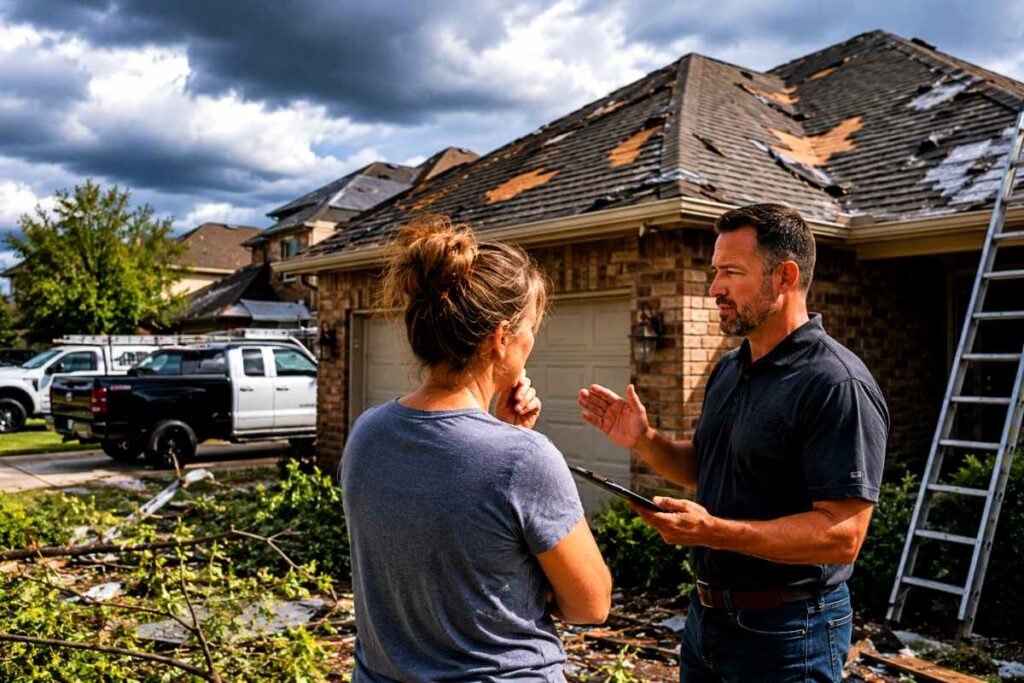
The wind quit around dawn, and by the time you walk the yard in Greensburg there are shingles in the flower bed and a truck already idling at the curb. A friendly guy hops out with a clipboard, says he was working a job down the street, and offers to climb up right now. Before you nod along, the smartest move after a storm is to slow down and vet the roofers Greensburg PA homeowners actually trust for emergency work. The damage is real and the fix matters, but the person in your driveway is not always the one who should get the job. A good emergency repair buys you time and stops the water; a bad one just costs you a deposit and the days you needed most.
Storm Chasers Move On, Local Crews Stay
Storm chasers are crews that follow bad weather across state lines, knocking doors while the debris is still fresh. In April 2026, the National Weather Service in Pittsburgh said straight-line winds, not a tornado, tore up parts of Western Pennsylvania, and out-of-town crews showed up within days. They fold their tents the minute the checks clear, which is a real problem when a warranty means nothing without a company left to honor it. The calls we get most often come the following spring, from someone holding a warranty and a phone number that rings nowhere. A local crew is easier to hold accountable, because you know where the shop is and who pulls the permits. It also tends to know how a Westmoreland County claim actually moves, what adjusters here expect, and how our winters punish a rushed patch. Around here, a reference from your own neighborhood carries more weight than a five-star review posted the same afternoon the storm rolled through. The rush is never a coincidence (and yes, the pressure on you is the whole sales tactic).
What To Ask Before Anyone Climbs Up
Signing with whoever knocks first is like handing your keys to a valet who does not work at the restaurant, and the uniform is doing all the convincing. A short vetting call sorts the pros from the pop-ups fast. About one in 36 insured homes files a wind or hail claim in a typical year, the Insurance Information Institute reports, so any roofer worth hiring should walk you through that claim without flinching. Ask for a physical local address, a Pennsylvania contractor number, and proof of insurance you can call and confirm yourself. A real company answers plainly and hands you paperwork, while a chaser gets vague or suddenly needs a signature before the discount expires. Look them up while they stand there, because a clean track record online is easy to check and hard to fake. Ask to see photos of two or three roofs they finished nearby, along with an address if they will share one, so the work becomes something you can actually go look at.
- Do you carry a Pennsylvania Home Improvement Contractor registration, and what is the number?
- Can you show proof of general liability and workers compensation coverage today?
- Will the full scope, materials, and price go in a written contract before any deposit?
- Who handles the warranty, and will you still be reachable next spring if it leaks?
Run The Claim Numbers Before You Sign
The money math is where a rushed signature hurts most, so it helps to walk it before you commit. Say a wind claim on a modest Westmoreland County roof approves at $14,000 to replace the covering, your policy carries a $1,000 deductible, and the carrier holds back $3,000 as recoverable depreciation until the work is done. Recoverable depreciation just means the insurer pays part now and the rest once the roof is actually replaced, so nobody collects for work that never happened. You would see roughly $10,000 up front, the $1,000 comes out of your own pocket, and the last $3,000 releases after the job passes inspection, which comes to the full $14,000 once everything clears. A crew that wants the entire check on day one is asking you to carry all the risk while they carry none. Your deductible is yours to pay under almost every policy, so anyone promising to waive it or absorb it is offering something that should worry you, not reassure you.
Read the contract before it is signed, not after. Oklahoma State University Extension advises that if you sign and then think better of it, you usually have about three days, roughly 72 hours, to cancel in writing by registered mail, though the exact window varies by state. Put every promise on paper, because a verbal guarantee from someone with out-of-state plates is worth about what you can prove later. Watch the deposit too, since a reasonable down payment is normal but handing over half in cash before a single bundle of shingles arrives is not.
Slow Down Before The Contract Gets Signed
A damaged roof feels like an emergency, and in the worst cases water is already moving inside the walls, so fast help is genuinely worth real money. Fast and reckless are not the same thing, and the crew that earns the work will happily wait a day for you to check it out. Typing roofers Greensburg PA into a search bar takes a second, but reading the reviews, confirming the license, and getting the scope in writing is the part that protects you. Roof damage is stressful, but a stressful week is far easier to survive than a cheap repair that quits in the first hard freeze. The storm will pass, the trucks will thin out, and the roof over your family still has to hold through the next one. Hire the company that will still answer the phone next spring, and let the truck at the curb keep driving.