
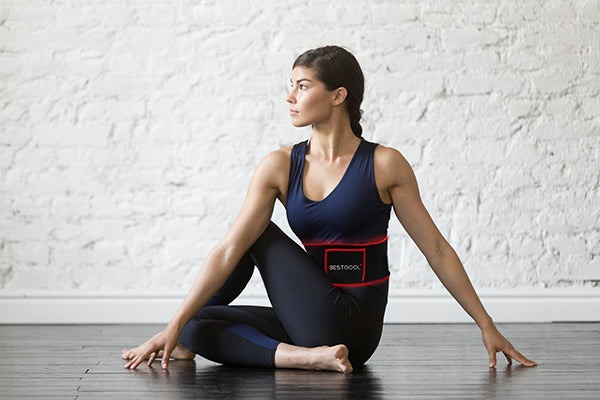
There is a particular point in a training block, usually somewhere past the halfway mark, where the plan stops being the hard part. The sessions are still going in, but a knee has started announcing itself on descents, or an Achilles takes the first kilometre to settle, or a hip flexor tightens in a way that was not there in week three. Nothing is injured. Everything is accumulating.
This is the phase that decides most race outcomes, and it is rarely decided by fitness. It is decided by whether the small complaints stay small. Runners in this position are not looking for a training stimulus — they already have more of that than they can absorb. They are looking for anything that helps tissue keep pace with the load being put through it.
Wrappable light devices have found a real following in this niche, and the reasons are more practical than the marketing usually suggests. They come down to contact, to the geometry of the joints runners complain about, and to whether a recovery routine can survive a mid-season week when everything else is already scheduled.
The Mid-Season Problem Nobody Plans For
Training blocks are designed around progressive overload, and progressive overload works precisely because it creates damage that the body then repairs into something stronger. The assumption buried in every plan is that recovery keeps up. In the middle third of a block, for most people, it stops keeping up quietly and without any single session being to blame.
The symptoms are consistent across runners: localised stiffness that eases with warm-up, tenderness that shows up the day after quality work rather than during it, and a persistent sense that yesterday’s session is still present in the tissue. None of it justifies stopping. All of it compounds if nothing changes.
What runners want at this point is targeted support for specific joints without adding another hour to the day. That combination is the entire case for a Red Light Therapy Belt at this stage of a block — it addresses one area properly while you are already sitting down, rather than asking for a dedicated slot the schedule does not have.
Why Contact Geometry Matters for Joints
Light intensity falls off with distance from the emitter, and it falls off faster than intuition suggests. A panel placed across the room delivers a fraction of what the same panel delivers up close. For a flat surface like a back or a chest this is manageable, because you can simply move closer and the whole area benefits equally.
Joints are not flat. A knee is a compound curve, an ankle is worse, and an elbow presents a surface that changes shape depending on flexion. Point a flat panel at any of them and the nearest point of the joint receives meaningfully more energy than the sides, which are angled away and further off. The parts of a knee that runners actually complain about are frequently on those flanks.
Wrapping Solves a Problem Distance Cannot
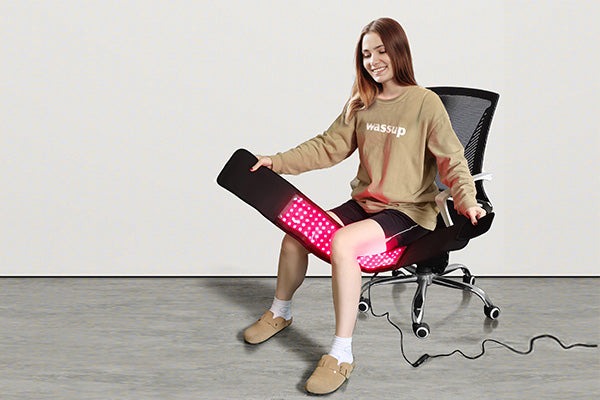
A flexible array conforms to the curve, holding every emitter at roughly the same short distance from tissue. That is a different delivery pattern rather than simply a stronger one — the energy reaches the medial and lateral aspects of the joint, not just the front. For anyone whose issue sits at the side of a knee or around an ankle, this is the whole reason to prefer a wrap.
Strap tension is worth getting right rather than pulling as tight as it will go. A wrap cinched hard on a calf or a knee compresses the tissue underneath and can restrict circulation over a fifteen-minute session, which works against the point of doing it. Firm enough that the surface stays in even contact when you shift position, loose enough that you forget it is there, is the setting to aim for.
Contact brings a second advantage that matters more than it sounds. Because the device is strapped in place, the session does not require you to hold a position. You can sit, work, eat, or help with homework while it runs, and the session is no longer competing with everything else in the evening for a block of stillness.
Placing Sessions Around Hard Training
Timing deserves a decision rather than a default. Immediately after a hard session the tissue is in an acute inflammatory phase, and that phase is not purely unwanted — it is part of the signalling that drives adaptation. Runners who aggressively suppress everything after every session sometimes find their gains flatten, which is a well-documented pattern with cold exposure and worth considering here too.
A more defensible arrangement is to use light on easy days and rest days, where the goal is unambiguously recovery, and after quality sessions only when the following day contains work that stiffness would compromise. Race week is the obvious exception: adaptation is already banked by then, and feeling good on the day is the only objective that remains.
Whatever pattern you choose, hold it steady long enough to read. Four weeks of the same protocol tells you something; changing timing weekly tells you nothing. Log the area treated, the day, and a stiffness rating out of ten first thing the next morning — the morning number is the one that correlates with how a session actually went.
What a Wrap Will Not Fix
The hardest thing to accept mid-block is that most accumulating complaints are load-management problems wearing a tissue-damage costume. If mileage jumped, if a new session type appeared, if shoes changed, or if sleep dropped below seven hours for a fortnight, that is the variable driving the symptoms. No recovery tool outruns a training error, and using one to keep a flawed plan going is how minor complaints become injuries with names.
Certain presentations need assessment rather than management. Pain that alters your gait, swelling that persists overnight, anything sharp and localised on bone, or discomfort that worsens through a run rather than easing after warm-up belong with a physiotherapist. Structural problems do not respond to light, and time spent hoping they will is time the injury spends getting established.
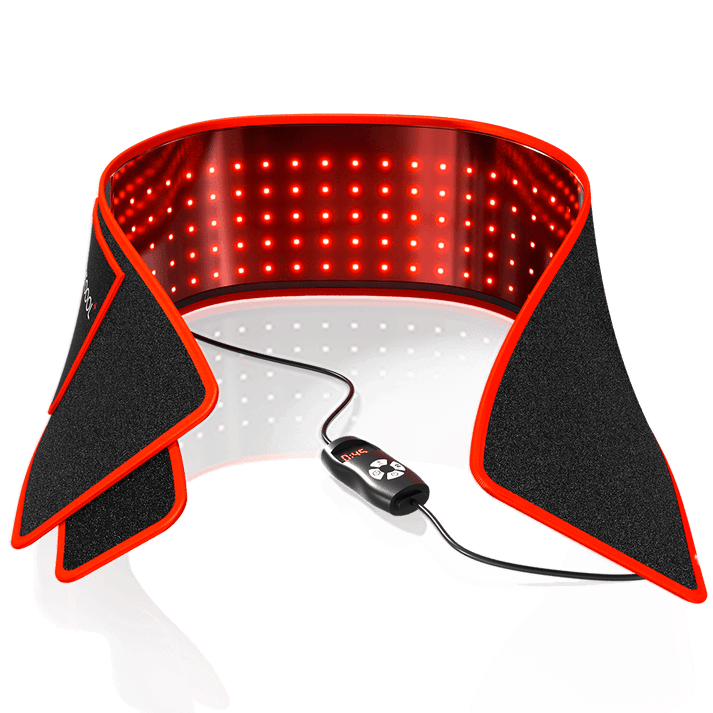
Within those limits, the proposition is modest and real: a device that reaches awkward joint geometry properly, requires no additional time, and can be used consistently for months. Brands that publish irradiance at a stated distance — BestQool among them — at least let you judge whether one product delivers more than another, which most of the category still leaves to inference.
Fitting It Into a Runner’s Week
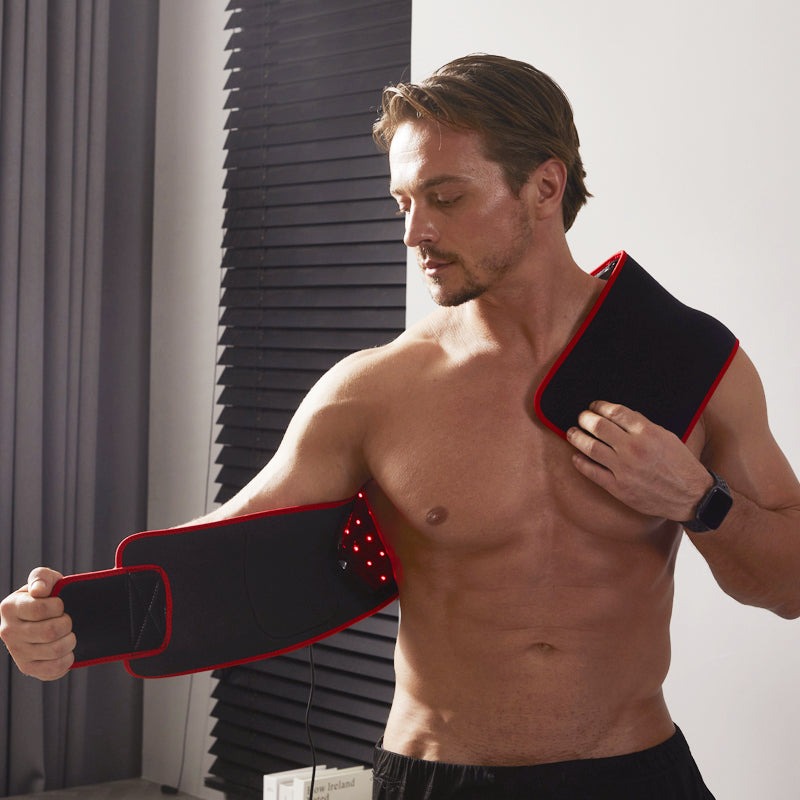
The routines that survive a training block are attached to something already fixed in the schedule. For runners that anchor is usually the post-run window: shoes off, stretching done, sitting down for the first time. Strapping a wrap on at that moment requires no decision, which is exactly what you want from a habit competing against fatigue.
Prioritise one area rather than rotating through several. Runners who try to cover knees, calves, and hips in the same evening end up doing shortened sessions on all three and gain little anywhere. Pick the joint that is genuinely limiting the block, commit to it for a month, and address the next one afterwards if it still matters.
Travel is the other predictable break point, and races involve travel by definition. A wrap packs flat and runs from a hotel bed, which is a genuine advantage over anything requiring a stand and floor space, but only if it is on the packing list rather than remembered at the airport. Runners who keep it with the race kit rather than in a drawer at home tend to keep the routine intact through exactly the weeks that matter most.
Finally, treat the arrangement as seasonal. What a body needs in a high-mileage build is different from what it needs during a taper or an off-season, and the area that mattered in March may be irrelevant by June. Reviewing the choice at the end of each block keeps the routine attached to current training rather than to a decision made months ago.
Keeping Small Complaints From Becoming Seasons Lost
Mid-block problems are rarely dramatic. They are the slow divergence between what training demands and what recovery supplies, and they are usually addressed too late — after the complaint has become a diagnosis and the goal race has become a spectator ticket.
A wrappable device fits this window for two specific reasons: it holds emitters against curved joint surfaces where a flat panel loses most of its output to angle and distance, and it runs while you are doing something else, which means it survives weeks when nothing else discretionary does. Anchor it to sitting down after a run, keep it on one joint for a month, favour easy days and rest days, and rate stiffness each morning rather than trusting how a session felt.
And keep the honest question in view. If mileage, sleep, or session types have shifted, fix that first — a wrap manages symptoms of accumulating load, it does not license more of it.