
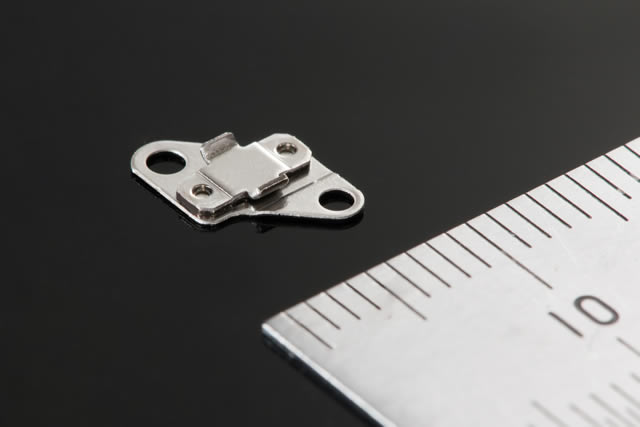
Pick up a smartphone and look at it. The glass screen, the aluminum frame, the camera lens. These are the visible parts. What you do not see are the dozens of stamped metal components inside that make the device function.
There are connector terminals that carry signals between the processor and the display. There are shielding cans that prevent electromagnetic interference from disrupting the device’s operation. There are contacts and springs inside the buttons and switches. There are heat sinks that dissipate heat from the processor. There are brackets and frames that hold everything in place.
None of these components are visible to the user. But without them, the device would not work. They are the hidden infrastructure of modern electronics.
The Materials and Their Properties
The materials used in consumer electronics stamping parts are selected for their electrical, thermal, and mechanical properties.
Copper and copper alloys are the most common materials for connectors, terminals, and contacts. Copper offers excellent electrical and thermal conductivity. Alloys such as brass, phosphor bronze, and beryllium copper offer improved strength and spring properties.
Aluminum is used for heat sinks, frames, and housings. It is lightweight and has good thermal conductivity.
Stainless steel is used for shields, brackets, and structural components. It offers corrosion resistance and strength.
Nickel and nickel alloys are used for battery tabs and connectors. Nickel offers good corrosion resistance and electrical conductivity.
Precious metals such as gold, silver, and palladium are used as plating materials on connectors and contacts. They provide low contact resistance and resistance to corrosion.
The Manufacturing Process
Consumer electronics stamping parts are produced through several processes, each suited to different part geometries and production volumes.
Progressive die stamping is the most common method for high-volume production. The metal strip is fed through a series of stations, each performing a specific operation. The finished part emerges at the end of the line. This method is efficient and consistent, making it ideal for the high volumes required by the consumer electronics industry.
Fine blanking produces parts with smooth edges and tight tolerances. It is used for parts that require high accuracy, such as connector terminals and contacts.
Etching and chemical milling are sometimes used for very thin parts or parts with complex geometries that are difficult to stamp.
Secondary operations such as plating, reeling, and assembly are often required to meet the final specifications of consumer electronics stamping parts.
The Challenges of Miniaturization
The relentless miniaturization of consumer electronics has created challenges for stamping manufacturers.
As devices become smaller, the components inside them must become smaller as well. The tolerances become tighter. The features become finer. The handling becomes more difficult.
The manufacturer must continually invest in equipment and processes to meet these demands. High-speed presses with precision controls are essential. Tooling must be designed to produce ever-smaller features. Inspection equipment must be capable of measuring dimensions that are measured in microns.
The challenge is not just technical. It is also economic. The cost of tooling and equipment increases as tolerances tighten. The manufacturer must balance the need for precision with the need for cost-effectiveness.
What to Look For in a Manufacturer
The selection of a manufacturer for consumer electronics stamping parts requires careful evaluation of several factors.
The first factor is precision. The manufacturer must have the equipment and expertise to produce parts with the tight tolerances required by consumer electronics. This includes high-speed presses, precision dies, and sophisticated inspection equipment.
The second factor is material expertise. The manufacturer must understand the properties of the materials used in consumer electronics and how they behave during stamping. They must be able to recommend the right material for the application and control the process to achieve the required properties.
The third factor is production capacity. Consumer electronics parts are required in high volumes. The manufacturer must have the capacity and the equipment to meet the production requirements.
The fourth factor is quality systems. The manufacturer must have robust quality systems that ensure consistent quality across high-volume production runs. This includes statistical process control, inspection, and traceability.
The fifth factor is speed. Consumer electronics product cycles are short. The manufacturer must be able to move quickly from design to production and to respond to changes in demand.
The Bottom Line
Consumer electronics stamping parts are the hidden components inside every device you own. They are small, precise, and produced in enormous volumes. They are essential to the function of the devices that define modern life. The materials, the processes, and the quality systems all determine the performance of the final part. For engineers and buyers, understanding what these parts are, how they are made, and what to look for in a manufacturer is essential to selecting components that perform reliably in demanding applications.