
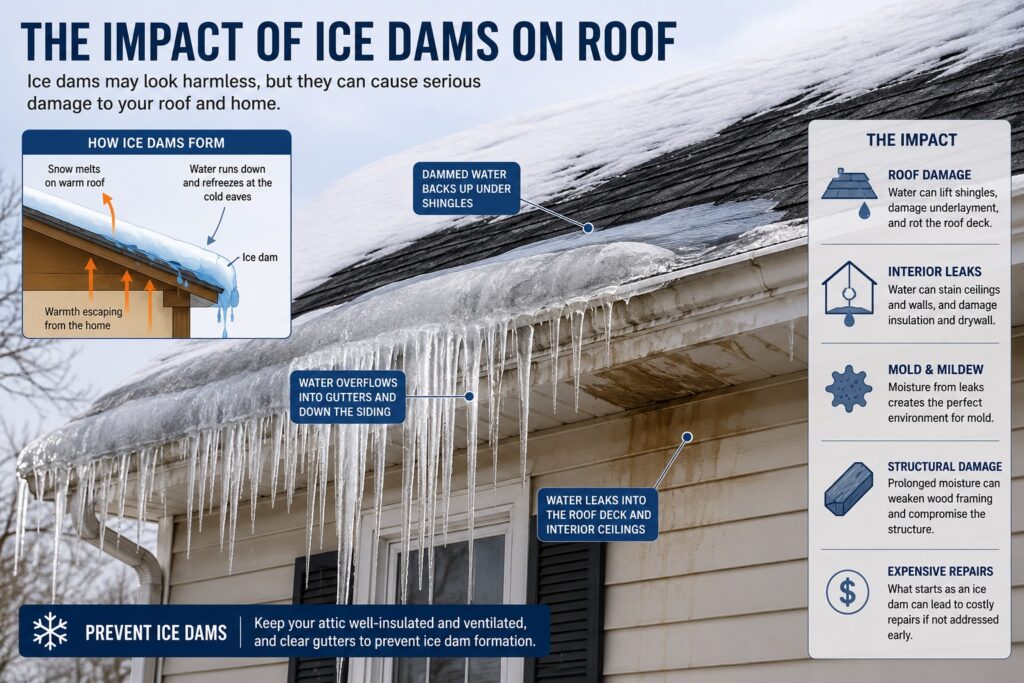
What are Ice dams? These are thick ridges of ice that form on the edges of the roof. Ice dams on roof form when snow melting on roof turns into water, flows down and again freezes at the colder roof edge. This creates a barrier which traps water behind it. The trapped water can penetrate into shingles, soak into the roof deck and cause leakage.
What Causes Ice Dam Formation
- Attic insulation problems are one of the common reasons for ice dam formation. When the insulation is too thin, compressed, or missing, heat from home reaches the attic and warms the roof resulting in snow melting on roof. The best way is to have enough insulation so the roof stays at outdoor temperatures.
- Attic ventilation issues also play a key part. Proper ventilation lets cold air move through the attic and keeps the roof surface constantly cold. Warm air stays in the attic if ventilation is not proper.
- Winter roofing problems take place when the temperature keeps falling and rising. In the day time the temperature falls below freezing point and at night time it rises above freezing point causing snow to melt and freeze repeatedly.
- With frozen gutters and clogged drainage system, water cannot drain properly causing leakage in the roofs
Damages Caused by Ice Dams
Roof leaks and roof water damages can happen when water is trapped behind an ice dam. It penetrates into shingles, damages the roof deck, and leaks into attics and walls.
Ice dams can damage shingles. It can cause shingles to lose, rot, and lift.
Moisture trapped in attics and walls cause mold growth.
Over time, repeated roof damage created by water can cause weakened wooden support, damage to fascia boards and gutters with the build up of ice.
When ice dams allow moisture to enter the home, professional mold removal may be necessary to prevent hidden growth from spreading. A Mold Inspector New York can help assess moisture-affected areas and identify signs of mold behind walls, in attics, or around damaged insulation. Prompt inspection and remediation can help protect the property from further moisture-related damage.
Ice Dam Removal
Ice dam removal should be done professionally and carefully to avoid any damages.
Professional Removal: Professional workers use steam-based equipment to melt ice without harming shingles and flashings. Steam gently loosens ice so it can melt and flow off naturally.
Homeowner Options: Use a roof rake to remove snow. You can also apply calcium chloride in a sock or nylon stocking to melt ice dams. People should strictly avoid hammering and using hot water which might lead to damaged shingles and leaking roofs.
When ice buildup becomes severe, it’s best to contact an experienced roofing service such as RosevilleMNRoofing.com to remove it safely and inspect the roof for any hidden damage. Professional roofing experts can also recommend preventative maintenance and insulation improvements to reduce the risk of future ice dams and protect your home throughout the winter.
Roof Leak Prevention
- Improve insulation: Upgrade insulation to at least R-30
- Seal gaps around vents and chimneys to stop warm air from entering attic
- Make sure soffit vents are not blocked by debris or insulation
- Bathroom and kitchen fans should vent outside not into the attic
- Clean leaves and debris from gutters and downspouts before winters
- Consider gutter guards in very cold areas
- Use a roof rake to take snow off the roof edges
- Check flashing around vents and chimneys.
Importance of Timely Roof Maintenance
Regular inspection can prevent ice buildup on roof edges and major winter roofing problems.
- Inspect the attic regularly to look for any signs of leak and mold.
- Look for gaps from where sunlight is exposed
- Hire a professional to check your roof, vents and shingles before winter
Signs you have an ice dam:
- Meltwater is freezing on roof edges
- There are water stains on your ceilings or walls
- Peeling paint or bubbling wallpaper near the ceiling
- Ice buildup over gutters
- Insulation that is damp or soggy from trapped moisture