
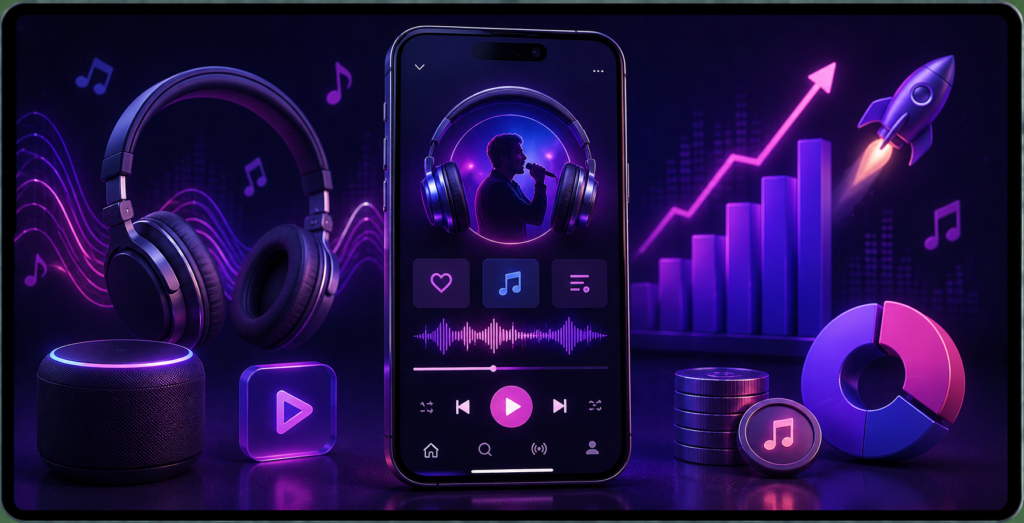
In a crowded app market, finding a product that keeps users engaged and generates recurring revenue is not easy.
Yet one category continues to gain attention from investors, and that is music streaming apps.
The reason is simple. Music streaming apps have evolved far beyond playing songs. Today, they offer personalized recommendations, creator tools, social features, and premium subscription services.
At the same time, users are spending more time listening to digital audio content through smartphones, smart speakers, and connected devices.
For startups, this creates a strong opportunity. Music streaming apps can attract loyal users, support multiple revenue streams, and scale as demand grows.
As technologies like artificial intelligence and cloud computing become more accessible, launching feature-rich streaming platforms is easier than ever.
In this post, we will explore the reasons startups are backing music streaming apps in 2026.
Key Reasons Startups Are Backing Music Streaming Apps
Music streaming apps have become much more than entertainment platforms. They now combine technology, user engagement, and revenue generation in a single product.
These advantages are encouraging startups to invest in the market and create innovative streaming experiences. Let’s explore these key reasons in detail.
[1] AI-Powered Personalization
Users want music apps that understand what they like. They expect recommendations that match their interests, mood, and listening habits.
Artificial intelligence helps streaming apps learn from user behavior. It analyzes the songs users play, skip, save, and search for. Based on this data, the app recommends content that feels more relevant and personal.
This creates a better user experience and encourages users to stay active on the platform. Businesses can partner with a music streaming app development company to integrate AI-powered recommendation systems from the beginning.
When users consistently discover music they enjoy, they are more likely to continue using the app and upgrade to premium plans.
[2] Subscription Revenue Models
One of the biggest reasons startups invest in music streaming apps is their ability to generate recurring revenue.
Unlike businesses that depend on one-time purchases, streaming apps can earn monthly income through subscription plans. Premium memberships often include ad-free listening, offline downloads, better audio quality, and exclusive content.
This creates a predictable revenue stream and makes long-term planning easier. It also improves business stability, which is important for startups looking to scale.
As subscription-based services continue to perform well across industries, music streaming apps remain a strong business model.
[3] Creator Support Features
Artists are looking for more than just a platform to upload music. They want tools that help them connect with fans and grow their income.
Modern streaming apps offer features such as fan subscriptions, exclusive releases, live audio sessions, and creator communities. These tools help artists build stronger relationships with their audience.
Many startups choose to build a music streaming app with creator-focused features because they create value for both artists and listeners.
When creators succeed on a platform, they bring more users with them, helping the business grow naturally.
This creates a stronger ecosystem and gives startups a clear way to stand out in a competitive market.
[4] Social Listening Tools
Music has always been a shared experience. People enjoy finding new songs through friends and sharing playlists with others.
To support this behavior, many streaming apps include social features. Users can create collaborative playlists, follow friends, share music, and interact with communities that have similar interests.
These features increase user engagement and encourage people to spend more time on the platform. They also help startups attract new users through referrals and organic sharing.
As competition increases, social interaction is becoming an important part of the user experience.
[5] Niche Market Opportunities
Large streaming platforms often focus on serving broad audiences. This creates opportunities for startups to target specific user groups.
Many businesses are launching apps focused on regional music, independent artists, cultural content, and genre-based communities. These audiences often want specialized experiences that larger platforms may not provide.
By focusing on a niche market, startups can build stronger customer relationships and reduce direct competition.
This approach also helps create loyal user communities that support long-term growth.
[6] Cross-Platform Accessibility
Modern users expect access to music wherever they go.
They may start listening on a smartphone during travel, continue through a smart speaker at home, and switch to a wearable device during a workout. A successful streaming app must support this smooth experience.
Cross-platform accessibility improves convenience and user satisfaction. It also creates more opportunities for engagement throughout the day.
For startups, providing a consistent experience across devices can strengthen retention and improve brand value.
[7] Data-Driven Insights
Every action inside a music streaming app generates valuable data.
Businesses can track listening habits, feature usage, user preferences, and engagement levels. These insights help startups improve recommendations, marketing campaigns, and future updates.
Data analytics also makes it easier to understand customer needs and identify growth opportunities.
As user expectations continue to evolve, data-driven decisions are becoming essential for success.
[8] Advanced Audio Technology
Technology continues to improve the streaming experience.
Features such as voice search, smart playlists, high-quality audio streaming, and immersive sound experiences are becoming more common. Users increasingly expect these capabilities from modern apps.
For startups, adopting advanced technologies can improve user satisfaction and help differentiate their platform from competitors.
Innovation remains a key factor in attracting and retaining users.
[9] Multiple Revenue Streams
Subscriptions are only one source of income for music streaming apps.
Businesses can also generate revenue through advertising, sponsorships, premium upgrades, artist promotions, virtual events, and partnerships. This creates greater flexibility and reduces dependence on a single revenue channel.
Multiple income streams help startups build stronger business models and improve long-term sustainability.
As the market evolves, diversified monetization strategies will become even more important.
[10] Long-Term Growth Potential
Demand for digital audio content continues to rise across global markets.
More people are listening to music, podcasts, and live audio content through connected devices. At the same time, smartphone adoption and internet access continue to expand.
These trends are creating new opportunities for streaming platforms and increasing the size of the potential user base.
For startups entering the market today, the future of music streaming remains full of possibilities.
Conclusion
Music streaming apps have evolved into powerful digital products that combine technology, engagement, and recurring revenue opportunities.
This transformation is one of the main reasons startups are investing in the sector in 2026.
Features such as AI-powered personalization, creator support tools, social listening capabilities, and advanced analytics help businesses build stronger user experiences while creating sustainable revenue streams.
At the same time, niche market opportunities and multiple monetization options allow startups to compete without directly challenging larger platforms.
As demand for digital audio content continues to grow, music streaming apps offer significant business potential.
Startups that focus on innovation, user needs, and scalable technology will be well-positioned to capture opportunities in this rapidly expanding market.