
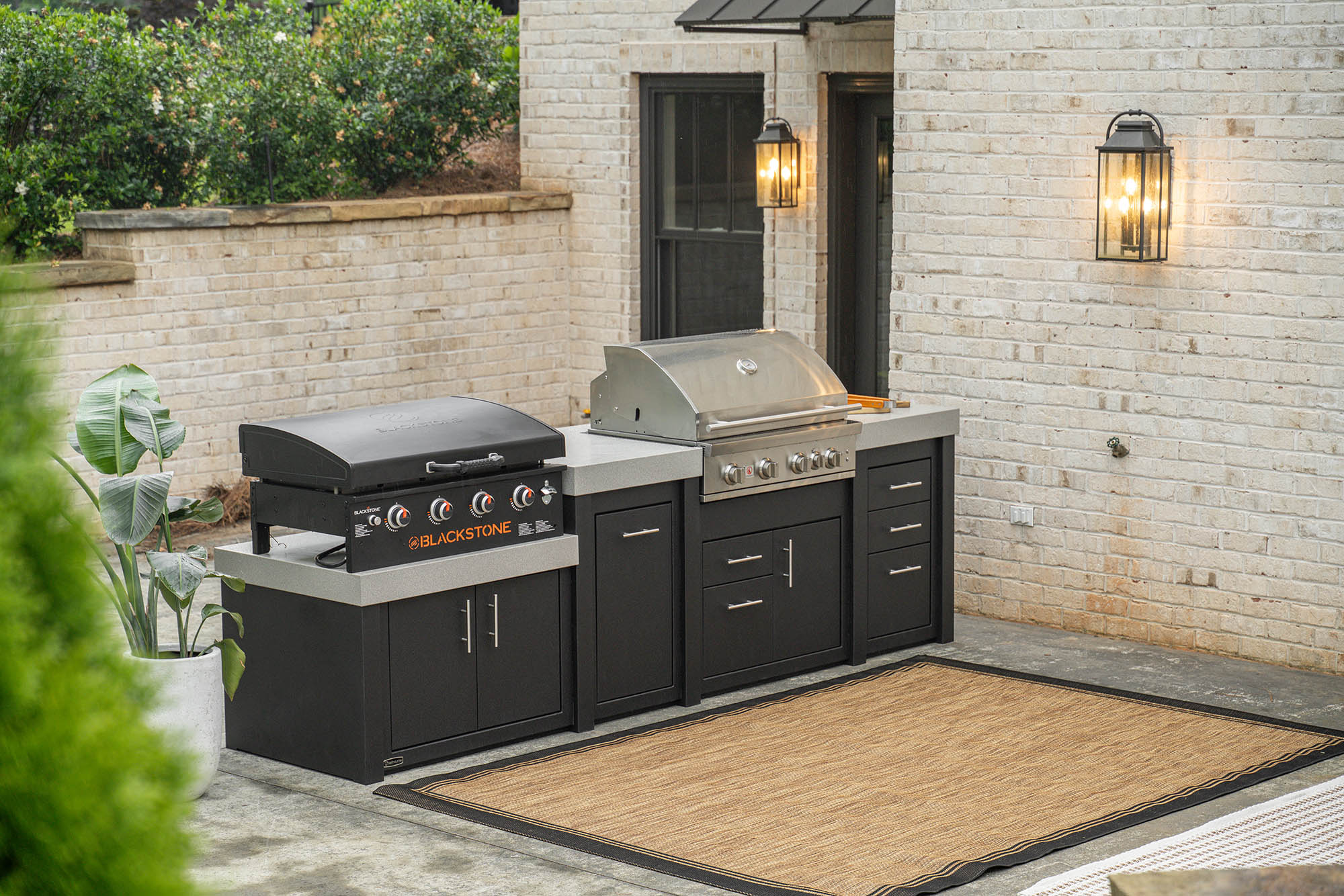
Custom outdoor kitchens are a fantastic way to transform your backyard into a functional and stylish space designed for cooking, dining, and entertaining. From grilling delicious meals to hosting unforgettable gatherings, your choice of materials for the outdoor kitchen can make a significant impact on its durability, appearance, and overall value. Among the top materials used in outdoor cabinets are stainless steel and solid wood, each offering unique characteristics.
When planning a custom outdoor kitchen, it’s essential to choose materials that can withstand the challenges of outdoor conditions, such as fluctuating temperatures, rain, humidity, UV rays, and pests. While solid wood cabinets offer a warm, timeless aesthetic, stainless steel cabinets are engineered for superior performance and longevity in outdoor settings. In this blog, we’ll compare these two popular materials to help you determine why stainless steel is often the better solution for outdoor kitchens.
Why Choosing the Right Material Matters
Outdoor kitchens face challenges that indoor kitchens don’t, such as exposure to the elements and temperature extremes. As a result, materials must provide durability, weather resistance, and low maintenance while complementing your outdoor living area’s design.
Factors to Consider When Selecting Materials
1. Weather Resistance: Can the material handle rain, humidity, snow, and direct sunlight?
2. Durability: Is the material strong enough to resist wear and tear over time?
3. Maintenance: Does it require frequent upkeep to prevent deterioration?
4. Longevity: How long will the material remain functional and visually appealing outdoors?
5. Aesthetic Versatility: Will the material complement your desired design style?
6. Cost Effectiveness: Does the material provide long-term value for its initial cost?
Let’s dive into how solid wood and stainless steel cabinets compare in these areas.
1. Solid Wood for Outdoor Kitchens: Natural Charm Meets Maintenance Challenges
Solid wood has been a long-standing favorite in kitchen design, offering a warm and inviting appearance that works beautifully in rustic, traditional, or farmhouse-style layouts. While wood is undeniably beautiful, its performance in outdoor kitchens is limited due to vulnerabilities to moisture, sunlight, and pests.
Advantages of Solid Wood Cabinets
1. Timeless Beauty
Wood cabinets bring a familiar, warm aesthetic to outdoor spaces. The wide-ranging options for finishes, stains, and natural textures allow wood to fit almost any design style, from rustic charm to elegant sophistication.
2. Variety of Hardwoods
High-quality hardwoods, such as teak, cedar, and mahogany, provide better durability and moisture resistance than cheaper softwoods. These materials are often used for outdoor applications due to their natural oils and density.
3. Customization
Solid wood is highly customizable. It can be stained, painted, or carved to achieve unique styles or intricate designs tailored to individual tastes.
Disadvantages of Solid Wood Cabinets
1. Lack of Weather Resistance
While certain hardwoods are more resilient than others, wood is vulnerable to moisture, humidity, and fluctuating temperatures. Exposure to rain or snow can result in warping, rotting, splitting, or mold growth.
2. Limited UV Protection
Direct sunlight causes wood to fade, discolor, and weaken over time, requiring protective coatings or treatments to maintain its appearance.
3. Pest Problems
Wood is susceptible to termites, ants, and other pests, which can compromise its structure, especially in humid environments.
4. Frequent Maintenance
Wood must be regularly sealed, stained, or painted to prevent damage from water and UV exposure. Neglecting this maintenance can significantly shorten its lifespan.
5. Shorter Lifespan
Despite proper care, even high-quality outdoor wood cabinetry typically lasts 5–10 years before showing signs of decay.
6. Fire and Heat Risks
Wood is highly flammable, posing safety concerns if used near grills, fire pits, or heat-producing appliances.
2. Stainless Steel for Outdoor Kitchens: Unmatched Durability and Modern Style
Stainless steel has revolutionized the world of outdoor kitchen design, earning widespread popularity for its ability to withstand harsh conditions while remaining visually stunning. Known for its durability and low maintenance, stainless steel is the perfect material for homeowners seeking long-term performance and elegance.
Advantages of Stainless Steel Cabinets
1. Superior Durability
Stainless steel is built to last. It resists dents, scratches, and wear, making it ideal for outdoor kitchens that experience heavy use. Unlike wood, stainless steel won’t warp, rot, or degrade over time.
2. Weatherproof Design
Stainless steel excels in all climates, whether you live in a rainy region or a hot, sunny area. It doesn’t absorb moisture, swell, or crack, and won’t fade under UV light. Marine-grade stainless steel, such as 316 stainless steel, offers added protection against saltwater and airborne corrosive particles, making it ideal for coastal environments.
3. Low Maintenance
Cleaning stainless steel is effortless—simply wipe it with soap and water. There’s no need for refinishing, resealing, or sanding, which wood requires regularly.
4. Long Lifespan
Stainless steel cabinets last 20+ years with proper care, providing homeowners with unmatched long-term value and eliminating the need for frequent replacements.
5. Hygienic and Food-Safe
Stainless steel is non-porous, meaning it resists bacteria, mold, and mildew growth. This ensures safe food preparation and makes cleaning even more straightforward.
6. Sleek, Versatile Appearance
Stainless steel’s clean, polished look complements modern, industrial, and minimalist designs, while pairing effortlessly with materials like stone, concrete, or wood finishes for a beautiful, balanced outdoor aesthetic.
7. Flame and Heat Resistance
Stainless steel is fireproof, making it safe to use near grills, fire pits, or pizza ovens.
8. Environmentally Friendly
Stainless steel is 100% recyclable, making it far more eco-friendly than woods that require deforestation and frequent replacements.
Why Stainless Steel Is the Best Choice for Custom Outdoor Kitchens
While solid wood offers aesthetic charm, its vulnerabilities, high maintenance needs, and shorter lifespan make it less than ideal for outdoor kitchens. Stainless steel, on the other hand, provides a combination of durability, weather resistance, low maintenance, and modern aesthetics that make it the superior material for outdoor kitchen cabinetry.
Top Reasons to Choose Stainless Steel:
Unparalleled Durability: Resists wear and tear, lasting for decades without corrosion or decay.
Weatherproof Features: Thrives in all climates, from rainy regions to sunny locales.
Low Upkeep: Saves time and money long-term with minimal maintenance demands.
Hygienic and Food-Safe: Non-porous surface ensures cleanliness and food safety.
Fireproof Safety: Ideal for use near grills and other heat sources.
Long-Term Value: More expensive upfront, but less costly over time due to its durability.
Eco-Friendly: 100% recyclable and sustainable.
Invest in Stainless Steel for Outdoor Kitchens
If your goal is to design a custom outdoor kitchen that effortlessly combines functionality, durability, and style, stainless steel outdoor kitchen cabinets are the perfect choice. While solid wood may tempt with its rustic appearance, stainless steel’s unmatched weather resistance, longevity, and low maintenance needs make it the best long-term investment.