
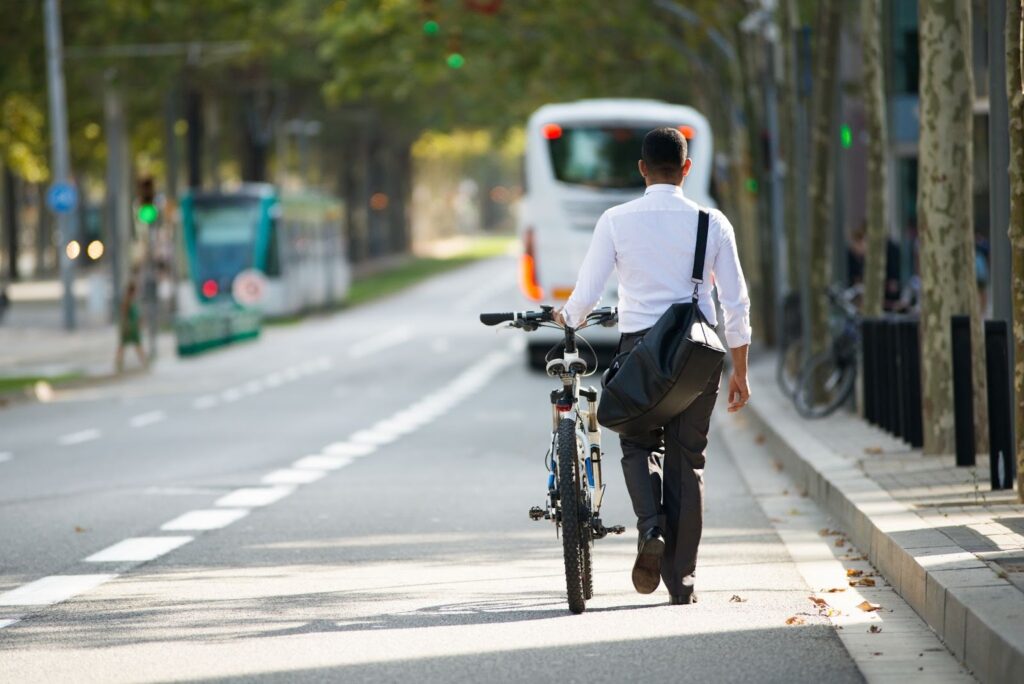
Urban transport cycling has increased substantially in cities across the world in recent years due to policies and goals related to sustainability, congestion management, and changing preferences of commuters. However, the infrastructure has not always kept pace with this growth. Intersections where cyclists are forced to share space with turning cars, pedestrians, and competing signal phases remain the most dangerous areas in any city cycling system. In the absence of a dedicated signal infrastructure design that explicitly indicates the priority, cyclists tend to interpret infrastructure design based mostly on motor vehicles, and this ambiguity may distract and cause predictable and preventable conflicts.
Challenges Cyclists Face at Signalised Intersections
The shared cycle phases are the bugbear of traffic signal control. When motorised traffic and bike traffic are given the green signal at the same time, turning vehicles and bike users who head straight are in competing travel ways with no priority assignment. Vehicles turning right across a cyclist’s line of travel — and vehicles turning left across lanes of oncoming cyclists contribute to an outsized portion of severe cycling crashes at signalised junctions.
The absence of clear direction increases the threat. Standard vehicle signals are based on motor vehicle lines of sight and speeds of decision-making. Slower-moving cyclists coming from different positions on the lane, and having distinct stopping distance needs, require signal aspects adapted to their movement profile – information which vehicular thinking has not yet started to provide.
Ambiguity gives rise to the uncertainty of behaviour. That leads to inconsistent behaviour among cyclists who don’t have a clear sense of when it’s their turn to go — some wait through cycles where they could move safely, others ride in phases that put them in harm’s way. “Both of these results are bad for the efficiency of the intersection and the probability of a crash.”
How Dedicated Bicycle Signal Systems Improve Safety
Dedicated cycling signals eliminate the confusion over who has right-of-way in a shared phase. Because cyclists are given their own phases, separated from those of vehicles, dedicated bike signals remove conflict points caused by simultaneously issuing a green light to both road users.
Cycling-optimised signal timing results in much greater compliance. Objectively calibrated phases for realistic cycling speeds and crossing distances allow cyclists enough time to clear an intersection without rushing, so the number of rushed crossings that are known to cause vehicle conflict is minimised.
A properly designed bicyclist traffic light employs internationally standardised cyclist-specific symbols (usually a bike pictogram rather than a regular vehicle arrow) so that no interpretation is needed when trying to apply vehicular signal rules to cycling movement.
Impact on Traffic Flow and Cycling Experience
Exclusive cycling phases at signalised intersections reduce the delay of all users due to these unmanaged conflicts, which prolong the discharge process and add conservative timing buffers for vehicles. Moving Predictability of cyclers’ movement enables signal controllers to efficiently set the phase sequencing compared with the setting of phases in more than two kinds of signals.
Reduced stress and increased predictability at intersections are known to have positive effects on cycling mode share. Places where cyclists are given simple, clear, and dedicated wayfinding and are physically separated from vehicular traffic consistently see higher rates of cycling participation than those where cyclists must share infrastructure.
Introducing a dedicated bicycle traffic light signifies that the institution recognises cycling as a real mode of transportation, a message that resonates with current cyclists’ confidence levels, and the potential for non-cyclists to consider cycling over private cars.
Conclusion
Separate, bicycle-only signal systems close the gaps in intersection safety that shared vehicle phases are structurally unable to close. Well-defined right-of-way, timing calibrated for cyclists, and symbology developed for that purpose result in statistically safer and more efficient crossings. With cities building out cycling networks and chasing mode-shift goals, the ability to invest in dedicated signal infrastructure is one of the most straightforward avenues for intersections that function well for all road users.
Ai Report