
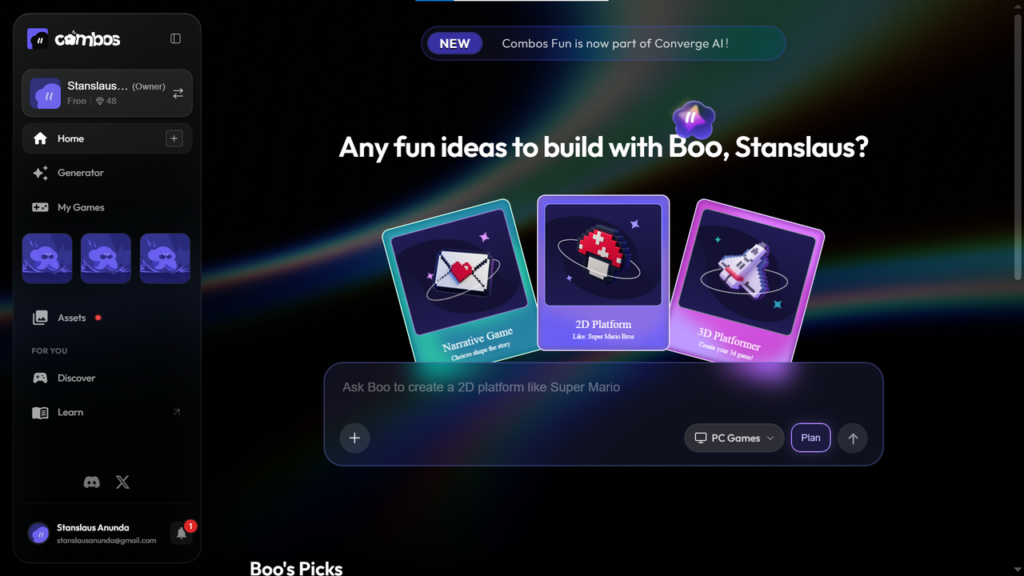
A story in a notebook or a document is set; the reader reads it exactly as written, in the same order. The same story is presented in an interactive format that allows the audience to have choices, view the consequences, and reach different conclusions based on their decisions. That shift, from passive reading to active participation, is what makes narrative games so engaging, and it used to require serious technical investment to build.
The ai game builder does just that; it is a program that lets you describe your story and its branching points, then it creates the interactive structure based on your description. No need to also implement dialogue trees in code or create your own UI for choice-based navigation – the platform is taking care of this layer.
Where to Start: Structure Before Polish
When adapting a story into a game, the urge is to have the visuals come first. Resist that. The key decision point is where the player makes a choice that will significantly impact what happens next, and the stronger starting point is to map the key decision points. There is a huge rework-savings factor between a story with one branch and two endings and a story with five branches and ten endings.
Before you begin prompting, it is useful to read this guide to narrative games, as it discusses considerations for branch density and pacing when building a full game with Combos Fun 3d game maker online.
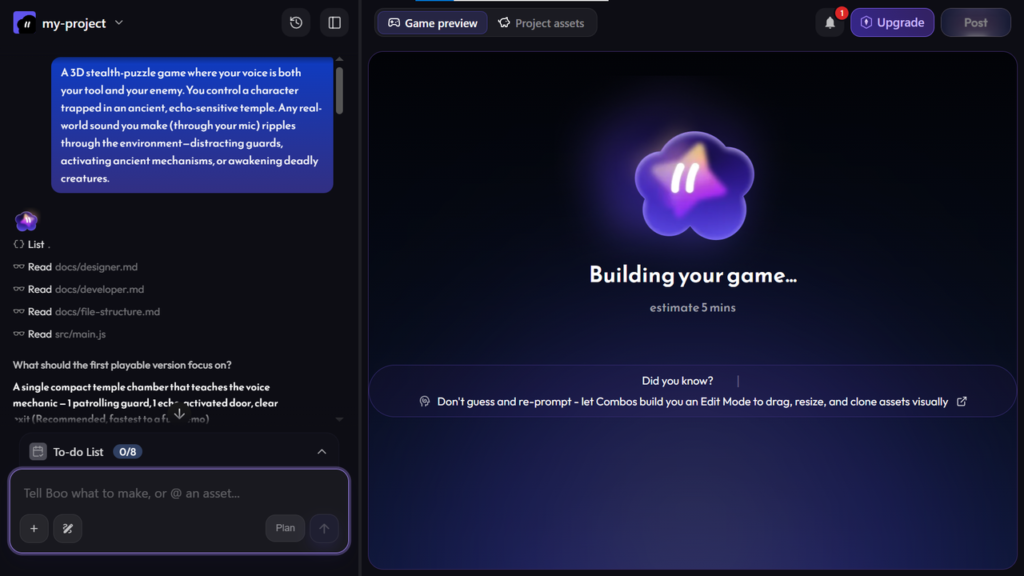
Turning Your Outline Into a Build
After determining your branch structure, have Boo, the platform’s AI game agent, explain in simple terms what the setting is, who the characters are, what the choices are, and what each choice results in. Boo creates a design document based on that structure; you can then review and modify that document before assets are created. This step is important and will be much easier to do here than after visuals have been produced.
If your story is more of a talking, text-heavy experience, rather than it’s all about the visuals, a visual novel maker might be better suited than a fully animated build, and it is important to decide this early as it will have an impact on the amount of asset creation the platform will require.
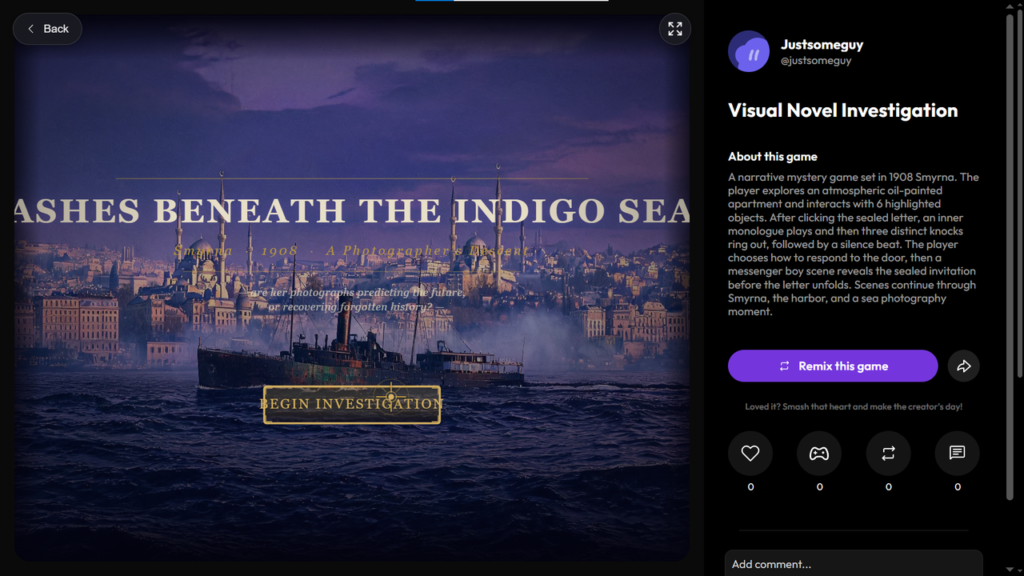
Refining Without Touching Code
The no-code editor allows you to modify dialogue, alter character art, swap characters out for who they will go to, and fine-tune pacing after the first generation – none of which requires a line of code. This is where most of the actual craft happens: the first generated version rarely matches your intent perfectly, and the refinement pass is what makes it feel like your story rather than a generic template.
Common Pitfalls When Adapting a Story
Most often, the error is to put on branches for the sake of branching, not because a choice actually changes the experience. If a branch leads to a slightly different sentence but the same outcome, it doesn’t make sense as interactivity; it’s just more content. Use branching funds for choices relevant to the narrative being told.
The second pitfall is underestimating how much a small visual detail communicates. While text might be important, the character’s facial reaction at a given moment can be just as important and deserves attention and consideration rather than being ignored as an afterthought.
Deciding How Much Branching Is Enough
An age-old question when adapting a story is how many endings does it need? There is no hard-and-fast rule, but a good guideline is to have as many branches as the decision’s emotional importance warrants. It’s probably not important to make a decision on which minor character to speak to first; it can just add flavor to the middle. The decision a player must make about whether to trust or betray a central character should have a clear endpoint, as that is the reason to replay the game to discover both possibilities.
Too many branches for minor decisions reduce the quality of your work spread out among less work, and too few branches for major decisions will leave your so-called interactive story feeling empty. Use your review time at the GDD stage to check that the branches you have tie into something that’s really important to the plot.
Working With Existing Material
However, if you are adapting an existing story, it might look a little bit different: you’re transforming existing prose into prompts. Divide all the source material into scenes, identify where a reader’s agency might plausibly enter the story, and describe these scenes and decision points to Boo one by one rather than pasting in the entire story. This method works best for creating a more accurate and well-structured adaptation than for attempting to fit a complete story into a single prompt.
Publishing and Sharing Your Story
When a story is complete and interactive, you can publish it to create a shareable link that can be viewed in any browser without downloading. For narrative in particular, accessibility is important: the easier it is for a reader to experience a story, the more powerful it will be, and a link the reader can open at a moment’s notice is the easiest way to do that.