
Induction heating is widely used in metal processing because it can heat workpieces quickly, accurately, and locally. Unlike conventional heating methods, induction heating does not require direct flame contact. Instead, an alternating magnetic field generates current inside the metal, allowing the workpiece to heat rapidly and evenly within the required area.
This technology is commonly used for billet heating, steel pipe heating, rebar heating, slab heating, forging preparation, bending, heat treatment, and surface hardening. For production lines that require stable heating before rolling, forging, or forming, an induction heating furnace can greatly improve process consistency.
One important benefit of induction heating is controllability. Heating temperature, heating time, power output, and production rhythm can be adjusted according to the workpiece size and material grade. This makes induction heating suitable for both continuous production lines and customized industrial applications.
For example, steel billets may need to be heated above 1200°C before rolling, while certain steel pipes may require controlled online heating for heat treatment. Aluminum rods, copper materials, and special alloy workpieces may also require different heating speeds and temperature ranges. Therefore, selecting the right equipment is not just about choosing a furnace model; it requires complete process matching.
An experienced induction heating furnace supplier can help customers evaluate workpiece dimensions, target temperature, production speed, power configuration, cooling method, and automation requirements. These details determine whether the final system can achieve stable output and long equipment life.
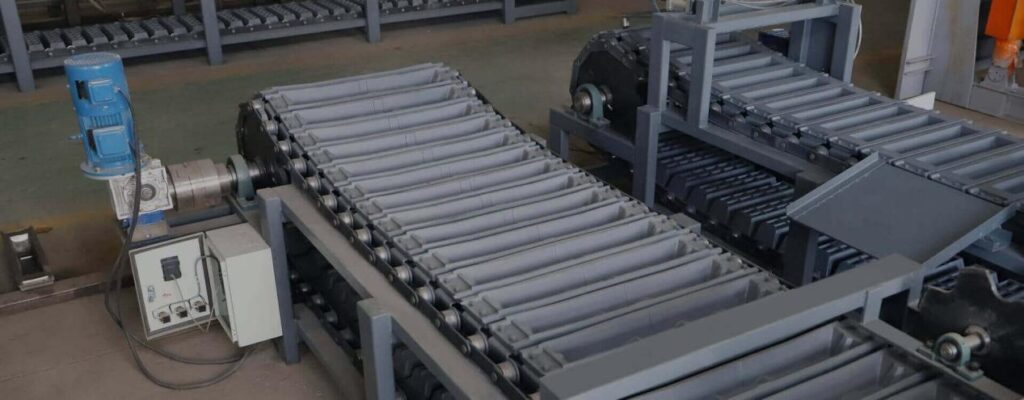
In addition to the furnace itself, the full system often includes a medium frequency power supply, induction coil, feeding and discharging device, temperature measurement system, PLC control system, and cooling system. For larger production lines, automatic conveying and integrated control can further reduce labor intensity and improve production efficiency.
Induction heating furnaces are also valued for their cleaner working environment. They produce less direct combustion pollution and can be integrated into modern industrial production lines more easily than many traditional heating systems.
For manufacturers involved in steel rolling, pipe processing, forging, aluminum rod production, or metal heat treatment, choosing the right induction heating solution can improve product quality, reduce energy consumption, and support continuous production.