
The dining table is more than a piece of furniture—it’s where families reconnect after long days, where friends linger over wine, and where the personality of a home reveals itself most naturally. For interior designers, selecting a dining table for 6 presents a unique challenge that sits at the intersection of form and function. The table must seat guests comfortably, fit proportionally within the room, complement the broader design narrative, and satisfy a client’s practical needs for years to come.
This guide offers a comprehensive approach to navigating that challenge with confidence. From understanding precise sizing requirements and matching materials to design aesthetics, to drawing layout inspiration and identifying the right products across every budget, each section delivers actionable guidance tailored to working professionals. Whether you’re furnishing a compact urban apartment or a spacious suburban dining room, the strategies here will help you make informed, client-focused decisions that result in dining spaces people genuinely want to gather around.
The Fundamentals: Sizing Your Dining Table for Six
Getting dimensions right is the foundation of every successful dining table selection. A table that’s too large overwhelms a room and disrupts traffic flow; one that’s too small leaves guests bumping elbows and feeling cramped. Before style or material enters the conversation, precise measurements must guide the decision.
Key Dimensions and Clearance Guidelines
For a rectangular dining table seating six, aim for a surface measuring approximately 72 inches long by 36 to 40 inches wide. This provides each person roughly 24 inches of elbow room—the minimum for comfortable dining. Round tables for six typically require a diameter of 54 to 60 inches, while oval tables follow similar length guidelines as rectangular options but offer softer sightlines and easier conversation flow. Standard table height sits between 28 and 30 inches regardless of shape.
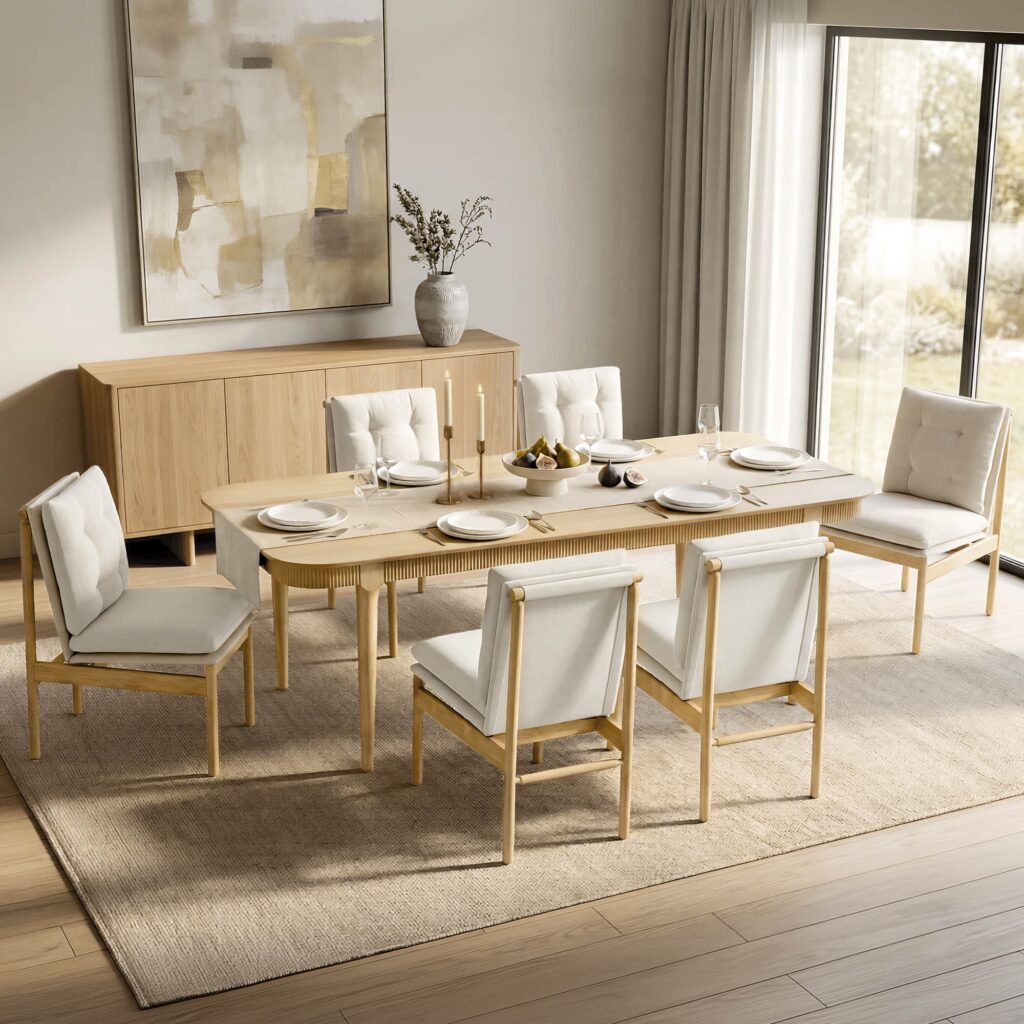
Clearance is where many designers underestimate requirements. Allow 36 inches between the table edge and the nearest wall or furniture piece for seated guests to push back comfortably. If the space doubles as a traffic corridor—common in open-plan layouts—increase that clearance to 48 inches on the passage side. In a dedicated dining room with walls on all sides, you’ll need a minimum room size of approximately 12 by 10 feet for a rectangular six-seater to breathe properly. Open-plan environments offer more visual breathing room but demand careful zoning so the dining area feels intentional rather than floating.
Evaluating Large Dining Tables vs. Compact Solutions
Large dining tables work beautifully in rooms where the table serves as an anchor piece—think generous suburban dining rooms or loft spaces where scale demands presence. They allow for generous place settings, centerpieces, and a sense of occasion. However, they commit square footage permanently and can make smaller rooms feel congested. Recommend these when clients entertain frequently and the room dimensions support full clearances without compromise.
Compact dining solutions—extendable tables, drop-leaf designs, or slim-profile models—earn their place in urban apartments, multipurpose rooms, or homes where flexibility matters more than grandeur. An extendable table that seats four daily but expands to six for dinner parties gives clients the best of both scenarios. Suggest these when floor plans are tight, when rooms serve double duty, or when clients value adaptability over a single dramatic statement.
Matching Style and Material to Your Design Vision
Once dimensions are locked in, the creative work begins. A dining table’s material and stylistic language must resonate with the room’s broader design narrative—otherwise, even a perfectly sized table feels like an afterthought. The goal is seamless integration, where the table anchors the dining space without competing with surrounding elements.
Popular Design Styles for Dining Table Sets
Scandinavian dining tables favor clean lines, light-toned woods like ash or birch, and tapered legs that create visual lightness. They pair naturally with open, airy rooms and neutral palettes. Industrial style leans on raw materials—think blackened steel bases paired with reclaimed wood tops, exposed hardware, and a general sense of honest construction that suits loft conversions and urban spaces. Farmhouse tables bring warmth through thick planked tops, turned legs, and distressed finishes that invite a relaxed, gathered-around-the-hearth sensibility. Mid-Century Modern designs distinguish themselves through sculptural bases, organic curves, and rich walnut or teak finishes that complement rooms featuring statement lighting and bold textiles. When selecting a dining table set—table plus coordinated chairs—ensure the chair silhouette reinforces rather than contradicts the table’s design language. A spindle-back chair beside a glass-and-chrome table creates visual confusion, while a molded shell chair beside that same table feels intentional and cohesive.
Durable and Aesthetic Material Options
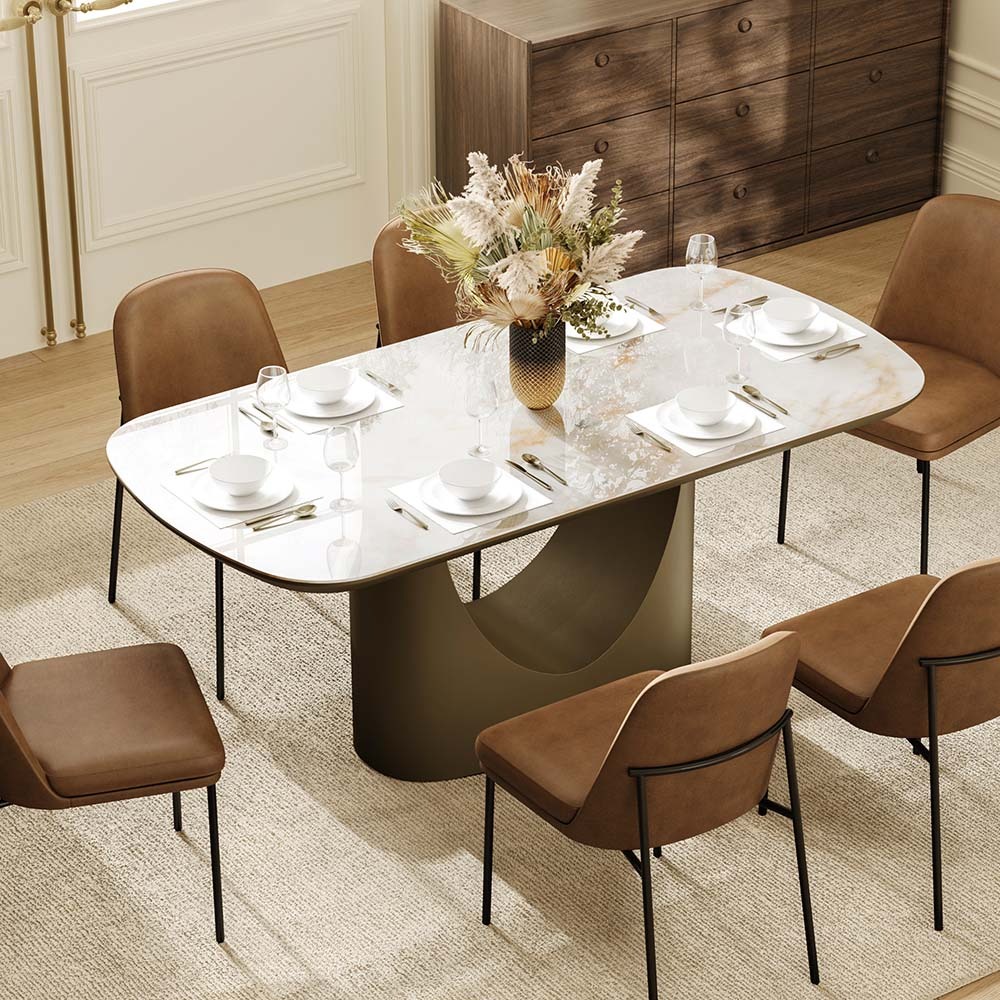
Solid oak offers exceptional durability and a grain pattern that ages gracefully, making it ideal for families who will use the table daily for decades. Walnut delivers deeper, warmer tones and a refined presence suited to formal or transitional spaces, though it scratches more easily and benefits from protective finishing. Marble and stone tops create instant visual drama and feel cool to the touch—perfect for Mediterranean or contemporary schemes—but they’re heavy, require sealing against stains, and can chip at edges. Tempered glass opens up small rooms by allowing sightlines through the table, though it shows fingerprints readily and demands frequent cleaning. For clients seeking low maintenance without sacrificing aesthetics, engineered wood with high-quality veneer provides the look of solid timber at reduced weight and cost, while ceramic-topped tables offer near-indestructible surfaces that resist heat, scratches, and staining. Always counsel clients on realistic maintenance expectations: a beautiful table that demands more care than a household can provide will become a source of frustration rather than pride.
Dining Room Design and Layout Inspiration
A well-chosen table only reaches its potential when placed thoughtfully within a room. Layout decisions determine whether a dining space feels inviting or awkward, whether conversation flows naturally or guests strain to connect. Beyond the table itself, the surrounding elements—lighting, floor treatments, and seating arrangements—transform a functional eating area into a destination within the home.
Creating Functional and Beautiful Layouts
In a square room, a round or square table centered beneath a pendant light creates balanced symmetry and equal access from all sides. This configuration works particularly well when the room measures between 11 and 13 feet per side, allowing uniform clearance that feels generous without wasted space. Rectangular rooms naturally accommodate elongated tables aligned with the room’s longer axis, which reinforces the architecture rather than fighting it. Position the table so that the primary entry point faces a long side, giving arriving guests an immediate sense of the gathering rather than approaching an end seat. Open-plan spaces require more deliberate anchoring. Use a rug sized at least 24 inches larger than the table on all sides to define the dining zone visually. A statement pendant or chandelier hung 30 to 34 inches above the table surface reinforces the area’s identity within the broader floor plan. Ensure the path between kitchen and dining table remains unobstructed—ideally a straight line that servers can navigate without weaving around furniture.
Incorporating the Table into Overall Design Themes
Color coordination starts with the table’s finish and radiates outward. A dark walnut table gains warmth from chairs upholstered in terracotta or olive linen, while a pale oak surface sings against charcoal or navy seating. Avoid matching wood tones exactly between the table and surrounding cabinetry or flooring—slight contrast creates depth, whereas identical tones flatten a room. Centerpieces should complement scale: a low arrangement of seasonal greenery or a simple sculptural object keeps sightlines open across the table, while tall candelabras or oversized florals suit formal rooms with higher ceilings where vertical drama enhances rather than obstructs. Chair selection offers an opportunity to introduce texture or a secondary design reference. Mixing two complementary chair styles—perhaps upholstered host chairs at the ends with lighter wooden side chairs—adds visual interest while maintaining cohesion through a shared color or material thread.
Curated Product Recommendations for Every Budget
Having established the right dimensions, style direction, and layout strategy, the final step is identifying specific products that deliver on all fronts. Interior designers benefit from maintaining a mental library of reliable sources across price tiers—this allows quick, confident recommendations tailored to each client’s budget without sacrificing design integrity.
Budget-Friendly Dining Table Sets
For cost-conscious clients who still expect thoughtful design, retailers like IKEA, Article, and Castlery offer six-seat dining table sets that punch well above their price point. Look for solid rubberwood or acacia constructions rather than particleboard—these provide genuine durability at accessible costs. IKEA’s extendable options work particularly well for younger clients furnishing first homes, while Article’s mid-century-inspired collections deliver designer aesthetics without custom pricing. When recommending budget sets, prioritize tables with removable or replaceable components: a scratched tabletop matters less when the base remains sound and a new surface can refresh the piece years later. Encourage clients to invest savings into quality chairs, since seating comfort ultimately determines how long people linger at the table.
Mid-Range to Luxury Large Dining Tables
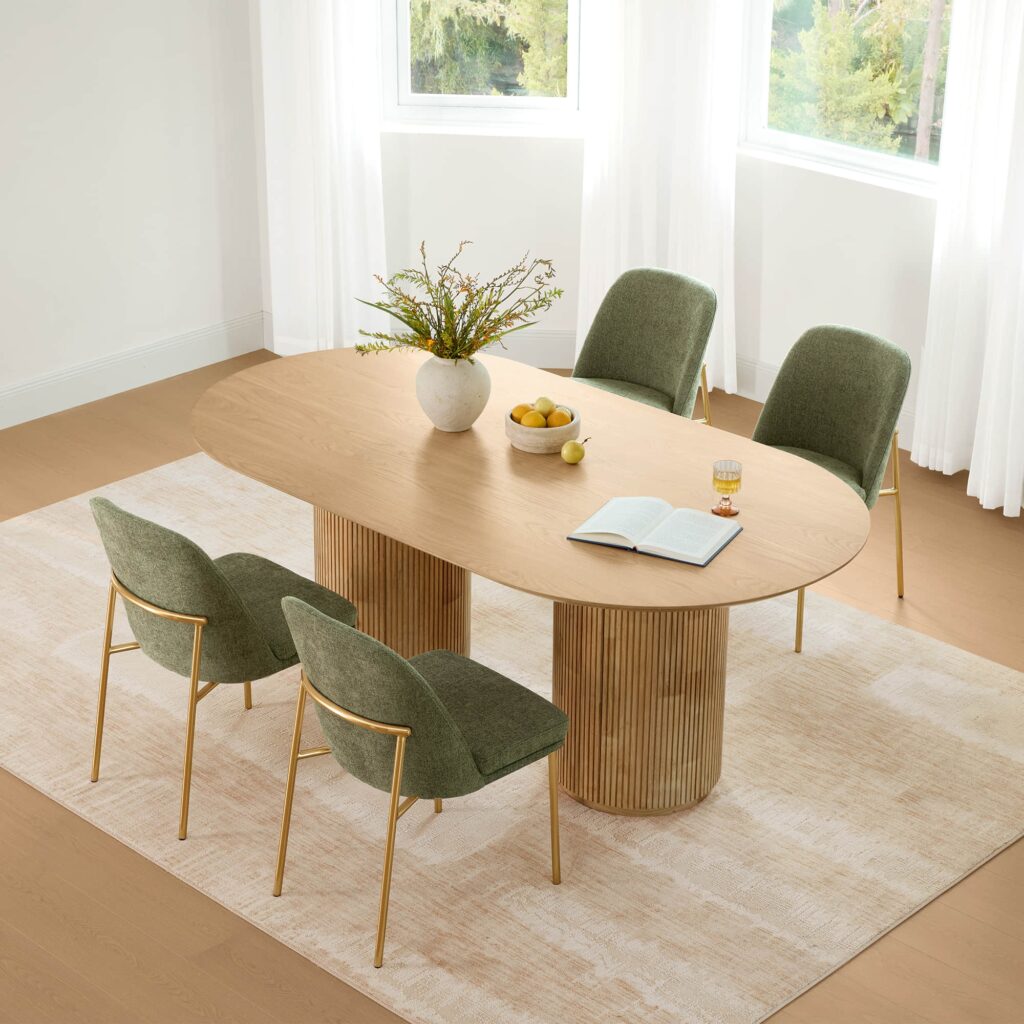
Brands like West Elm, Crate & Barrel, and Restoration Hardware occupy the mid-range with solid hardwood tables featuring kiln-dried construction and professional-grade finishes that withstand daily family use. For those drawn to warm, natural wood craftsmanship, Chitaliving offers wooden dining tables that balance clean design with solid construction—a worthwhile option for clients seeking understated elegance. For clients ready to invest in statement pieces, custom workshops and design-focused manufacturers such as Room & Board or local artisan makers offer live-edge slabs, hand-turned bases, and bespoke dimensions that transform the dining table into a one-of-a-kind anchor. Premium materials at this level include book-matched walnut, honed marble with sealed edges, and blackened steel fabrication that develops character over time. These pieces justify their investment through generational longevity—a well-crafted hardwood table can serve a family for fifty years or more with minimal refinishing.
Space-Saving Compact Dining Solutions
For urban apartments and multipurpose rooms, extendable tables from brands like BoConcept and Calligaris offer engineering-forward solutions that expand from four-seat daily use to comfortable six-seat entertaining through butterfly leaf or slide-out mechanisms. Drop-leaf designs remain relevant for extremely tight spaces—a table that folds against a wall when not in use reclaims valuable square footage in studio layouts. Innovative options include pedestal-base round tables that eliminate corner legs and allow flexible chair placement, and counter-height tables that double as kitchen workspace during the week. When specifying compact solutions, test the extension mechanism personally before recommending it—a table that requires two people and five minutes to expand will frustrate clients into never using the feature at all.
From Measurements to Memories: Making the Final Selection
Choosing a dining table for six requires a disciplined sequence of decisions, each building on the last. Start with precise measurements—confirm the table dimensions suit both the guest count and the room’s footprint, ensuring clearances that allow comfortable movement without wasted space. Next, align material and style with the project’s design narrative, selecting finishes and construction methods that serve both aesthetic ambitions and the household’s realistic maintenance capacity. Then consider layout holistically, positioning the table within the room so that lighting, rugs, and seating arrangements create a cohesive zone that draws people in rather than feeling like an isolated furniture grouping.
Finally, match product recommendations to the client’s budget with honesty and creativity—knowing that a well-chosen mid-range table often outperforms a poorly selected luxury piece in both longevity and daily satisfaction. For interior designers, mastering this process means delivering dining spaces that function effortlessly on a Tuesday night and rise to the occasion when guests arrive on Saturday. The tables we specify today become the backdrop for countless meals, conversations, and memories—a responsibility worth approaching with both precision and imagination.