
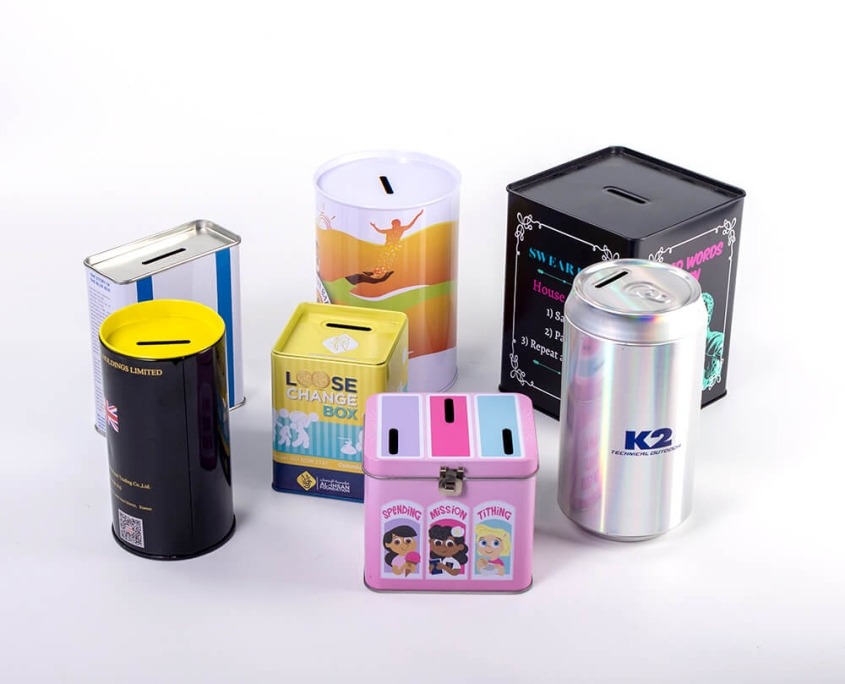
When evaluating custom tin cans, clients often focus first on color, logo placement, and overall visual appeal. This reaction is understandable; packaging plays a role in sales even before the product is opened. However, in actual production, appearance is only one aspect. A beautifully printed tin can loses its value if issues such as ink scratching, fading, peeling, or poor adhesion arise during transport, storage, or daily use. For brands relying on packaging to convey their image and value, such defects cause damage that goes far beyond the surface; they also undermine the effectiveness of the product’s messaging.
Why does the durability of custom tins printing and overall quality depend on surface treatment?
The durability of printing on custom tin cans depends not only on the ink itself but also on the ink’s adhesion to the metal surface and its ability to maintain that bond over time. While tinplate and other metal surfaces may appear smooth, smoothness does not equate to printability. In reality, metal surfaces can harbor grease, oxides, dust, rolling residues, and other contaminants invisible to the naked eye—all of which can compromise ink adhesion. If surface treatment is inadequate, the printed design might look fine initially, but could gradually peel off during actual use. This is why surface pretreatment is crucial; it creates a cleaner, more stable substrate for printing. By removing contaminants and increasing surface energy, pretreatment ensures superior adhesion for inks and coatings.
Surface pretreatment eliminates hidden issues before printing.
The first step of pretreatment is straightforward: removing substances that should not be present on the surface. Even trace amounts of oil, dust, fingerprints, rolling residues, or oxides can weaken the adhesion of the print on custom tins. Although invisible to the naked eye, these contaminants can disrupt the bond between the metal and the ink film.
Cleaning typically begins with degreasing. During metal forming and processing, tin surfaces often pick up lubricants and manufacturing residues. If these residues accumulate, the ink may fail to spread evenly or adhere securely. Effective pretreatment removes these substances, making the surface more receptive to printing. This step alone can significantly enhance print quality. Surface oxidation is another issue that is easily overlooked. Over time, metal reacts with air and moisture, forming a thin oxide layer that reduces adhesion. Even if this layer is not immediately visible, it creates weak points on the printing surface.
Pre-treatment of custom tins improves surface energy and ink adhesion
Beyond cleaning, a primary function of pre-treatment is to increase surface energy. This is one of the most critical—yet often overlooked—factors in enhancing print durability. Simply put, surface energy dictates how well ink wets and spreads across the metal surface. If surface energy is too low, ink may bead up, separate, or form weak contact zones. Increasing surface energy allows the ink to form a stronger, more uniform bond.
This is vital for custom tins, as durable printing relies on intimate contact between the ink layer and the metal substrate. When the surface is more receptive to ink, the ink adheres effectively rather than sitting loosely on the surface. This stronger interaction helps prevent the printed design from scratching, peeling, or lifting at the edges, and ensures long-term color stability. Many tin box manufacturers employ specialized pre-treatment methods before printing to boost surface energy.
Pre-treatment enhances resistance to abrasion, moisture, and heat
Print durability is tested not only in the laboratory but also in warehouses, on trucks, on retail shelves, and in consumers’ homes. Consequently, custom tin cans must withstand various stresses. They are subjected to friction from stacking and handling, moisture in storage environments, and temperature fluctuations during transport or product use. Surface pre-treatment helps the printed layer better withstand these conditions.
Abrasion resistance is a key benefit. During packaging or shipping, cans may rub against one another; if adhesion is insufficient, the printed design can wear away. Pre-treatment strengthens the bond between the ink and the metal, reducing the likelihood of scratches or abrasions. This is particularly important for custom tin cans that are tightly packed in cartons or shipped in large volumes.
Achieving better results with different printing methods
Different printing methods impose varying surface requirements on custom tin cans. While pre-treatment enhances the reliability of any printing method, its specific benefits vary depending on the technique used. Therefore, the choice of pre-treatment method must always align with the printing process. For offset printing, surface uniformity and cleanliness are paramount; a stable surface is essential for accurately reproducing fine details, gradients, and brand-specific colors. Surface contamination or irregularities can compromise print clarity and consistency. Pre-treatment creates a controlled substrate, thereby improving both image quality and durability.
For screen printing, adhesion is typically the primary concern. Screen-printed designs often feature bold logos, solid color blocks, or high-contrast graphics—elements that require strong adhesion to prevent peeling or edge wear. Pre-treatment enhances the bond between the ink and the substrate, ensuring superior long-term performance. For tin box manufacturers, aligning the pre-treatment process with the printing method is a crucial aspect of effective technical control.
Surface Pre-treatment: The Key to Durable Custom Tins
Surface pre-treatment plays a decisive role in the print durability of custom tins. It removes contaminants, increases surface energy, enhances ink adhesion, and helps the printed layer withstand abrasion, moisture, and high temperatures. Furthermore, it optimizes the performance of various printing processes and establishes a more reliable foundation for maintaining high quality over the long term. For customers, the message is simple: if print durability is critical, then surface trea