
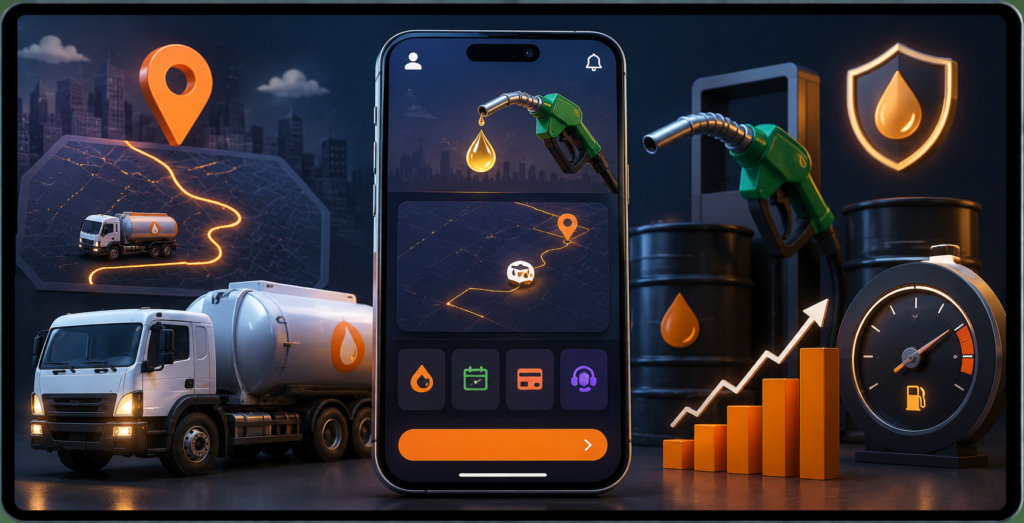
The on-demand economy has transformed how essential services are delivered, and fuel distribution is no exception. Businesses and consumers now expect fast, safe, and reliable fuel delivery directly to their location, whether it’s for vehicles, generators, or industrial use. This shift has created a strong demand for intelligent, scalable, and user-friendly mobile applications that can manage logistics, safety, and real-time operations efficiently.
As competition grows in this space, companies must focus on building feature-rich applications that not only streamline fuel ordering but also ensure compliance, tracking accuracy, and seamless user experience. A well-designed platform can significantly improve operational efficiency while opening new revenue streams for fuel providers.
User-Friendly Customer Interface
A successful fuel delivery application starts with a simple and intuitive customer interface. Users should be able to place orders without confusion or unnecessary steps.
Key features include:
- Easy registration and login
- Quick fuel selection (petrol, diesel, industrial fuel)
- Real-time price estimation
- Delivery scheduling options
- Saved delivery locations
A clean UI ensures customers can complete orders in seconds, increasing conversion rates and improving retention.
Advanced Booking and Scheduling System
Fuel demand is not always immediate; many users require scheduled deliveries for fleets, construction sites, or backup generators.
A robust scheduling system should offer:
- Future date and time booking
- Recurring delivery options
- Emergency fuel requests
- Priority delivery slots
- Dynamic availability updates
This feature ensures better resource planning and reduces operational delays.
Real-Time Tracking and GPS Integration
One of the most critical features in fuel delivery apps is real-time tracking. Customers want visibility into their order from dispatch to delivery.
A strong tracking system includes:
- Live GPS tracking of delivery vehicles
- Estimated time of arrival (ETA)
- Route optimization for drivers
- Delivery status notifications
- Geofencing alerts
This level of transparency builds trust and enhances user satisfaction.
Secure Payment Integration
A successful fuel delivery platform must support multiple secure payment options. Users expect convenience and flexibility when paying for services.
Common payment features include:
- Credit/debit card payments
- Digital wallets
- UPI and instant transfers
- Cash on delivery (where applicable)
- Automated invoicing and receipts
Security protocols such as encryption and tokenization are essential to protect sensitive financial data.
Driver App and Fleet Management System
Drivers are the backbone of any fuel delivery platform. A dedicated driver application ensures smooth coordination between users and logistics teams.
Key driver features include:
- Trip assignment and navigation
- Delivery status updates
- Digital proof of delivery
- Fuel inventory tracking
- Earnings and performance dashboard
Fleet management tools also help businesses monitor vehicle usage, maintenance schedules, and fuel capacity.
Admin Dashboard for Full Control
An advanced admin panel is necessary to manage the entire ecosystem efficiently.
It should include:
- User and driver management
- Order monitoring and control
- Analytics and reporting tools
- Pricing management
- Complaint resolution system
With a centralized dashboard, businesses can make data-driven decisions and improve operational efficiency.
Safety and Compliance Features
Fuel delivery involves hazardous materials, making safety a top priority. The application must integrate strict safety protocols.
Essential safety features include:
- Driver verification and training records
- Hazardous material handling guidelines
- Emergency response integration
- Automated safety alerts
- Compliance tracking with local regulations
These features ensure both customer and operational safety while maintaining legal compliance.
AI-Powered Optimization and Analytics
Modern fuel delivery applications leverage AI to improve efficiency and reduce operational costs.
AI-driven features include:
- Demand forecasting
- Route optimization
- Fuel consumption analysis
- Customer behavior insights
- Dynamic pricing models
These tools help businesses scale efficiently while maintaining service quality.
Scalability and Cloud Infrastructure
As user demand grows, the application must handle increasing traffic without performance issues. A scalable architecture ensures smooth operations during peak usage.
Important considerations:
- Cloud-based hosting solutions
- Microservices architecture
- Load balancing systems
- Database optimization
- Auto-scaling capabilities
This ensures long-term reliability and performance stability.
1. Role of Fuel Delivery Applications in Modern Business
Modern fuel delivery systems are transforming logistics by offering real-time tracking, automated dispatching, and seamless customer ordering experiences. Businesses in this sector are increasingly relying on advanced digital platforms to improve operational efficiency and customer satisfaction.
To build such scalable and secure platforms, partnering with a fuel delivery application development company becomes essential. These experts ensure the app includes features like GPS tracking, secure payments, and fleet optimization while maintaining industry compliance and safety standards.
2. Importance of Technology and Expertise in App Development
As demand for on-demand fuel services grows, businesses must focus on performance, scalability, and user experience. From backend architecture to UI/UX design, every component plays a critical role in application success.
Working with a mobile app development company in Denver helps businesses leverage modern technologies, agile development processes, and robust infrastructure to create high-performing fuel delivery solutions that can handle large-scale operations efficiently.
Customer Support and Communication Tools
Efficient communication is essential in on-demand services. Customers should be able to reach support instantly if issues arise.
Key features include:
- In-app chat support
- AI chatbots for instant responses
- Call integration
- Ticketing system
- Order issue resolution tracking
This improves customer satisfaction and builds brand trust.
Conclusion
A successful on-demand fuel delivery application is built on a combination of smart design, advanced technology, and operational efficiency. From user-friendly interfaces and real-time tracking to secure payments and AI-driven optimization, every feature plays a critical role in ensuring smooth service delivery. Businesses that invest in well-structured platforms can significantly improve customer satisfaction, reduce operational costs, and gain a strong competitive advantage in the growing fuel delivery market.