
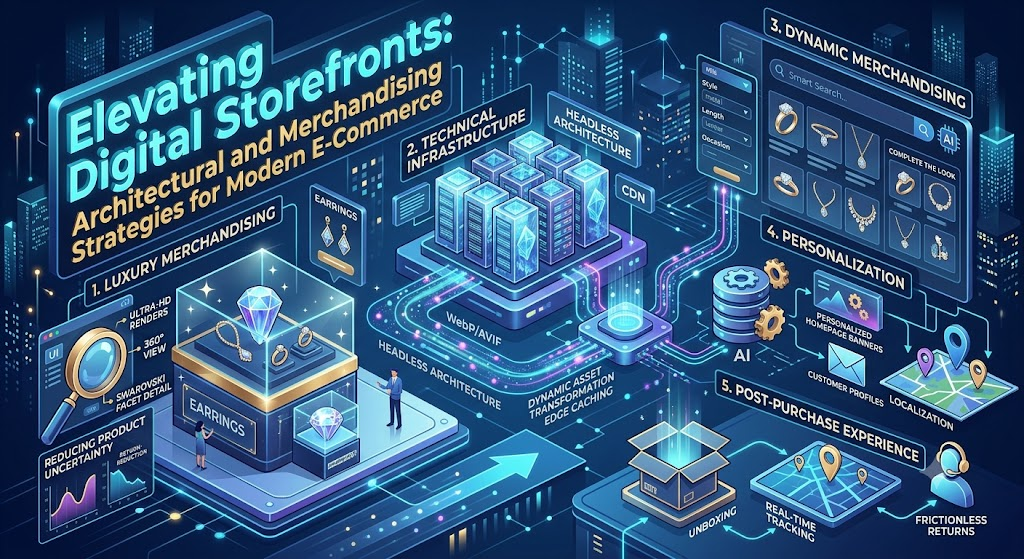
The global e-commerce landscape has transitioned from a convenience-driven purchasing channel into a primary destination for brand discovery and high-value retail. In the early days of online shopping, consumer decisions were heavily dictated by basic utility, price comparison, and delivery speed. Today, digital storefronts must deliver rich interactive experiences, frictionless navigation, and sophisticated visual storytelling that reflect the prestige and quality of physical boutique shopping.
As customer acquisition costs continue to rise across digital marketing channels, online retailers can no longer rely solely on top-of-funnel ad spend to drive growth. Sustainable profitability depends on maximizing conversion rates, elevating average order value, and building long-term customer retention. Achieving these metrics requires a deliberate alignment between technical infrastructure, high-fidelity visual assets, and personalized merchandising strategies.
1. Reinterpreting Luxury Merchandising for the Digital Screen
Selling high-margin products online presents a distinct psychological barrier: consumers cannot physically handle, weigh, or inspect the craftsmanship of the items before placing an order. In physical retail environments, tactile feedback, lighting, and curated display cases build trust and justify premium price points. To replicate this sensory reassurance online, e-commerce brands must invest heavily in high-fidelity visual assets and interactive product displays.
When browsing premium accessory and jewelry catalogs online, customer confidence relies entirely on extreme visual precision and realistic material presentation. Industry leaders like Swarovski have demonstrated how high-resolution multi-angle renders, 360-degree interactive viewers, and close-up video clips help bridge the gap between digital previews and physical reality. When shoppers can examine facet cuts, reflections, and fine textures in crystal detail, purchase hesitation drops significantly.
Furthermore, context-rich imagery—such as model previews showing exact scale and proportion—helps manage consumer expectations accurately. Reducing product uncertainty directly lowers return rates, which remain one of the largest operational margin drains in modern e-commerce fulfillment.
2. Technical Infrastructure for High-Throughput Visual Catalogs
Delivering media-rich shopping experiences creates an inherent technical challenge: balancing ultra-high-definition imagery with rapid page load speeds. Modern consumers expect instantaneous navigation, with page load delays of even a single second leading to measurable drops in conversion rates and higher bounce rates.
To support heavy media assets without compromising load times, modern e-commerce platforms leverage advanced headless architecture and content delivery networks. Key technical optimizations include:
- Next-Generation Image Formats: Utilizing lightweight WebP and AVIF formats that preserve intricate detail while minimizing file payload sizes.
- Dynamic Asset Transformation: Automatically serving resized and compressed images based on the user’s specific screen resolution, device type, and connection speed.
- Asynchronous Loading and Prefetching: Prioritizing critical above-the-fold content while lazily loading secondary product galleries as the user scrolls.
- Edge Caching: Storing static product catalog data at server nodes closest to the user, drastically reducing latency across global markets.
By decoupling the front-end presentation layer from backend database management systems through API-first development, brands ensure that complex visual catalogs remain lightning-fast during peak traffic events.
3. Dynamic Merchandising and Precision Category Filtering
As product inventories expand, presenting shoppers with intuitive discovery paths becomes critical to maintaining high engagement. Disorganized product categories or rigid filtering menus force users to scroll through hundreds of irrelevant items, leading to decision fatigue and abandoned sessions. Modern e-commerce architecture relies on intelligent taxonomy and real-time dynamic filtering to streamline navigation.
A well-structured catalog categorizes inventory not just by basic product types, but also by style preferences, metal finishes, wearing occasions, and price bands. For example, a shopper searching for statement earrings should be able to filter instantly by drop length, stud design, stone color, or backing mechanism without reloading the main catalog page. Similarly, when multi-category retailers localize product lines across global markets—such as tagging fitness gear under regional terms like hantlar for Scandinavian shoppers—implementing multi-faceted taxonomy ensures that buyers reach their desired product within two or three clicks.
Beyond static filters, dynamic merchandising algorithms analyze user browsing history, search terms, and trending items to reorder search results on the fly. Recommending complementary pieces—such as matching necklaces or bracelets alongside selected items—naturally increases cross-selling opportunities and average basket value.
4. Personalization and Omnichannel Data Integration
Modern consumers expect their online shopping journey to reflect their individual preferences. Generic bulk marketing emails and static homepage banners are rapidly being replaced by AI-driven personalization engines that adapt content based on past purchases, brand interactions, and location data.
Integrating inventory management with customer relationship data enables brands to deliver hyper-targeted shopping experiences:
- Tailored Product Recommendations: Displaying personalized “Complete the Look” modules based on items currently in the user’s cart or wishlist.
- Localized Stock Availability: Informing shoppers whether an item is available for immediate local pickup or home delivery based on real-time geolocation.
- Predictive Re-engagement: Triggering automated lifecycle communications when past buyers are due for repeat orders, seasonal releases, or special occasion gifts.
When data flows seamlessly between enterprise resource planning systems and user-facing storefronts, retailers can deliver cohesive experiences across web, mobile apps, and social commerce platforms.
5. Post-Purchase Experience and Sustainable Brand Trust
The e-commerce customer journey does not end when the payment transaction completes; in fact, the post-purchase phase heavily influences brand loyalty and customer lifetime value. High-performing online retailers prioritize transparent shipping updates, unboxing experiences, and frictionless return policies to solidify customer satisfaction.
Providing detailed tracking portals, automated delivery updates, and responsive digital customer support transforms a simple order transaction into a long-term relationship. Brands that invest in sustainable packaging, clear warranty information, and hassle-free exchange portals consistently generate higher repeat purchase rates and strong organic advocacy.
Succeeding in the modern e-commerce marketplace requires far more than setting up a digital catalog and running acquisition ads. Sustainable growth demands a balanced integration of robust platform architecture, intuitive catalog organization, and high-fidelity visual storytelling. By eliminating technical performance bottlenecks, implementing precision filtering, and prioritizing post-purchase satisfaction, online retailers can create engaging digital storefronts that stand out in an increasingly competitive landscape.