
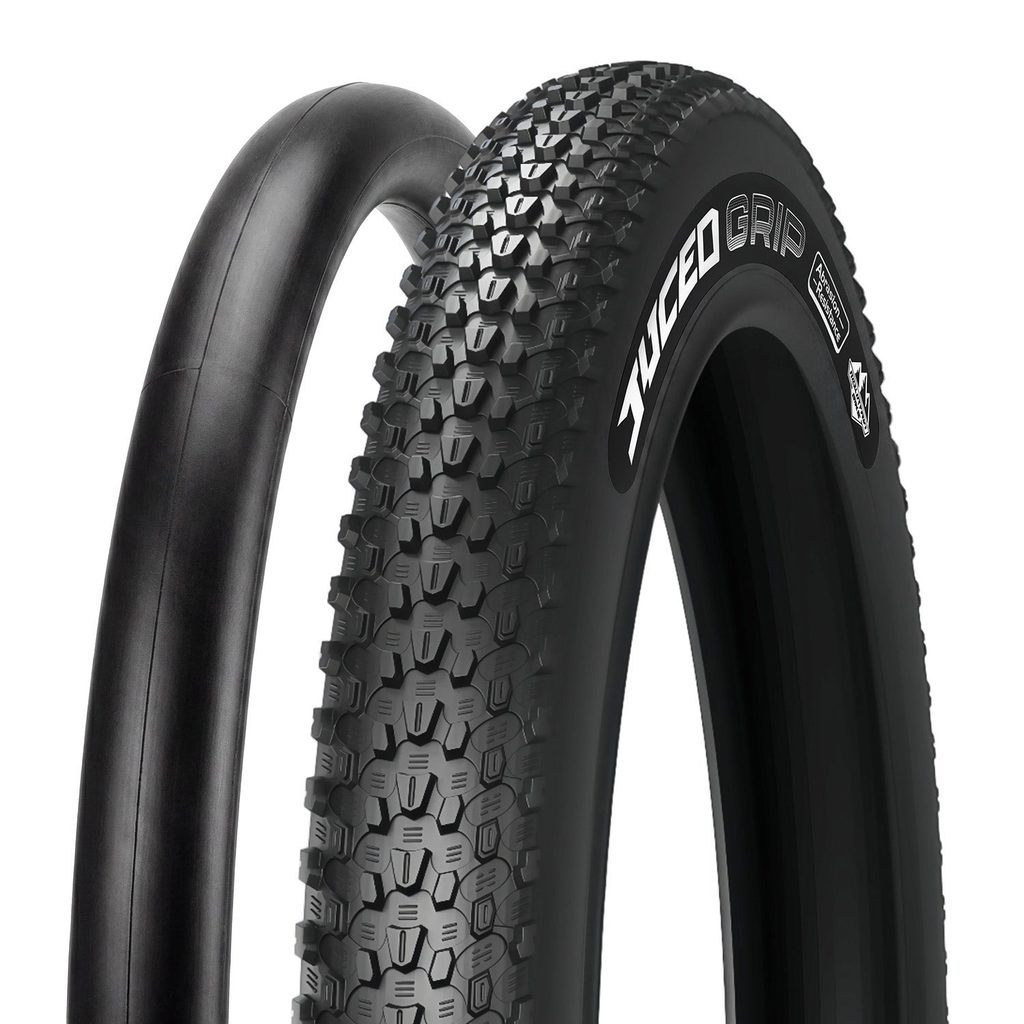
Every mountain bike tire is a compromise between two competing goals: rolling fast and gripping hard. No tread pattern excels at both simultaneously, which means the tire that feels perfect to a cross-country racer chasing efficiency will frustrate a rider descending steep, technical terrain who needs every bit of traction available.
Understanding this trade-off changes how you shop for tires. Instead of searching for a mythical do-everything tire, the smarter approach is figuring out where your riding actually falls on the speed-versus-grip spectrum and choosing accordingly. This piece breaks down what each end of that spectrum looks like and how to find your position on it.
What Fast-Rolling Tires Sacrifice
Low-profile tread with tightly packed knobs minimizes rolling resistance by reducing the amount of rubber deforming against the ground with each pedal stroke. This efficiency is exactly what long climbs and endurance rides reward, letting riders conserve energy over hours in the saddle rather than fighting drag from oversized knobs that barely engage on firm ground.
The sacrifice shows up the moment conditions turn loose or wet. Fast-rolling tread simply doesn’t have enough bite to hold a line through a loose corner or muddy climb, and riders who choose these tires for terrain they don’t suit often find themselves sliding through sections that a grippier tire would clear easily.
What Grip-Focused Tires Sacrifice
On the other end, tall, aggressive knobs spaced widely apart dig deep into soft or loose surfaces, providing confident traction on descents, in mud, and through loose rock gardens. This is the tread of choice for enduro and downhill riders who need predictable grip more than they need pedaling efficiency.
The Rolling Resistance Trade-off
That same aggressive knob structure creates drag on hardpack and pavement sections, since more rubber flexes and deforms with each rotation. Riders who spend significant time climbing or riding flat connector trails between technical sections will feel this efficiency loss on every pedal stroke, even if the descents feel fantastic.
Finding Your Position on the Spectrum
Most riders don’t sit at either extreme. Trail riders who mix climbing, flat sections, and technical descents typically land somewhere in the middle, favoring a moderate tread that balances both qualities reasonably well without excelling dramatically at either. Identifying your typical ride composition, roughly how much time you spend climbing versus descending technical terrain, helps narrow down where you belong on this spectrum.
Front and rear tires don’t need to match either. Many experienced riders run a grippier tread up front for confident cornering and braking, paired with a faster-rolling tire in the rear where grip demands are slightly lower. This mixed setup, sometimes offered as a matched front-rear combination, lets you capture benefits from both ends of the spectrum instead of choosing one compromise for the whole bike. Exploring a full range of mountain bike tires makes it easier to identify which pairing fits your specific balance of climbing and descending.

Juceo’s lineup spans this spectrum deliberately, giving riders a way to lean toward speed, grip, or a balanced middle ground depending on the terrain they ride most often throughout the year.
Balancing Speed and Traction for Your Trails
There’s no universally superior tire, only a better fit for the specific mix of climbing, descending, and cornering that makes up your typical ride. Fast-rolling tread rewards efficiency on smooth, firm trails, while aggressive tread rewards confidence on loose, technical terrain.
Rather than searching for a tire that does everything, identify where your riding actually falls on that spectrum and choose tread that matches it, mixing front and rear setups if your trails demand both qualities in different measures.