
The substrate dictates the primer, the surface preparation, and often the topcoat chemistry itself. Polyurethane colored paints are applied to metal, concrete, wood, and plastic, and each requires a different approach.
Steel is the most common substrate in industrial and architectural applications. The steel must be cleaned to the appropriate standard, typically abrasive blast cleaning, before any coating is applied. A primer is almost always required, both for adhesion and for corrosion protection. Epoxy primers are common under polyurethane topcoats because they provide excellent corrosion resistance and a compatible surface for the topcoat to bond to.
Aluminum requires different preparation. The surface is often treated with a conversion coating or an etch primer to promote adhesion. Without proper preparation, polyurethane paint may not bond reliably to aluminum, leading to premature peeling.
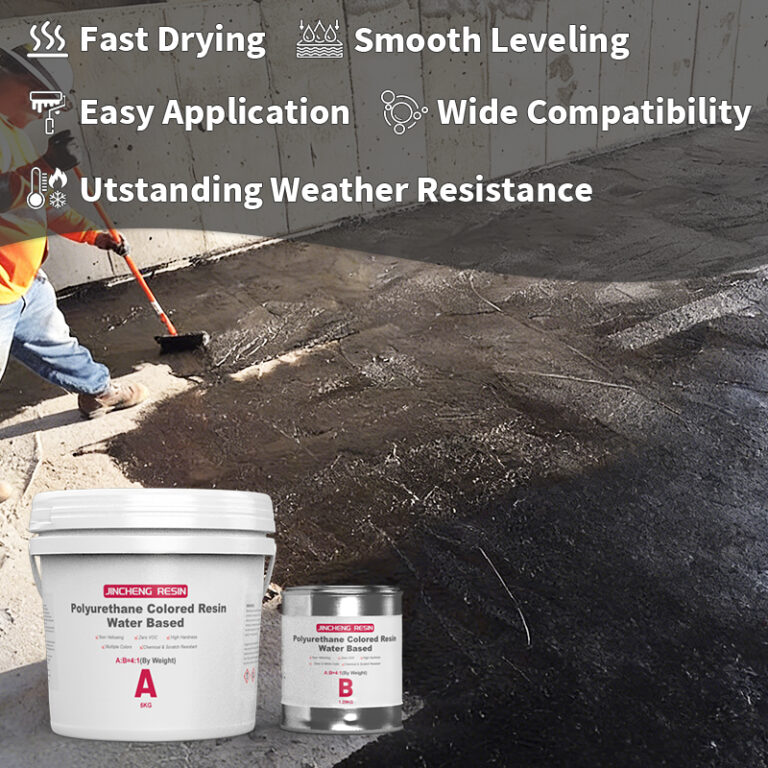
Concrete is porous and alkaline, and it requires a primer that seals the surface and resists alkali attack. Polyurethane colored paints can be applied to concrete, but the concrete must be fully cured, typically twenty-eight days or more, before coating. Moisture in the concrete can cause blistering or adhesion failure.
Wood is coated with polyurethane colored paint in some applications, but wood moves with changes in humidity, and the coating must be flexible enough to accommodate that movement. Exterior wood coatings often use flexible polyurethane formulations or hybrid systems.
Plastics vary widely in their surface energy and compatibility with coatings. Some plastics require special primers or surface treatments. Others cannot be coated reliably at all. Testing is essential before committing to a specification.
Match the Chemistry to the Exposure
The exposure environment determines whether an aromatic or aliphatic polyurethane is appropriate. This is one of the most consequential decisions in the specification process.
Aromatic polyurethanes are economical and perform well in interior applications where UV exposure is minimal. They are used in industrial equipment, interior metalwork, and some automotive underbody coatings. They are not suitable for exterior applications because they yellow and chalk when exposed to sunlight.
Aliphatic polyurethanes resist UV degradation and retain color and gloss in exterior exposure. They are more expensive than aromatic systems, but the performance difference justifies the cost in applications where appearance matters. Automotive topcoats, architectural metalwork, marine finishes, and exterior industrial equipment all use aliphatic polyurethanes.
The exposure environment also determines the required chemical resistance. A coating exposed to solvents, acids, or fuels must be formulated to resist those specific chemicals. The manufacturer should provide chemical resistance data for the intended exposure.
Application Method Drives Formulation Choice
The way a coating is applied affects which formulation will work. Spray application is the most common method for industrial and automotive coatings. It requires a formulation with the right viscosity, pot life, and spray characteristics. Brush and roller application is common in architectural and field applications, and it requires a formulation that levels well and does not dry too quickly.
Environmental conditions during application also matter. Temperature and humidity affect cure speed, pot life, and finish quality. A formulation designed for a heated spray booth may not perform well in a cold, humid field environment. The manufacturer should provide guidance on the acceptable application window.
Color Consistency and Matching
Color is the most visible attribute of polyurethane colored paint, and consistency is essential. In production environments, batches must match each other and match the specified standard. In repair and touch-up work, the new coating must match the existing finish, which may have weathered or changed since it was applied.
Manufacturers address this through rigorous pigment dispersion, color matching technology, and batch documentation. Specifiers should ask about the manufacturer’s color matching capabilities, the tolerance for batch-to-batch variation, and the availability of touch-up products in the same color.
For critical color matches, some manufacturers provide custom color matching services. The customer provides a sample, and the manufacturer formulates a matching batch. This is common in automotive refinishing and architectural restoration.
Warranty and Technical Support
A polyurethane colored paint is a long-term investment. The warranty and technical support provided by the manufacturer reflect their confidence in the product and their commitment to the customer.
A meaningful warranty covers both the coating and the labor to repair or replace it if it fails. The terms should be clear, and the exclusions should be understood. A warranty that excludes the most common failure modes is of limited value.
Technical support matters before, during, and after application. Before application, the manufacturer should help with specification and substrate preparation. During application, they should provide guidance on mixing, application, and curing. After application, they should be available to address questions and investigate problems.
The Bottom Line
Specifying a polyurethane colored paint is a technical decision with long-term consequences. The substrate, the exposure environment, the application method, and the color requirements all shape the choice. A coating that meets all these requirements and is backed by a manufacturer with strong technical support will perform as expected for years. One that does not may fail prematurely, requiring costly repair and repainting. The care taken in specification is repaid in performance and longevity.