
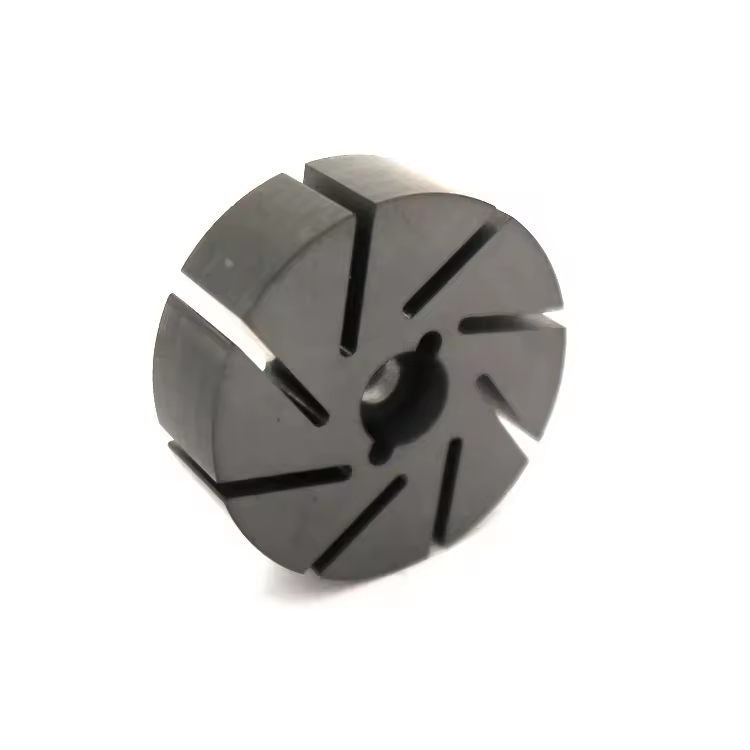
The first sign of a failing graphite impeller is usually a change in pump performance. The flow rate drops. The discharge pressure falls. The motor draws more current as it works harder to move the same volume of fluid. Operators may notice that a pump that once filled a tank in thirty minutes now takes forty-five. That is a signal that something has changed.
Vibration is another warning sign. A balanced impeller runs smoothly. An unbalanced one vibrates, and the vibration transmits to bearings, seals, and piping. Maintenance engineers often detect this through routine vibration monitoring before it becomes severe enough for operators to notice. By the time an impeller is visibly damaged, the problem has usually been developing for weeks or months.
Noise is a third indicator. A pump with a failing impeller may sound different. The pitch may change. Grinding or scraping sounds may indicate that the impeller is contacting the housing. Any new noise in a pump that has been running quietly deserves investigation.
Finally, visual inspection during routine maintenance reveals wear patterns. Erosion, cracking, and loss of material are all signs that the impeller is approaching the end of its service life. Catching these signs early allows planned replacement rather than emergency shutdown.
The Causes of Graphite Impeller Failure
Graphite impeller fail for several reasons, and understanding the cause is essential to preventing recurrence. Erosion is the most common cause in abrasive service. Slurries containing sand, ore particles, or crystalline solids wear away the graphite surface, changing the impeller geometry and reducing performance. The wear rate depends on the particle size, hardness, concentration, and velocity.
Cracking is another failure mode. Graphite is brittle, and it does not tolerate mechanical shock or thermal shock well. A pump that experiences cavitation, water hammer, or rapid temperature changes can crack a graphite impeller. The crack may not cause immediate failure, but it weakens the impeller and eventually leads to catastrophic breakage.
Chemical attack can also degrade graphite impellers, though this is less common. Graphite resists most acids and alkalis, but it can be attacked by strong oxidizing agents at high temperatures. If the process chemistry changes, the impeller may no longer be compatible.
Improper installation can cause failure as well. An impeller that is not properly balanced, not correctly seated on the shaft, or not aligned with the housing will wear prematurely or fail suddenly. Maintenance errors during installation are a common cause of premature failure.
Preventing Failure Through Proper Operation
Preventing graphite impeller failure begins with operating the pump within its design parameters. Running a pump outside its flow range causes cavitation, vibration, and excessive wear. Running it dry causes rapid overheating and cracking. Running it at speeds higher than designed causes vibration and stress that the graphite cannot tolerate.
Proper filtration and solids control reduce erosion. If the process fluid contains abrasive particles, filtering or settling them out before they reach the pump reduces wear on the impeller. In some cases, a different impeller material may be more suitable, but graphite remains the best choice for corrosive service.
Regular inspection and maintenance catch problems before they cause failure. Vibration monitoring, performance trending, and periodic visual inspection all provide early warning. Keeping spare impellers on hand ensures that replacement can be done quickly when needed.
Managing Replacement Intelligently
When a graphite impeller fails, the priority is restoring production. But replacement should not be a simple swap. The failure should be investigated to determine the cause. Was the impeller worn from erosion? Was it cracked from thermal shock? Was it damaged during installation? The answer determines what changes are needed to prevent recurrence.
The replacement impeller should be sourced from a supplier who can provide the correct grade, dimensions, and balance. Graphite impellers are not interchangeable between pumps, and a poorly made replacement will fail prematurely. Documentation of material properties and dimensional inspection is essential.
If the failure was caused by operating conditions rather than the impeller itself, those conditions should be addressed. Reducing pump speed, improving filtration, or changing the process chemistry may extend impeller life significantly. A maintenance program that only replaces failed components without addressing root causes is a program that will keep replacing them.
The Bottom Line
A graphite impeller is a critical component in pumps that handle corrosive, hot, or contaminated fluids. When it fails, production stops. Maintenance engineers who understand the warning signs of failure, the causes, and the strategies for prevention and replacement are better equipped to keep those pumps running. The graphite impeller may not be the most glamorous component in the plant, but it is one of the most important. Treating it that way is the mark of a well-run maintenance program.