
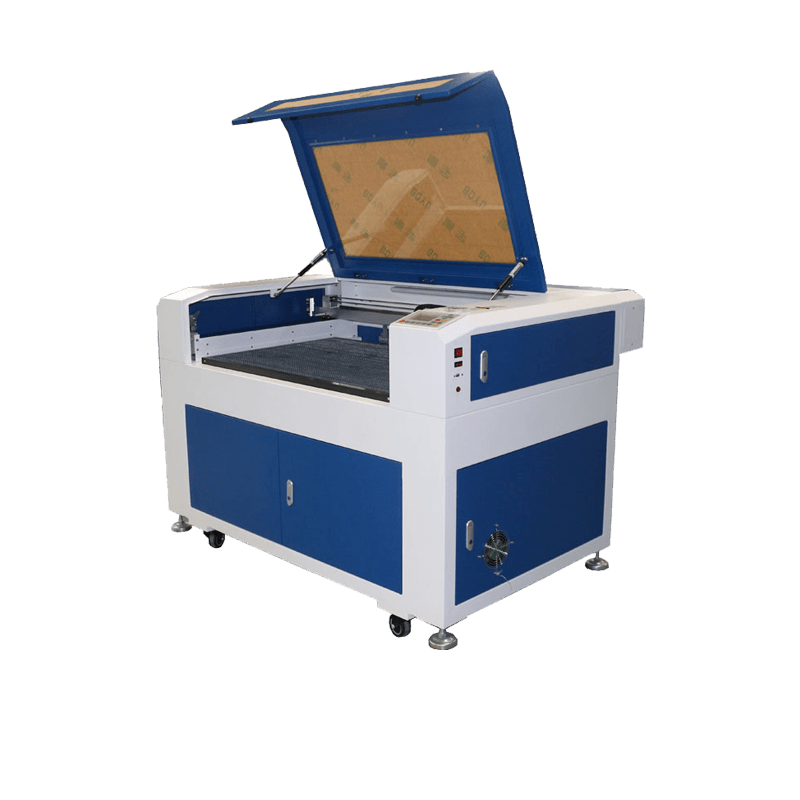
The CO2 laser cutting machine manufacturer serves a market that fiber laser manufacturers largely ignore. Fiber lasers dominate metal cutting because their shorter wavelength is absorbed efficiently by steel, aluminum, and copper. CO2 lasers operate at a longer wavelength that metals reflect but organic materials absorb. This division of labor is not a limitation. It is a specialization, and it has created a distinct industry with its own customers, technical challenges, and competitive dynamics.
The customers for CO2 laser cutting machines are diverse. Sign shops cut acrylic letters and logos. Packaging companies cut cardboard and corrugated board. Fashion and upholstery businesses cut leather, fabric, and foam. Architectural model makers cut plywood and MDF. Schools and maker spaces use smaller machines for teaching and prototyping. Each of these customer segments has different requirements for bed size, power, speed, and software, and manufacturers position their product lines accordingly.
What Manufacturers Actually Build
A CO2 laser cutting machine is not a single product but a system of components that must work together reliably. The laser resonator, or tube, is the most recognizable component. It contains the gas mixture and the electrodes that excite it. Tube quality varies enormously between manufacturers. Some build their own tubes in-house, controlling quality and cost. Others source tubes from third-party suppliers, which can lead to variability in performance and lifespan.
The motion system determines how precisely and quickly the beam moves across the material. Belt-driven systems are common in entry-level machines and are adequate for many applications but can stretch over time and lose accuracy. Rack-and-pinion systems are more rigid and precise and are found in mid-range and high-end machines. Linear motor systems offer the highest speed and accuracy but come at a premium.
The optics, including mirrors and the focusing lens, must be precisely aligned and kept clean. Dust and debris from cutting accumulate on optics and degrade beam quality, so manufacturers design their machines with access and maintenance in mind. The control system, including the CNC and the software, determines how easily the machine can be programmed and operated. Some manufacturers provide comprehensive software suites, while others rely on third-party solutions.
The Power Range and What It Means for Buyers
CO2 laser cutting machine manufacturer typically offer systems from around 40 watts to 400 watts, with larger industrial machines exceeding that range. The power rating determines the thickness of material that can be cut and the speed at which cutting can be performed.
Low-power machines, from 40 to 60 watts, are suited to thin materials and fine detail work. They are common in small shops, schools, and maker spaces where the primary work is engraving and cutting thin acrylic, paper, and fabric. Medium-power machines, from 80 to 150 watts, handle thicker materials and faster production speeds. This is the workhorse range for most commercial sign and fabrication shops. High-power machines, 200 watts and above, cut thick acrylic and wood and are used in industrial production where throughput is critical.
The laser tube is a consumable. It degrades over time and must be replaced. The cost and lifespan of the tube vary widely depending on the manufacturer. A cheap machine with expensive tubes may cost more over five years than a more expensive machine with affordable tubes. Buyers who ignore this calculation often regret it.
What Separates a Good Manufacturer From a Bad One
Several factors distinguish a manufacturer that supports its customers well from one that does not. The first is tube quality and availability. A manufacturer that builds reliable tubes and stocks replacements locally makes life easier for the customer than one that sources tubes from overseas with long lead times.
The second is software. The control software determines how easily the machine can be programmed, how well it handles common file formats, and whether it includes nesting capabilities that optimize material usage. Manufacturers that invest in good software reduce training time and increase productivity for their customers.
The third is service and support. CO2 laser cutting machines require maintenance and occasional repair. A manufacturer with a local service network and responsive technical support keeps downtime short. One without forces customers to solve problems on their own.
The fourth is documentation and training. Clear manuals, accessible training materials, and responsive customer service make the difference between a machine that runs smoothly from day one and one that frustrates its owner for months.
The Global Landscape
CO2 laser cutting machine manufacturing is a global business. Chinese manufacturers dominate the entry-level and mid-range markets, offering machines at prices that have made the technology accessible to small shops and startups worldwide. European and American manufacturers focus on the high end, competing on precision, reliability, and service rather than price.
For buyers, this means a wide range of options at different price points. It also means that due diligence is essential. Not all manufacturers are equal, and the cheapest machine is rarely the best value. Speaking with existing customers, visiting showrooms, and testing the machine on actual production materials are the best ways to separate a good manufacturer from one that will leave you stranded.
The Bottom Line
The CO2 laser cutting machine manufacturer occupies a specialized niche in the industrial equipment market. Their products cut materials that other technologies cannot, and they serve industries that depend on precision, speed, and flexibility. Choosing the right manufacturer is a decision that affects productivity, operating costs, and the ability to grow. It is not a decision to be made on price alone.