
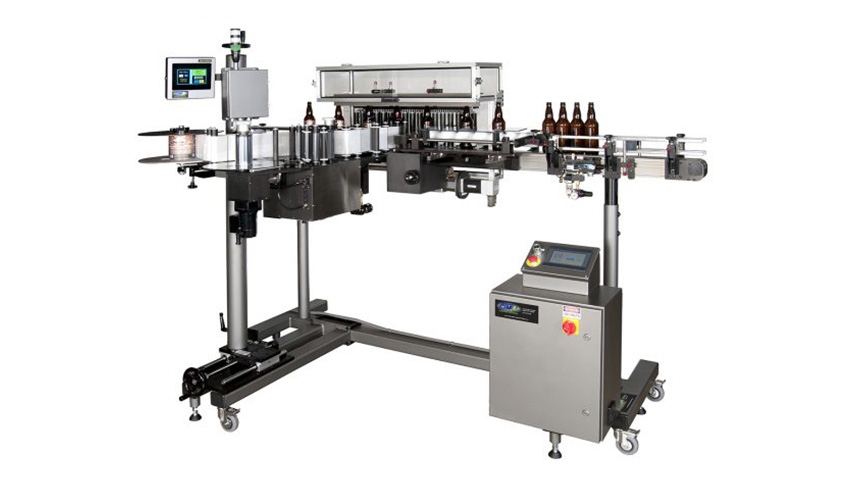
Every product that leaves your facility tells a story. But if that story is told with crooked labels, smudged barcodes, or inconsistent branding, you’re not just wasting time—you’re losing money and customers.
The truth is, manual labeling has a hidden cost that most business owners don’t calculate until it’s too late. And in today’s competitive market, that cost is becoming impossible to ignore.
The True Cost of Manual Labeling
Let’s start with the numbers that matter.
Manual labeling is slow, error-prone, and expensive. One small manufacturer discovered this firsthand when they realized their manual labeling bottleneck was costing them over $50,000 annually in labor and errors . That’s not a typo—**$50,000 a year** lost to a process that could be automated.
Here’s what that breakdown looks like:
- Labor costs: Employees spending hours applying labels by hand instead of focusing on higher-value tasks
- Error rates: Crooked labels, misaligned barcodes, and incorrect information that leads to rework, returns, and compliance penalties
- Production speed: Manual processes simply can’t keep pace with modern demand, creating bottlenecks that slow your entire operation
- Wasted materials: Misapplied labels mean wasted label stock and rejected products
When you factor in all these elements, the question isn’t whether you can afford a labeling machine—it’s whether you can afford not to have one.
Why Your Brand Depends on Accurate Labeling
Your label is often the first thing a customer sees. It’s the handshake between your brand and the consumer. A crooked, faded, or poorly applied label sends a clear message: We don’t pay attention to detail.
Consistent, professional labeling achieves the opposite :
Builds brand recognition – When every product carries the same clean, precise label, customers remember you. Your brand becomes synonymous with quality and reliability.
Establishes trust – Labels provide critical information—ingredients, usage instructions, safety warnings, and regulatory compliance. Accurate labeling builds credibility and fosters customer loyalty.
Differentiates your product – In crowded markets, your label is your primary differentiator. Creative, high-quality labels make your product stand out on shelves and in online listings.
Speed and Precision You Can’t Achieve Manually
Let’s be honest: no human can match the consistency and speed of a modern labeling machine.
Consistency – Labeling machines use advanced sensors and positioners to ensure every label is placed precisely, every single time. No human error. No crooked applications. No variations between shifts.
Speed – Automatic labeling systems handle hundreds of units per minute. That’s throughput that manual labor simply cannot replicate.
Integration – Modern labeling machines integrate seamlessly with your existing production line. They work alongside packaging equipment, conveyors, and inspection systems to create a smooth, efficient workflow from manufacturing to distribution.
Compliance and Traceability You Can’t Ignore
Industries like food and beverage, pharmaceuticals, and electronics face increasingly strict labeling regulations.
The FDA’s Food Safety Modernization Act (FSMA) and European Union labeling standards require manufacturers to provide accurate, traceable information on every product. Failure to comply can result in:
- Hefty fines
- Product recalls
- Reputational damage
- Legal liability
Labeling machines ensure your labels meet these requirements every time. They can print variable data—batch numbers, expiration dates, serial codes—on demand, ensuring every product carries the correct information.
The Market Is Moving—Don’t Get Left Behind
The labeling and coding equipment market is projected to reach $5.9 billion by 2034**, driven by e-commerce growth, technological advancements, and the relentless pursuit of quality assurance. The automatic labeling machine market alone is valued at **$2.67 billion and growing at 3.5% annually.
Your competitors are already adopting this technology. They’re labeling faster, more accurately, and more cost-effectively than you can with manual processes.
Smart Automation Is Within Reach
You might assume that labeling automation is only for massive corporations with unlimited budgets. That’s simply not true.
The case of Algae Barn proves otherwise. A small food manufacturing company in Colorado struggled with slow, expensive manual labeling. Commercial labeling machines cost over $100,000—out of reach for their budget.
Instead of accepting defeat, they designed an affordable labeling system using compact actuators, sensors, and a microcontroller. The result? Annual savings of over $50,000, improved accuracy, and faster production—all at a fraction of the cost of traditional systems.
This isn’t just a one-off success story. It’s proof that innovation isn’t about the size of your budget—it’s about the smartness of your solution.
What to Consider Before You Buy
If you’re ready to explore how a labeling machine can transform your operations, here are four questions to guide your decision:
1. What problem are you solving? Is it speed? Accuracy? Compliance? Understanding your primary pain point helps you choose the right machine.
2. What’s your budget? Automatic labelers can range from around $15,000 to $30,000 or more, depending on features and customizations. Semi-automatic tabletop models are more affordable and still deliver significant improvements over manual processes.
3. Do you need customizations? Consider additional components like static eliminators, thermal transfer printers, or specialized sensors for your label type.
4. Automatic or semi-automatic? Automatic machines integrate into production lines with minimal human input. Semi-automatic machines are smaller, more portable, and require more hands-on operation.
The Bottom Line
Manual labeling is a relic of a slower, less demanding era. Today’s market requires speed, precision, and consistency that only automation can deliver.
Every crooked label costs you credibility. Every misapplied barcode costs you compliance. Every slow hour costs you revenue.
Don’t let manual labeling be the bottleneck that holds your business back. Investing in a labeling machine isn’t an expense—it’s a strategic move that protects your brand, satisfies your customers, and grows your bottom line.
The market is ready for your products. Make sure they’re labeled right.