
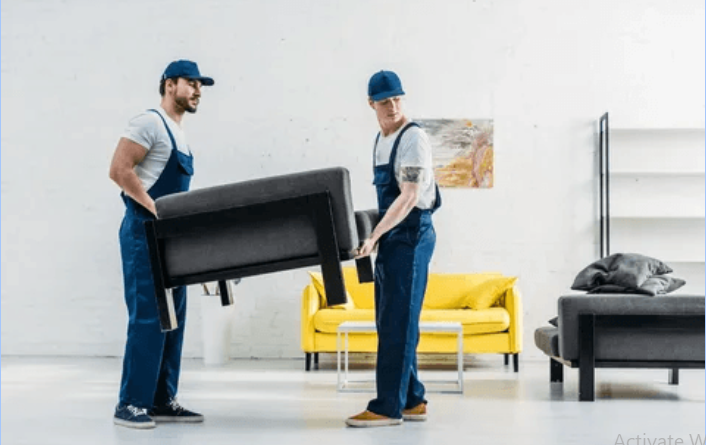
Let’s be honest most companies only start thinking seriously about office layouts and workstation assembly after something has already gone wrong. A desk arrives with missing fittings, meeting tables don’t align with the floor plan, cable access gets blocked, or storage units end up reducing the usable space instead of improving it. It happens more often than people think, especially during fast office relocations or rushed commercial fit-outs in places like Dubai, Abu Dhabi, and major business districts such as Business Bay, DIFC, and JLT. That’s usually the point where businesses realise office furniture installation in UAE is less about “putting furniture together” and more about planning workflow, spacing, safety access, cable management, and day-to-day usability inside a working office environment.
Over time, experienced relocation and fit-out teams learn that small installation mistakes create bigger operational problems later. Workstations placed incorrectly affect movement across departments, badly assembled storage systems become safety risks, and poor layout decisions make even modern offices feel cramped or inefficient. That’s why proper installation normally involves site measurements, furniture mapping, coordinated delivery schedules, and technicians who understand commercial office systems rather than basic flat-pack assembly. Companies handling relocations across Dubai and other UAE business hubs often combine installation with moving, dismantling, workstation reconfiguration, and IT setup to avoid disruption during transitions. When handled properly, the result is an office that actually functions the way it was intended instead of a space full of expensive furniture that nobody enjoys working around.
Why Office Furniture Installation in UAE Isn’t Like Other Markets
Setting up an office in the United Arab Emirates rarely works the way people expect on paper. Timelines move fast, building rules change from one tower to another, and small delays quickly turn into bigger operational problems. In areas like Dubai, Business Bay, DIFC, and JLT, companies are often trying to coordinate deliveries, workstation assembly, internet setup, access cards, and staff movement all within the same few days. That pressure alone makes office installation projects very different from slower-paced markets elsewhere. Teams handling these projects need to think beyond furniture assembly because the real challenge is usually access timing, floor coordination, and making sure everything becomes operational without disrupting the business schedule. That’s one reason companies often work with experienced providers such as E Office Movers in Dubai, where relocation planning and installation are managed together instead of treated as separate jobs.
The physical environment adds another layer most businesses don’t think about until problems appear. High temperatures during UAE summers can affect materials during transport and unloading, especially when trucks are delayed outside commercial buildings or waiting for access permissions. Certain wood finishes react badly to heat exposure, adhesives weaken faster, and imported items sometimes arrive after long shipping periods already under stress. A lot of office furniture used in the UAE also comes from international suppliers, which means installers regularly deal with unfamiliar assembly systems, different hardware standards, and manuals that aren’t designed for local installation teams. In practice, the work becomes less about simply building desks and more about managing logistics, timing, technical fitting, and space planning under conditions that move much faster than many companies initially expect.
What Does a Professional Office Furniture Installation Actually Cover?
This is where a lot of confusion starts. People hear “installation” and picture two guys with an Allen key. Professional office furniture installation in the UAE is a very different thing.
Here’s what it actually involves when done properly:
- A site survey before anything else measuring, checking column positions, door swings, ceiling heights, and emergency exit paths
- Coordination with your interior designer, IT contractor, and MEP teams so nobody’s working over each other
- Staged unloading, where every piece is moved to its designated zone before assembly begins rather than piled at the entrance
- Full assembly of workstations, executive desks, meeting tables, storage walls, and soft seating
- Cable management built into workstation setup, not retrofitted afterwards
- Unit-by-unit quality checking before any area is signed off
- Complete packing material removal not left for your staff to sort out
The last point matters more than it sounds. A professional office movers team in Dubai leaves the space clean and ready for use. That’s the standard. Anything less is just logistics with a markup.
How Should You Actually Plan This Kind of Project?
Bad planning is the root cause of most installation disasters. Not bad products. Not bad teams. Bad planning.
Start with a floor plan, a real one, not a rough sketch. Every column, every door swing, every fixed point on the floor needs to be on it. The number of times we’ve arrived on-site to find that a modular workstation configuration physically won’t fit because someone measured wrong is genuinely depressing. It’s entirely avoidable.
Once you have the floor plan confirmed, sequence the installation by zone. For a typical office setup in Dubai, here’s the order that works:
- Server rooms and storage areas go first they’re tucked away and won’t get disrupted by later work
- Executive offices and meeting rooms come next, since they tend to need the most careful assembly and finishing
- Open-plan workstation runs go in from the back wall toward the entrance, so teams aren’t climbing over completed sections
- Reception and breakout areas go last these are the first thing clients see and need to look clean
This sequencing isn’t arbitrary. It keeps different crews from blocking each other, protects finished sections from damage, and means the most visible parts of the office get the freshest attention at the end of the day.
The Mistakes That Keep Costing Businesses in Dubai
Even companies with proper budgets and experienced operations teams get tripped up here. These are the patterns we see repeatedly.
Booking installation for the same day as delivery is the big one. The assumption is that when furniture arrives, the team starts building. In reality, a large delivery needs to be checked against the manifest before a single bolt is touched. One missing bracket or wrong panel size discovered halfway through assembly stops everything. Getting the delivery a day ahead and checking it properly costs nothing extra and prevents a potential full-day delay.
Ignoring building management requirements is another one that blindsides people. Commercial towers across Dubai and Abu Dhabi have specific rules around:
- Goods lift booking windows often restricted to early mornings or evenings only
- Mandatory floor protection before any wheeled equipment enters the lobby or corridors
- Power tool noise restrictions during normal business hours
- Maximum number of workers permitted on a single floor at one time
If you haven’t sorted all of this before installation day, you’ll find out about it at 8am when your team is standing in the car park with a truck full of furniture and nowhere to go.
A third mistake and this one is surprisingly common is not involving the installation team in the furniture selection process. If you’ve already ordered a 4-meter conference table for a room where the corridor bend is 3.8 meters wide, no amount of professional skill makes that work.
Does the Furniture Type Change How Installation Is Handled?
Very much so. And understanding this upfront helps you plan timelines and costs far more accurately.
| Furniture Type | Complexity Level | Rough Time Per Unit |
| Modular workstation with screens | High | 45 to 90 minutes |
| Executive desk with cable tray | Medium to High | 30 to 60 minutes |
| Large conference table | High | 60 to 120 minutes |
| Ergonomic task chair | Low | 10 to 15 minutes |
| Storage wall or tall cabinet | Medium | 30 to 50 minutes |
| Soft seating and lounge pieces | Low to Medium | 15 to 30 minutes |
The complexity column is what drives cost and timeline more than anything else. Twenty ergonomic chairs take three hours. Twenty modular workstations can take two full days depending on the cable management requirements. Getting this right at the quoting stage means no surprises once work starts.
What Happens When Ergonomic Furniture Is Installed Wrong?
This question doesn’t get asked nearly enough and it should, especially in the UAE where office hours are long and wellbeing conversations are finally becoming more serious.
Ergonomic furniture only delivers its benefits when it’s set up correctly. A sit-stand desk left at a fixed height because nobody adjusted the range during installation is just an expensive standing desk. A lumbar support chair with the pad sitting at the wrong spinal position is actively uncomfortable, sometimes more so than a basic chair with no lumbar at all.
When professional office furniture installation teams in UAE handle ergonomic setups, the approach includes:
- Setting height ranges on adjustable desks to suit the typical user in that space
- Positioning monitor arms at correct reach and tilt angles
- Leaving clear adjustment instructions physically attached to each workstation
- Flagging any units where assembly issues have compromised the ergonomic function
For any business going through a relocation, this stuff matters practically. The faster your team feels comfortable and settled at their desks, the faster productivity returns to normal. That’s not a soft benefit — it’s a real operational one.
What Questions Should You Ask Before Hiring Anyone for Office Furniture Installation in UAE?
Not every company offering office furniture installation in Dubai is operating at the same level. Before you sign anything, ask these:
- How many commercial office projects have you completed in the UAE in the last year, and what were the typical sizes?
- Does your liability insurance cover damage to furniture, the building’s flooring, and third-party property?
- Can you share references from clients in similar commercial buildings?
- Do you handle building management coordination and goods lift booking, or is that on us?
- What’s your process when a component arrives damaged or missing?
- Will the same person who surveys our space lead the installation team?
- How do you handle snagging after handover?
None of these are difficult questions. Any company worth working with will answer them clearly and without hesitation. If you get vague responses or someone starts hedging around insurance, that tells you everything.
Is Professional Installation Worth It for Smaller Offices in Dubai?
There’s a stubborn belief that this kind of service is only for big corporations fitting out entire floors in DIFC towers. It isn’t.
A ten-person startup in Dubai Internet City has a proportionally higher risk from a DIY installation than a 300-person corporation does. One damaged executive desk in a five-desk office is a massive percentage of the total fitout cost. One badly assembled modular workstation in a small open-plan space creates a visual mess that the whole team has to look at every day.
Then there’s the time argument. A founder or COO spending two days wrestling with flatpack furniture is two days not spent on anything that actually moves the business forward. Add the cost of their time to the cost of wrong assembly, missing components not caught, furniture damaged during DIY moving and a professional installation often costs less overall than the alternative.
E Office Movers in Dubai works across all office sizes. The approach doesn’t change based on the floor plate. Small projects get the same site survey, the same sequencing, the same quality check before we leave.
What’s Happening With Sustainability in UAE Office Fitouts?
It’s worth spending a moment on this because it’s moved from a nice-to-have to a genuine business consideration across the UAE, particularly as green building certifications become standard and the country’s net-zero targets start to translate into corporate procurement policies.
From an office furniture installation perspective, sustainability shows up in a few practical ways:
- Old furniture disposal done responsibly donating pieces to charities or recycling centres rather than sending them straight to landfill
- Removal of all packing waste from site, including foam, cardboard, and stretch wrap that would otherwise become the client’s problem
- Route planning that consolidates vehicle trips to reduce emissions something that’s often overlooked but genuinely makes a difference across dozens of projects per year
- Attention to GREENGUARD or similar certifications on furniture, and ensuring installation methods don’t void those certifications
More businesses in Dubai and Abu Dhabi are now asking about this during procurement. It’s not a box-ticking exercise anymore, it’s real. And it should be part of the conversation when you’re choosing who handles your office furniture installation in UAE.
How Long Will This Actually Take?
Realistic timelines matter. Promising the impossible and then failing to deliver is a trust issue, not just a planning one.
For a small office say up to 20 workstations with the usual meeting room, executive office, and reception furniture a proper professional team finishes in one to two full working days. That assumes furniture is on-site and checked before day one begins.
A mid-size project covering 50 to 100 workstations, multiple meeting rooms, and breakout areas generally runs three to five days. Phasing sometimes helps here, completing one section fully before moving to the next keeps disruption manageable if the business is partially operational during fitout.
For large corporate installations above 200 workstations, the honest answer is one to three weeks depending on complexity. These projects often run alongside live construction activity, which adds coordination layers that simply take time.
One thing that reliably extends every project: discovering on day one that components haven’t been checked and something is missing. That single problem can add a full day to any timeline. Pre-delivery inventory checking isn’t optional, it’s the thing that keeps everything else on track.
Why Does Post-Installation Support Actually Matter?
There’s a version of this industry where a team assembles everything, takes a photo, and disappears. The client discovers two weeks later that a drawer doesn’t sit flush, a monitor arm isn’t locking correctly, or a cable tray wasn’t secured and is now pulling on the desk edge. They have no recourse.
Post-installation support, specifically a proper snagging walkthrough, is the difference between a finished project and a completed one. Snagging means going through every assembled unit before the final handover, catching anything that’s slightly off, and fixing it before the client’s team starts using the space daily.
It also means being reachable when something happens six months down the line. A gas cylinder on a height-adjustable desk wears out. A hinge on a storage cabinet needs replacement. A modular panel shifts over time and creates a gap. These are normal, expected maintenance items but your ability to get them resolved depends entirely on whether you worked with a company that treats post-installation as part of the job, or one that considers the work done the moment the last chair is assembled.
Conclusion
Office furniture installation in UAE gets underestimated constantly, and it costs businesses real money, real time, and real frustration every time it does. The climate, the pace, the building regulations, the international supply chains these aren’t small complications. They’re meaningful factors that require genuine local experience to navigate well.
E Office Movers in Dubai has built that experience across hundreds of commercial projects, from compact offices in Al Quoz to large headquarters in Downtown Dubai and everything in between. The advice in this guide isn’t theoretical. It’s what we’ve learned from doing it and from watching what happens when it’s done without the right preparation.
If you’re heading into an office fitout or relocation and want to get the furniture side of it right, we’re happy to talk through the specifics. Reach out to E Office Movers in Dubai and let’s look at what your project actually needs.